
Domestic equity ETF share falls from 48.5% in June to 41.2% in October
Bond and overseas equity ETFs gain ground; mixed-asset funds draw attention after IRP rule change
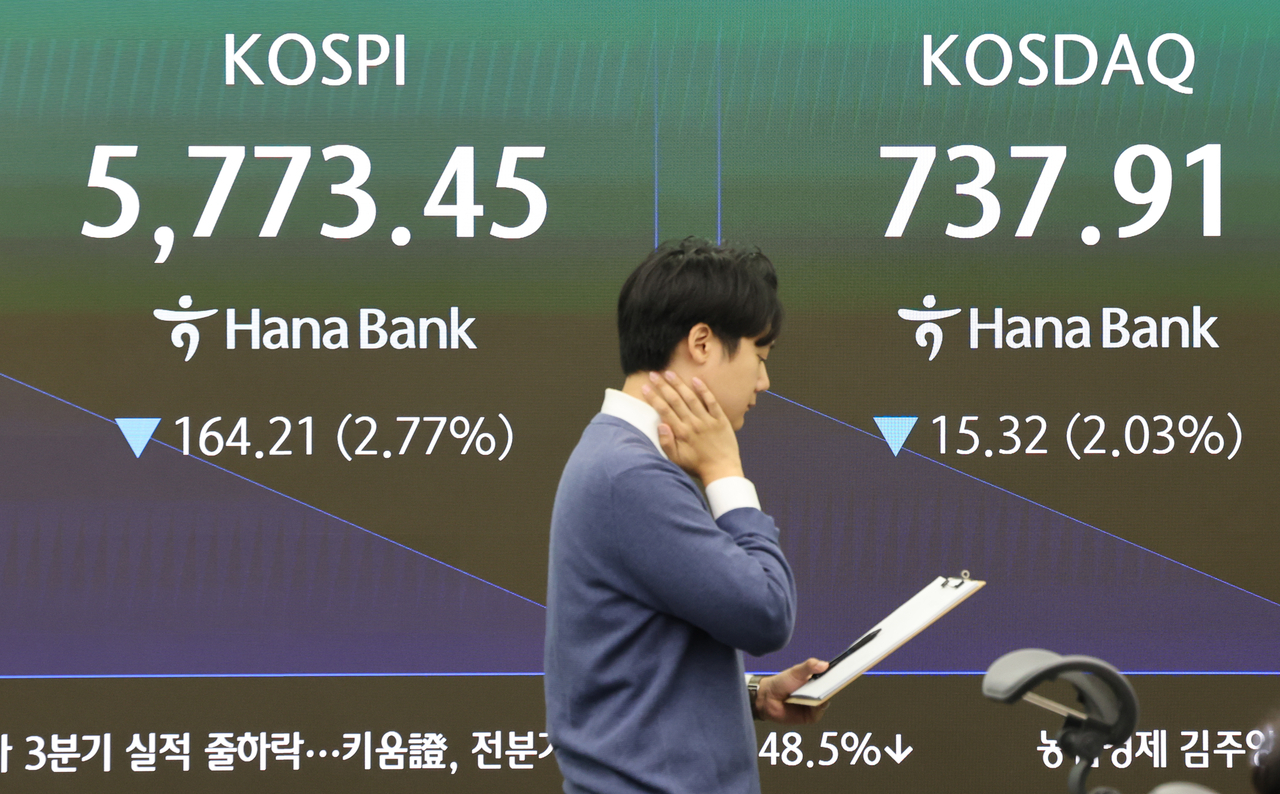
A prolonged Kospi correction is reshaping how investors allocate assets in South Korea's ETF market. The share of domestic equity ETFs in the overall market has shrunk, while bond and overseas equity ETFs have grown — a shift analysts attribute to demand for short-term, low-volatility products and rising interest in US stocks.
According to FnGuide, a financial data provider, net assets in domestic equity ETFs stood at 180.63 trillion won ($135 billion) as of Wednesday, accounting for 41.20% of total ETF net assets of 438.38 trillion won. The domestic equity share had climbed from 36.92% at the start of the year to a peak of 48.49% at the end of June, but has been declining since the market entered a correction in July.
Domestic bond ETFs, by contrast, had net assets of 69.61 trillion won, with their share of the overall ETF market expanding from 12.01% at end-June to 15.88% in October. Products with relatively low volatility — such as money market active and interest rate active ETFs — have been among the most prominent.
The decline in the domestic equity share partly reflects a drop in the market value of domestic equity ETFs as the Kospi fell from its June peak. As market volatility increased, investors appear to have shifted toward "parking-type" ETFs and bond products for short-term cash management. Net asset ratios, however, reflect both price movements and net fund flows.
The share of overseas equity ETFs surpassed 30% for the first time this year. Net assets in that category reached 133.33 trillion won as of Wednesday, representing 30.40% of the total. The gains reflect growing demand to diversify into US equities while the domestic market has been under pressure.
Domestic mixed-asset ETFs — which hold both stocks and bonds — also expanded. Net assets reached 15.46 trillion won, or 3.53% of the total, up 0.28 percentage points from 3.25% at end-June. The category moved into fourth place by net assets among all ETF types, surpassing domestic alternative, overseas bond and other categories.
Mixed-asset ETFs are also drawing attention as a vehicle for retirement pension investment. Some products with equity allocations of 50% or below can be used to effectively increase equity exposure within the risk-asset investment limits that apply to retirement pension accounts.
The government announced a plan Thursday to strengthen the retirement pension system, saying it would gradually ease the risk-asset investment limit for individual retirement pension accounts, known as IRP. The scale of the increase and the implementation timeline have not yet been determined. A similar easing for defined-contribution pension plans will be reviewed at a later stage.
"If the risk-asset limit is relaxed, investors will have more room to put money into ETFs classified as risk assets," Han Su-jin, a researcher at Samsung Securities, said. "But expanded capacity does not automatically translate into a higher actual investment ratio, so portfolio strategy will be important."

attom@heraldcorp.com




