
Apple and AMD earnings due alongside US midterm elections
October exports, consumer prices and jobs data also on tap
Volatility seen continuing as AI investment profitability doubts linger
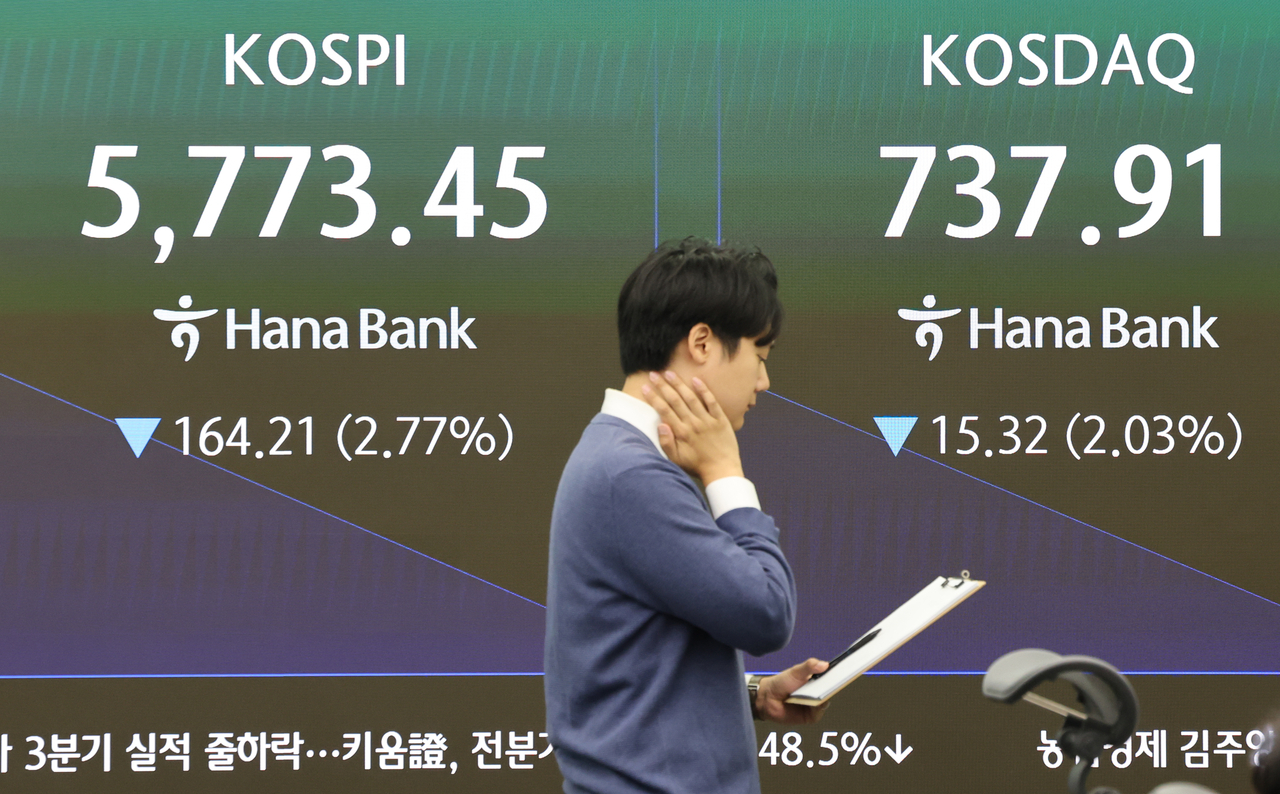
The Kospi, which had briefly reclaimed the 6,000 level, retreated to the 5,700 range on concerns over US big-tech earnings. This week brings a string of market-moving events: earnings from Apple and AMD, the US midterm elections and jobs data. The results will help investors gauge whether AI spending is translating into real profits, while semiconductor export figures and inflation data add further variables that could set the direction for South Korean equities.
According to Korea Exchange and Yonhap Infomax, the Kospi closed Friday at 5,730.74, up 180.44 points, or 3.25 percent, from the previous week, snapping four consecutive weeks of declines since late September. The index swung sharply throughout the week, sliding as low as 5,469.47 early on before surging 3.09 percent on Tuesday and 6.63 percent on Wednesday to reclaim 6,000. It then gave back much of those gains, falling 1.24 percent on Thursday and 3.48 percent on Friday.
The rebound was driven by Anthropic's filing of an initial public offering prospectus and a rally in semiconductor stocks. SK hynix posted a record operating profit of 83.33 trillion won ($62.4 billion) for the third quarter and announced a 20 trillion won buyback plan. Expectations around earnings and shareholder returns sent AI and chip stocks surging, triggering buy-side sidecar halts on the Kospi on both Tuesday and Wednesday.
Doubts about the profitability of AI investment resurfaced after US big-tech earnings. Alphabet's results fell short of market expectations, and concerns were raised over Amazon's cash flow and outlook. Intel warned of slowing PC demand. On Friday, NASDAQ fell 2.86 percent and the Philadelphia Semiconductor Index dropped 7.20 percent, while Intel's share price tumbled 28.58 percent.
The first major data point this week will be October export figures, due Sunday. A confirmed rise in semiconductor exports would support earnings expectations for domestic stocks. However, if the export strength turns out to be concentrated in semiconductors, concerns about sector concentration and over-reliance on AI investment could persist. Markets are expected to look beyond the headline export figure to semiconductor demand and growth trends by product category.
In the United States, Apple reports earnings Monday and AMD on Tuesday. AMD's results and its outlook for data centers and AI are seen as particularly significant for investor sentiment on AI accelerator demand and the broader semiconductor cycle. If both companies' results and guidance meet expectations, they could provide a catalyst for a chip-stock rebound. But if revenue and profitability fail to keep pace with rising investment, the recent selling pressure could continue.
Tuesday also brings the US midterm elections and South Korea's October consumer price index. Depending on the outcome, the outlook for US fiscal and trade policy could shift, and markets will be watching the balance of power in Congress closely. If domestic inflation comes in higher than expected, expectations for an interest rate cut could fade, adding pressure to stock valuations. The Bank of Korea is scheduled to release September balance-of-payments data on Thursday.
Later in the week, US employment data will be in focus. The Bureau of Labor Statistics is set to release the October jobs report on Friday. Strong hiring could push back expectations for US rate cuts, weighing on technology and growth stocks. Conversely, a marked slowdown in job growth could ease rate concerns but heighten fears of an economic slowdown.
Seo Sang-young, a managing director at Mirae Asset Securities, said "Kioxia's forecast for a slowdown in NAND price growth and reports related to Anthropic's credit risk could weigh on investor sentiment," while adding that "given that some of this was already priced in Friday, the downside should not expand significantly." This week, whether export and inflation data and big-tech earnings support expectations for the semiconductor cycle — or instead highlight the burden of AI investment — is seen as the key factor shaping the Kospi's trajectory.

attom@heraldcorp.com




