Foreign Minister Cho Hyun: Kim Jong-un's Dandong visit could be 'catalyst' for North Korea-US summit
NIS: North may have conveyed intentions to China; shift possible around APEC
US urges Seoul not to get ahead of itself; North Korea still silent
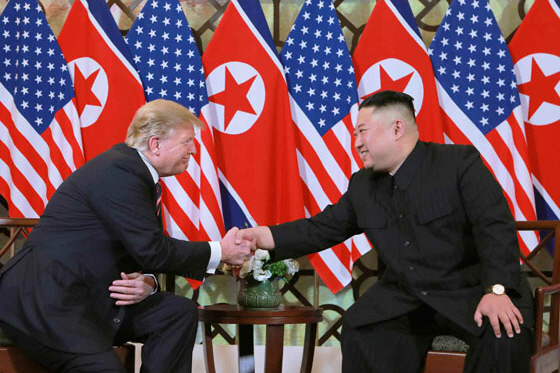
South Korea's government is searching for renewed signs of a North Korea-US dialogue following Kim Jong-un's day trip to Dandong, China. The foreign minister, the unification minister and the National Intelligence Service all offered assessments during the ongoing national audit suggesting the visit was not unrelated to prospects for North Korea-US talks. Some observers also raised the possibility of a shift in the situation around the Asia-Pacific Economic Cooperation summit, set for Nov. 18-19 in Shenzhen, China.
However, the two parties directly involved — the United States and North Korea — have yet to show much enthusiasm. Washington has signaled to Seoul that it hopes South Korea will not get too far ahead of itself. Pyongyang has not responded to the US proposal for a summit. As APEC draws closer, managing the gap between the government's expectations and reality is emerging as a key challenge.
Foreign Minister Cho Hyun, testifying Tuesday before the National Assembly's Foreign Affairs and Unification Committee, said there was a possibility that North Korea and China had discussed North Korea-US dialogue during Kim's visit to Dandong on Oct. 24. "I think there is a possibility," Cho said.
Asked about a strategy to bring North Korea back to the negotiating table, Cho said, "I think a North Korea-US summit could serve as a catalyst for breaking through the current situation."
Unification Minister Jeong Dong-young offered a more optimistic reading. "There is room to view positively the fact that the North has begun to move," Jeong said.
The NIS offered analysis pointing in the same direction. In a closed-door session of the National Assembly's intelligence committee Thursday, the agency reported that Kim may have "conveyed intentions related to North Korea-US dialogue to Chinese leadership."
The composition of Kim's delegation was cited as the basis for that assessment. Despite the stated purpose of commemorating the "War to Resist US Aggression and Aid Korea," not a single senior military figure accompanied Kim. Instead, the delegation was led primarily by diplomatic officials, including Foreign Minister Choe Son-hui and Kim Song-nam, the ruling party's international affairs secretary. On the Chinese side, the diplomatic line — including Foreign Minister Wang Yi — was also prominently represented. During the visit, Choe took the lead on the schedule ahead of Jo Yong-won, who outranks Choe in the party hierarchy. Choe and Wang were also observed holding separate conversations on multiple occasions.
The NIS assessed that the two sides have yet to find common ground on the conditions for dialogue. Even so, the agency said it understood both sides to be "keeping open the possibility of a shift in the situation around the APEC summit and preparing accordingly."
It was the United States that put the brakes on rising expectations. Cho said at the same audit session that North Korea-US dialogue had been a major topic when meeting with US Secretary of State Marco Rubio about a month earlier. Cho described Washington's position as: "We understand, and we'll keep communicating closely, but we hope South Korea doesn't get too far out ahead." Cho said the remark was directed at the role Seoul had taken on as a "pacemaker" in the process, and cautioned against reading too much into it. "The US is not opposed to us taking any initiative," Cho added.
Reuters reported Thursday (local time), citing five sources, that the United States had received no response from North Korea regarding a potential summit. A White House official who requested anonymity told Reuters that "President Donald Trump remains open to talking with Chairman Kim without preconditions," but added that "there is no meeting to announce at this time."
North Korea's official messaging has also fallen short of expectations. State media, including KCNA, focused their coverage of the Dandong visit on reaffirming the blood-forged alliance between the two countries and highlighting the significance of the opening of the new Yalu River bridge. There was no mention of North Korea-US dialogue or any message directed at Washington.
Cheong Wa Dae also moved to temper expectations. A senior official met with reporters Friday and said the outlook for a North Korea-US meeting was "very murky and uncertain," adding, "It is unclear whether such a meeting will happen at all, and there are no visible signs pointing to it." Asked about reports that the government was planning to propose an end-of-war declaration at a potential North Korea-US summit, the official drew a line, saying, "There has been no review or consideration of that at the government level." The official added, however, that given how fluid the situation remains, no possibilities were being ruled out and multiple scenarios were being kept in mind.
Experts say the Shenzhen APEC summit could provide an opportunity for North Korea-US contact, but that a direct leap to a leaders' summit is unlikely. Sidney Seiler, a senior adviser at the Center for Strategic and International Studies, assessed that North Korea was gaining leverage by keeping the US anxious and in a more desperate position through its refusal to engage.
Some analysts warn that Seoul's eagerness could end up strengthening Pyongyang's negotiating hand. The more impatient the US and South Korea appear, the more room North Korea has to raise the bar for dialogue — including by demanding the lifting of sanctions.
rimsclub@heraldcorp.com