
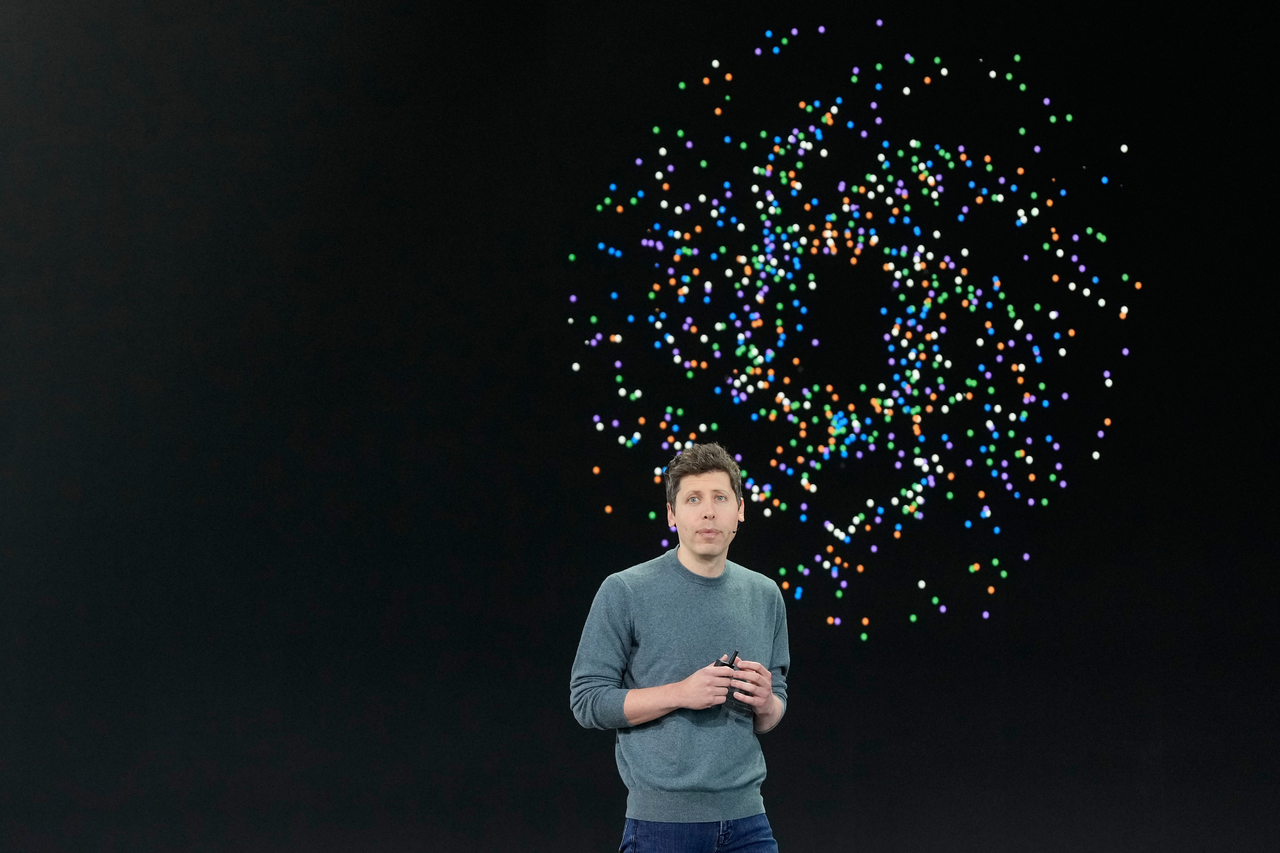
OpenAI CEO Sam Altman has criticized the inefficiency of distributing memory across personal computers, arguing that cloud-based computing is the better approach. The remarks drew immediate attention in South Korea's semiconductor industry, as Altman arrived in the country shortly after the podcast aired and held back-to-back meetings with executives at Samsung Electronics and SK Group.
Samsung Electronics and SK hynix have both posted record earnings on the back of an AI memory boom, and how leading AI companies choose to deploy technology and direct investment is increasingly seen as a key variable shaping medium- to long-term demand for South Korea's memory chip industry.
Altman made the comments on the podcast "Cheeky Pint," released Thursday, in a conversation with Stripe co-founder John Collison about the global shortage of memory chips.
Altman pushed back on the idea that running AI locally on personal computers — so-called local inference — could reduce demand for data centers.
With DRAM in short supply worldwide, allocating scarce memory to individual PCs that use it only about 5 percent of the time is a significant waste of resources, Altman said. Concentrating memory utilization in the cloud would be far more efficient, Altman argued.
The 5 percent figure, however, is Altman's own characterization, not an independently verified statistic on PC memory usage. Altman also stopped short of explicitly calling for restrictions on personal memory use.
The timing of the remarks has drawn particular notice.
Altman arrived in South Korea on Friday night, the day after the podcast was released. On Saturday morning, Altman met with about 50 presidents of Samsung Group's major affiliates at Samsung Human Resources Development Center in Yongin, Gyeonggi Province to discuss AI strategy, then had lunch with SK Group Chairman Chey Tae-won.
OpenAI is pursuing cooperation with Samsung Electronics on AI infrastructure and memory chip supply. The company also maintains a working relationship with SK Group on HBM and AI data centers.
The OpenAI chief's views on memory deployment were made public just before a visit to the country whose memory industry counts OpenAI among its most important customers. How the companies driving global AI growth plan to secure and use memory chips has direct implications for the medium- and long-term business strategies of South Korean semiconductor firms.
Altman's remarks underscore that where memory demand is concentrated matters as much as how large that demand is.
Whether AI increasingly runs on personal computers or becomes ever more concentrated in large-scale cloud data centers will determine what types of memory products are needed and how supply chains are structured.
A shift toward cloud-centric AI, however, does not necessarily spell bad news for South Korean memory makers. Demand for HBM and server DRAM used in AI servers could in fact expand further. Consumer-grade DRAM for PCs and HBM are also distinct products with different specifications and applications.
Domestic memory companies have been securing stable demand through long-term supply contracts. Samsung Electronics has also projected that supply constraints could persist through 2028, given the time required to build new factories and procure semiconductor equipment.
Even so, how the big tech companies driving AI industry growth choose to allocate computing resources and memory going forward remains a variable worth watching closely.
For Samsung Electronics and SK hynix — both of which have posted record profits on surging AI demand — the central challenge now is whether they can sustain profitability through shifts in the technology and investment strategies of their key customers, not just ride the current boom.
South Korean memory makers are widely regarded as among the biggest beneficiaries of rising investment in AI data centers.
SK hynix announced Wednesday that it posted sales of 104.62 trillion won ($78.3 billion) and operating profit of 83.33 trillion won in the third quarter of this year. The operating profit margin reached 79.7 percent. Sales of HBM4 and server DRAM drove the results.
Samsung Electronics announced Thursday that it recorded third-quarter operating profit of 107.4 trillion won. Of that, 106.5 trillion won came from the Device Solutions division, which oversees the semiconductor business. Sales at the memory chip unit reached 140.7 trillion won.
why37@heraldcorp.com




