
Bank of Korea commissions research on stablecoin leverage risks
Study aims to build indicators of potential leverage exposure
2.4 trillion won invested via three DEXs over past two and a half years
Net stablecoin outflows hit 2.2 trillion won in second quarter of last year
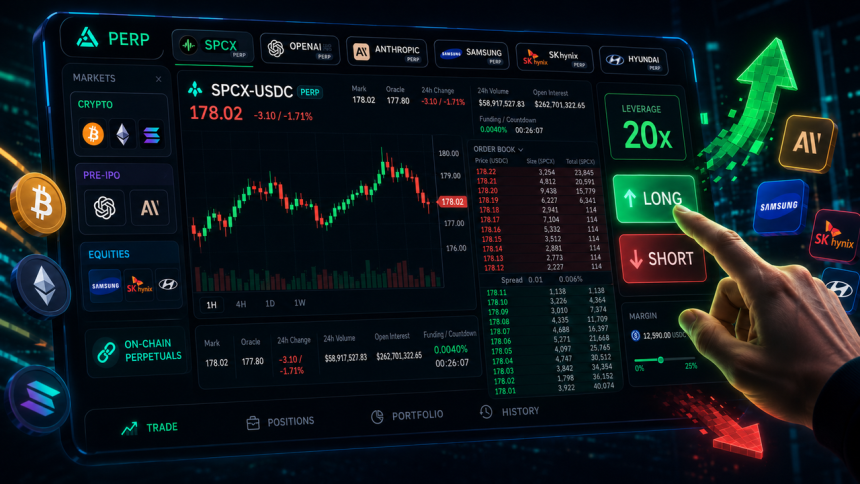
An estimated 2.4 trillion won ($1.8 billion) flowed from domestic investors into stablecoin-based overseas perpetual futures and related products through three decentralized exchanges over the past two and a half years, according to industry research. Amid that trend, the Bank of Korea has begun examining how high-leverage overseas investments made via stablecoins are affecting domestic financial and foreign exchange markets.
The central bank's review reflects concern over the growing practice of Korean investors transferring dollar stablecoins abroad for derivatives trading, and aims to quantify both the scale of those investments and the channels through which risk could transmit back to domestic markets.
According to a list of external research contracts obtained Saturday from the office of Democratic Party lawmaker Kim Nam-jun, a member of the National Assembly's Finance and Economy Planning Committee, the Bank of Korea's Economic Research Institute commissioned a study in April titled "The Impact of Overseas Cryptocurrency Leverage Investment via Stablecoins on Domestic Financial Market Stability." The research period runs from April 13 through Saturday. The study is being conducted as a policy reference, and the final results are to be released at a later date.
The research combines blockchain data on stablecoin flows between domestic and overseas exchanges with information on leverage and derivatives products at foreign exchanges, as well as short-term funding and foreign exchange market indicators, with the goal of building indicators of potential leverage exposure. Based on that framework, the study aims to identify the scale of overseas leverage investment and the channels through which risk spreads, and to assess the implications for financial stability.
Separately, the Bank of Korea's Financial Settlement Department concluded a research contract in July covering capital outflow risks and heightened exchange rate volatility stemming from stablecoins. That project analyzes how stablecoins increase incentives to hold foreign assets and amplify capital outflows and exchange rate volatility. The review extends beyond tracking funds moving overseas to assessing how the investment risks those flows generate could affect domestic markets.
Domestic funds flow toward leverage trades
The Bank of Korea's decision to examine these risks reflects a growing awareness that more Korean investors are gaining access to high-leverage overseas products through stablecoins.
Private-sector analysis has also captured significant derivatives activity by wallets believed to belong to domestic investors. According to Web3 research firm Tiger Research, wallets identified as belonging to Korean investors deposited a cumulative 2.4 trillion won into three decentralized exchanges — Hyperliquid, Lighter and one other — between January 2024 and July this year.
Those exchanges are known for active leverage trading centered on perpetual futures with no expiry date, absorbing demand for derivatives products unavailable on domestic platforms. In July alone, roughly 1,200 wallets estimated to belong to Korean investors recorded a notional trading volume of 7.4 trillion won on Hyperliquid.
The range of underlying assets has also expanded beyond virtual assets to include products tied to traditional assets such as SK hynix and Samsung Electronics share prices and crude oil. Analysts say the ability to trade with high leverage outside regular market hours has driven part of that demand. In one documented case, a wallet believed to belong to a Korean investor used about 1 billion won as margin in July to build a 10-times leveraged short position in SK hynix-based perpetual futures.
Net outflow intensity rises
Even as domestic virtual asset trading has slowed, the share of funds flowing out overseas has moved in the opposite direction. Tiger Research's "net outflow intensity" metric — which divides quarterly net overseas outflows by the spot trading volume of the three major domestic exchanges, Upbit, Bithumb and Coinone — rose from minus 0.5 percent in the fourth quarter of last year to 0.6 percent in the second quarter of this year.
The shift signals that fund flows relative to domestic trading volume have turned from net inflows to net outflows. "As futures investment methods become more widespread, domestic investors will have even greater incentive to leave the local market," said Jo Yun-seong, a senior researcher at Tiger Research.
Within the industry, the prevailing view is that recent discussions over taxing virtual assets could accelerate the migration to overseas exchanges. Demand to invest in a wider range of derivatives beyond the spot-only products available on domestic platforms could combine with the incentive to reduce tax burdens.
The movement of stablecoins toward overseas exchanges is also visible in the Bank of Korea's own earlier analysis. According to a stablecoin white paper published last year, dollar stablecoin outflows between domestic and overseas exchanges in the second quarter of 2025 totaled about 14.9 trillion won, while inflows came to about 12.7 trillion won, leaving net outflows of about 2.2 trillion won.
Korean investors are moving dollar stablecoins to overseas exchanges and using them for derivatives trading, decentralized finance services and arbitrage that exploits price differences between domestic and foreign markets, the analysis found.

forest@heraldcorp.com




