
Legal disputes and project delays loom as contract talks collapse after more than a year
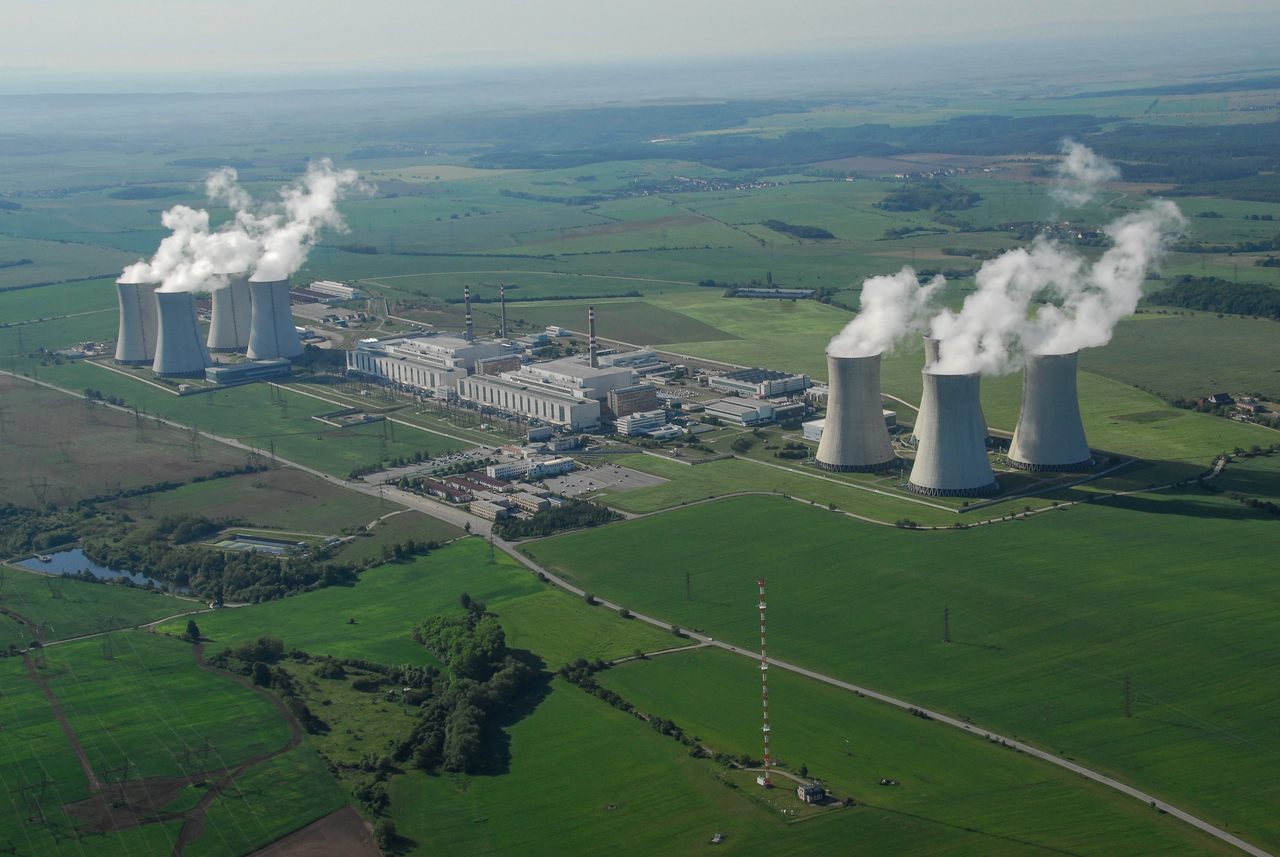
The Czech Dukovany nuclear power plant project — widely seen as South Korea's gateway into the European nuclear market — has hit a major setback after contract negotiations broke down. Korea Hydro & Nuclear Power and a consortium of Daewoo Engineering & Construction and Doosan Enerbility failed to conclude construction contract talks that had stretched on for more than a year and four months.
The two sides could not bridge their differences over construction costs and who should bear additional expenses arising from design changes. The collapse raises the prospect of legal disputes, including injunction filings, over settlement of accounts. Industry officials also warn that the time needed to select a new contractor could delay the overall project schedule, putting the "on-time, on-budget" commitment that helped South Korea win the contract at risk.
According to the nuclear power industry, Korea Hydro & Nuclear Power and the Daewoo E&C consortium were unable to narrow their gap on construction costs and key contract terms. Korea Hydro & Nuclear Power had demanded that Daewoo E&C cut its construction fee to more than 10 percent below the original bid price, with the proposed reduction said to exceed 1 trillion won ($748 million). The two sides held working-level talks, a dispute-adjustment committee session and executive-level negotiations, but still could not reach an agreement.
The central dispute was over how construction costs should be calculated and what contract structure to use. Korea Hydro & Nuclear Power pushed for a lump-sum fixed-price contract — under which the contractor bears the risk within a set amount agreed at signing, as was done for the Barakah nuclear plant in the United Arab Emirates — while the consortium argued for a unit-price settlement model that would reimburse actual costs for any increase in construction volume once detailed designs are finalized.
A Korea Hydro & Nuclear Power official rebuffed the contractor's position, noting that both Team Korea partners — Doosan Enerbility for major components and Kepco Engineering & Construction for overall design — had signed lump-sum fixed-price contracts. "If only the construction contract uses a cost-settlement model, Korea Hydro & Nuclear Power would end up absorbing all the risk of project cost overruns," the official said.
Korea Hydro & Nuclear Power also rebuffed allegations that it had lowballed the Czech contract and was squeezing the contractor on construction costs. The total contract value for Dukovany Units 5 and 6 — about 27 trillion won — is 2.62 times that of the UAE Barakah plant on a two-unit basis (or 1.68 times when adjusted for inflation) and 2.4 times that of the domestic Shin Hanul Units 3 and 4, meaning construction costs are also higher than on previous projects, the company said.
Korea Hydro & Nuclear Power also said that payments arising from the settlement of its intellectual property dispute with US firm Westinghouse would be covered through internal reallocation within the existing project budget, and therefore did not constitute a factor pressuring it to cut construction costs.
Korea Hydro & Nuclear Power's decision to declare the talks over at this point is tied to commitments made to the Czech client, EDU II, and to the schedule agreed between the two governments. The client had originally asked that the construction contract be signed by the end of September to avoid disrupting the overall project timeline.
In response, Korea Hydro & Nuclear Power shared a deadline with both governments at the third meeting of the bilateral Delivery Steering Committee — a high-level implementation review body — held earlier this month, stating that it would terminate negotiations if no deal was reached by the end of October. The company ultimately acted on that deadline. Industry observers widely believe the Ministry of Trade, Industry and Energy had set that negotiating deadline for Korea Hydro & Nuclear Power.
Korea Hydro & Nuclear Power said it has begun preparing an open competitive tender under the National Contracts Act, with a target of signing a contract with a new contractor by July 2027.
Daewoo E&C said it had accepted the unit prices submitted by the prime contractor in January 2024 as presented, while also putting forward a revised proposal that reflected project realities. The company rebuffed the claim that a lump-sum fixed-price contract represents global standard practice, arguing that imposing excessive liability for volume increases caused by design changes on a contractor with no involvement in the design process for the APR1000 — a model being built for the first time in the world — does not align with international norms. Daewoo E&C has been involved as the lead construction contractor since the bidding stage. Its share of construction work is understood to be 55 percent, with Doosan Enerbility holding the remaining 45 percent.
Voices in the nuclear and construction industries are questioning whether it is appropriate to replace a core contractor that has worked in step with the Team Korea consortium for eight years since its formation in 2018, simply by exercising a position of dominance. Concerns have also been raised about potential legal disputes — including injunction filings — over settlement of accounts following the termination of the joint cooperation agreement with the existing contractor. The process of selecting a new contractor, which could take close to a year, may also delay the overall project schedule — a serious concern given that South Korea's track record of delivering on time and on budget was a decisive factor in the Czech Republic's decision to choose Team Korea.
Questions of accountability for the government and Korea Hydro & Nuclear Power may also arise, industry officials say. Reports that Korea Hydro & Nuclear Power demanded a reduction of more than 1 trillion won in construction costs — more than 10 percent below the original bid price — have drawn criticism from the industry that the state-run utility abused its dominant position as a public institution, a practice known as "gapjil."
Daewoo E&C indicated it could not accept the demand, and in March allegations emerged that Korea Hydro & Nuclear Power had pressured the company by signaling it could replace the contractor with another firm. The two sides continued negotiations after that point without reaching agreement on the contract amount.
Industry officials are also questioning whether Korea Hydro & Nuclear Power sought to shift the burden onto the contractor by wielding its contract-awarding authority rather than proposing a reasonable cost-reduction plan.
oskymoon@heraldcorp.com




