
Mid-sized Korean carriers ordering container ships from China
War in the Middle East pushes firms toward cheaper Chinese vessels
Industry calls for support to sustain domestic maritime ecosystem
US and Japan secure domestic orders through government backing
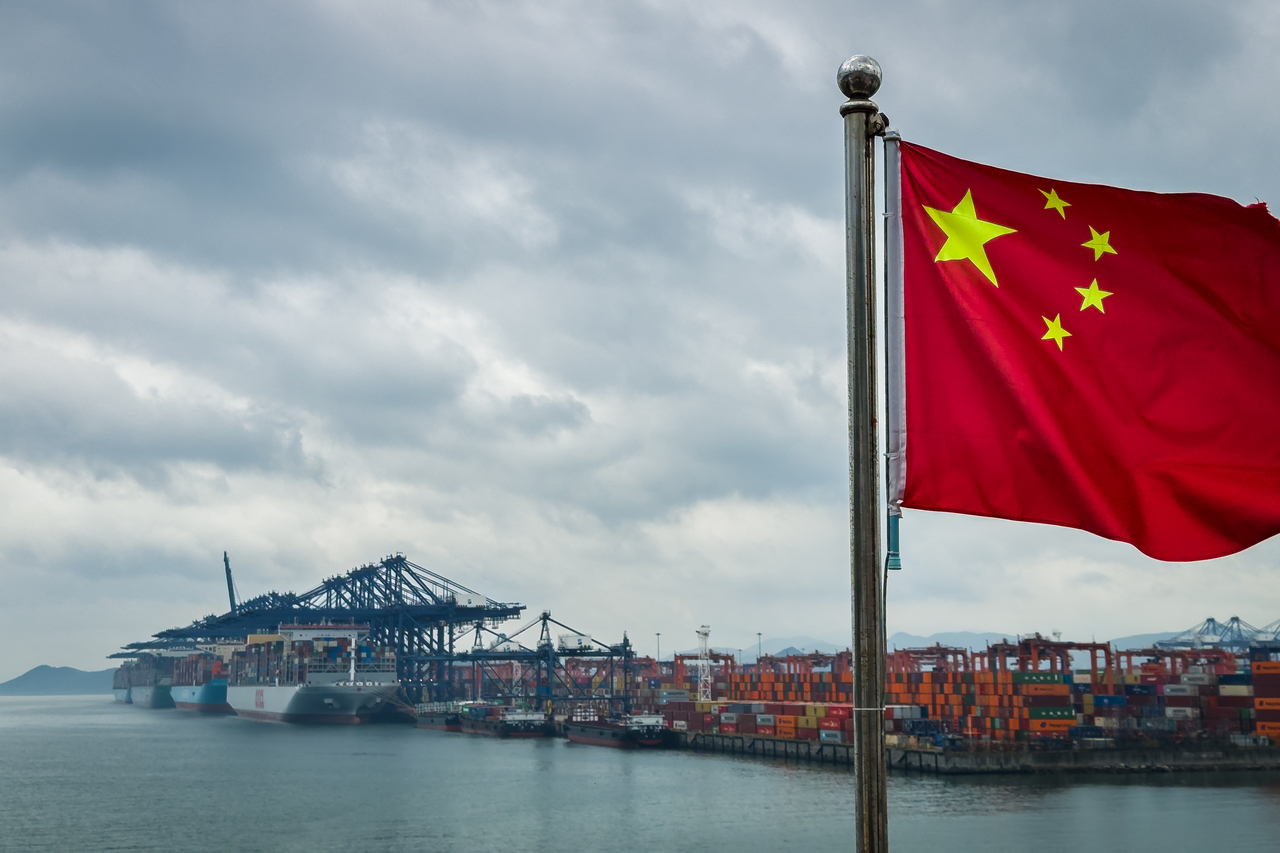
As global ship orders continue to concentrate in China, a growing number of mid-sized South Korean shipping companies have this year begun placing orders with Chinese shipyards — a trend raising concerns about the long-term health of the domestic maritime industry.
According to foreign media reports, Huangpu Wenchong Shipbuilding, a yard under state-owned China State Shipbuilding Corporation (CSSC), recently received an order from South Korean mid-sized carrier Korea Marine Transport Co. for six container ships of 3,100 TEU capacity (one TEU equals one 20-foot container). The exact contract value was not disclosed. The order is believed to be the first time Korea Marine Transport has placed a vessel order with a Chinese shipyard since its founding in 1950.
Placing orders with Chinese shipyards has long been treated as an unspoken taboo in the South Korean shipping industry, given the competitive dynamics between the two countries in the global shipbuilding market and security concerns. This year, however, mid-sized carriers in particular have been doing so with increasing frequency.
South Korean mid-sized carrier CK Line signed a contract with Huangpu Wenchong in August for two 6,400-TEU container ships, with an option for two additional vessels. The total contract value was estimated at $320 million. Heung-a Shipping placed an order with CSSC-affiliated Wuchang Shipbuilding Industry in June for three chemical tankers at $152 million.
The shift reflects a combination of capacity constraints at domestic shipyards and price competition. As ship orders have surged in recent years, South Korean shipbuilders have become increasingly selective, focusing on high-value vessels such as eco-friendly ships, while Chinese yards continue to aggressively pursue lower-priced container ship orders. Clarkson Research, a British shipping market research firm, estimated that China captured about 80 percent of the 388 container ship orders placed in the first half of this year.
South Korean shipbuilders, for their part, say the shift in container ship orders has little immediate impact on their profitability. "Shipyard slots are already filled with high-value vessels for four to five years out, so it is realistically difficult to take on more orders," an industry official said. "It is less a matter of not being able to get orders and more that suppliers have the upper hand in this market."
At the same time, South Korean shipping companies have found themselves with little choice but to seek cheaper options following the outbreak of war in the Middle East. War risk insurance premiums have surged due to threats to the Strait of Hormuz, and rising oil prices have added to fuel cost burdens. The Korea Shipowners' Association estimated that daily losses borne by small and mid-sized carriers whose vessels were stranded in the Strait of Hormuz in the early days of the conflict reached 600 million won ($430,000).
Some in the industry, however, argue that domestic order volumes should be increased to preserve the maritime ecosystem at home. The US government, for example, covers 75 percent of construction costs when strategic merchant vessels — reserved for national emergencies — are built domestically. Japan has also announced a plan to double the volume of vessels built at domestic shipyards over 10 years in a bid to revitalize its own maritime industry.
Yang Jong-seo, a visiting professor of naval architecture and ocean engineering at Seoul National University, said requiring private commercial vessels to be ordered domestically would be difficult given companies' need to pursue profitability. "But from a security standpoint, there is a need for government support — at least for strategic vessels to be deployed in emergencies — to ensure they are built domestically, as the United States does," Yang said.

klee@heraldcorp.com




