Record earnings for fourth consecutive quarter
Memory chip sales hit 141 trillion won, leading growth
HBM4 sales surge, server SSD supply expands
Finished-product division stays in the red on rising component costs
Shareholder return plan to be finalized, announced in January
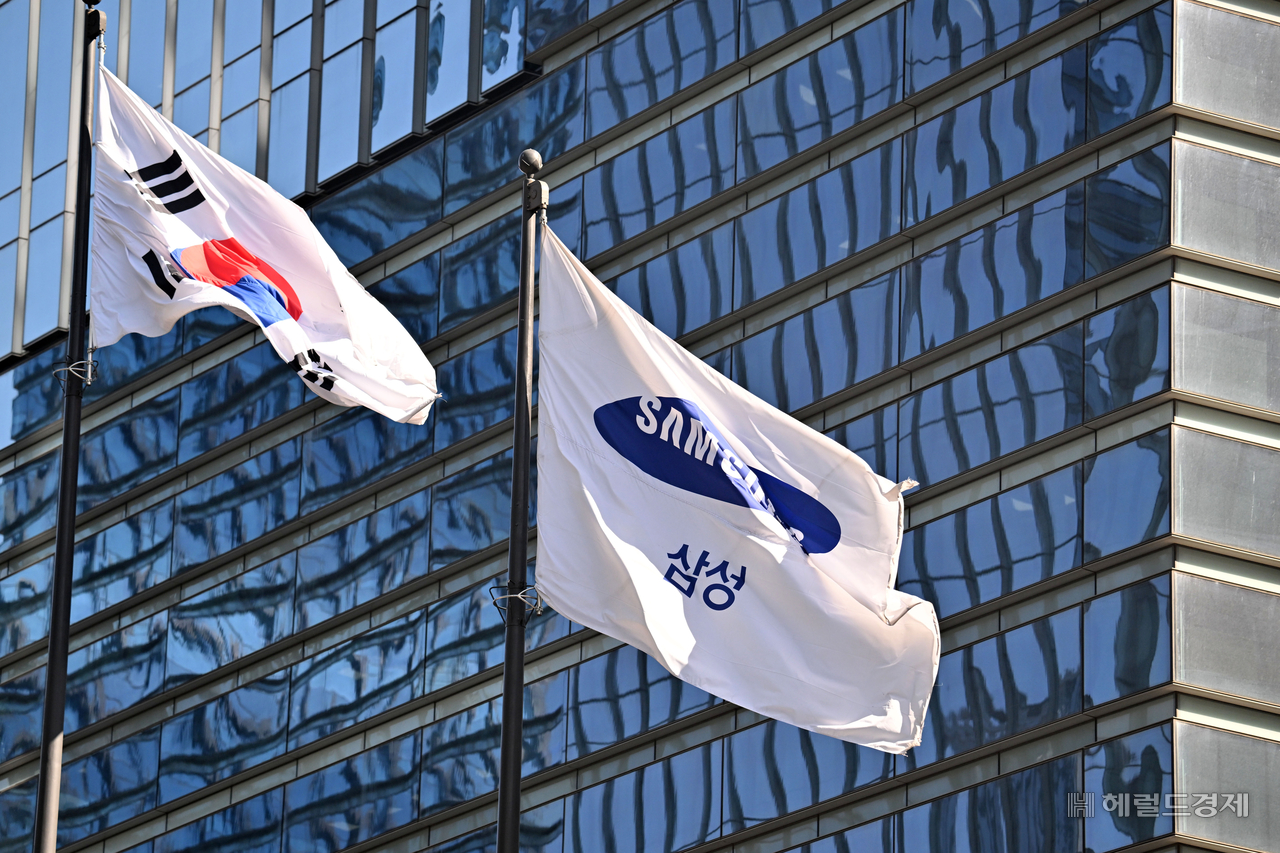
Samsung Electronics posted more than 100 trillion won ($74.8 billion) in operating profit from semiconductors alone in the third quarter, setting a new all-time record for the fourth consecutive quarter.
The company said Thursday its third-quarter consolidated sales reached 195.3 trillion won and operating profit came in at 107.4 trillion won — up 127 percent and 780 percent, respectively, from the same period a year earlier. The operating profit margin stood at 55.0 percent.
The driving force behind yet another record, even as the won's sharp strengthening against the dollar weighed on results, was semiconductors by far.
The Device Solutions division, which oversees the semiconductor business, posted operating profit of 106.5 trillion won for the quarter alone — the first time the division's quarterly operating profit has exceeded 100 trillion won. That marks a 20 percent increase from the second quarter's 89.2 trillion won.
DS division sales also rose 15 percent from the second quarter to 147.1 trillion won. The memory chip unit was the primary growth engine, recording sales of 140.7 trillion won.
The record run was sustained by a sharp expansion in sixth-generation high-bandwidth memory (HBM4) sales and an aggressive response to growing demand for server solid-state drives (SSDs).
The Device Experience division, which handles finished products, posted year-on-year sales growth on the back of new product launches — including the Galaxy Z Fold 8 — and a higher average selling price.
Even so, the division could not avoid a second consecutive quarterly loss. Rising component costs, including memory chips, combined with the impact of the won's strengthening dealt a heavy blow, analysts said. The division's prolonged slump stands in sharp contrast to the semiconductor unit, which has broken its own profit record every quarter.
The Mobile Experience unit recorded a loss of 600 billion won in the third quarter. Some had forecast the deficit could exceed 1 trillion won, but a higher share of flagship models helped narrow the loss from the second quarter's 700 billion won shortfall.
The home appliances and TV businesses also fell into the red, posting a combined loss of 200 billion won in the third quarter, widening from a 10 billion won loss in the second quarter, as rising component costs and sluggish sales took their toll.
Subsidiary Samsung Display is expected to post operating profit of 1.1 trillion won, buoyed by OLED panel supply for Apple's first foldable phone, the iPhone Duo, and the new iPhone 18.
Harman, the audio and automotive electronics subsidiary that marks its 10th year under Samsung Electronics' ownership this year, posted operating profit of 600 billion won.
Samsung Electronics will pay a total cash dividend of 30 trillion won for the third quarter. The company plans total shareholder returns of between 90 trillion and 110 trillion won for 2026. After subtracting the 35 trillion won already distributed or committed, the remaining pool stands at between 55 trillion and 75 trillion won. The company said it plans to return those funds through cash dividends alongside a substantial buyback and cancellation of treasury shares.
Park Soon-chul, Samsung Electronics' chief financial officer and executive vice president, said during the third-quarter earnings conference call Thursday morning that the company is "aware of market attention to the price gap between common and preferred shares" and that it "will actively consider and adjust the proportion of preferred share purchases when buying back and canceling treasury shares, taking market conditions into account."
Park added that the next shareholder return policy, the final size of the remaining 2026 shareholder return pool, and the specific execution plan would be confirmed and announced at a board meeting at the end of January.
Meanwhile, the company said annual facility investment this year to strengthen its technology leadership is expected to reach about 84.4 trillion won ($63.2 billion). For semiconductors, 76.8 trillion won is earmarked to address AI and medium-to-long-term demand. The display segment will receive 3.9 trillion won, focused on upgrading existing production lines.
joze@heraldcorp.com