Park says dissent after parliamentary investigation decision is 'not the attitude of party leadership'
Warns internal feuding risks draining governing momentum
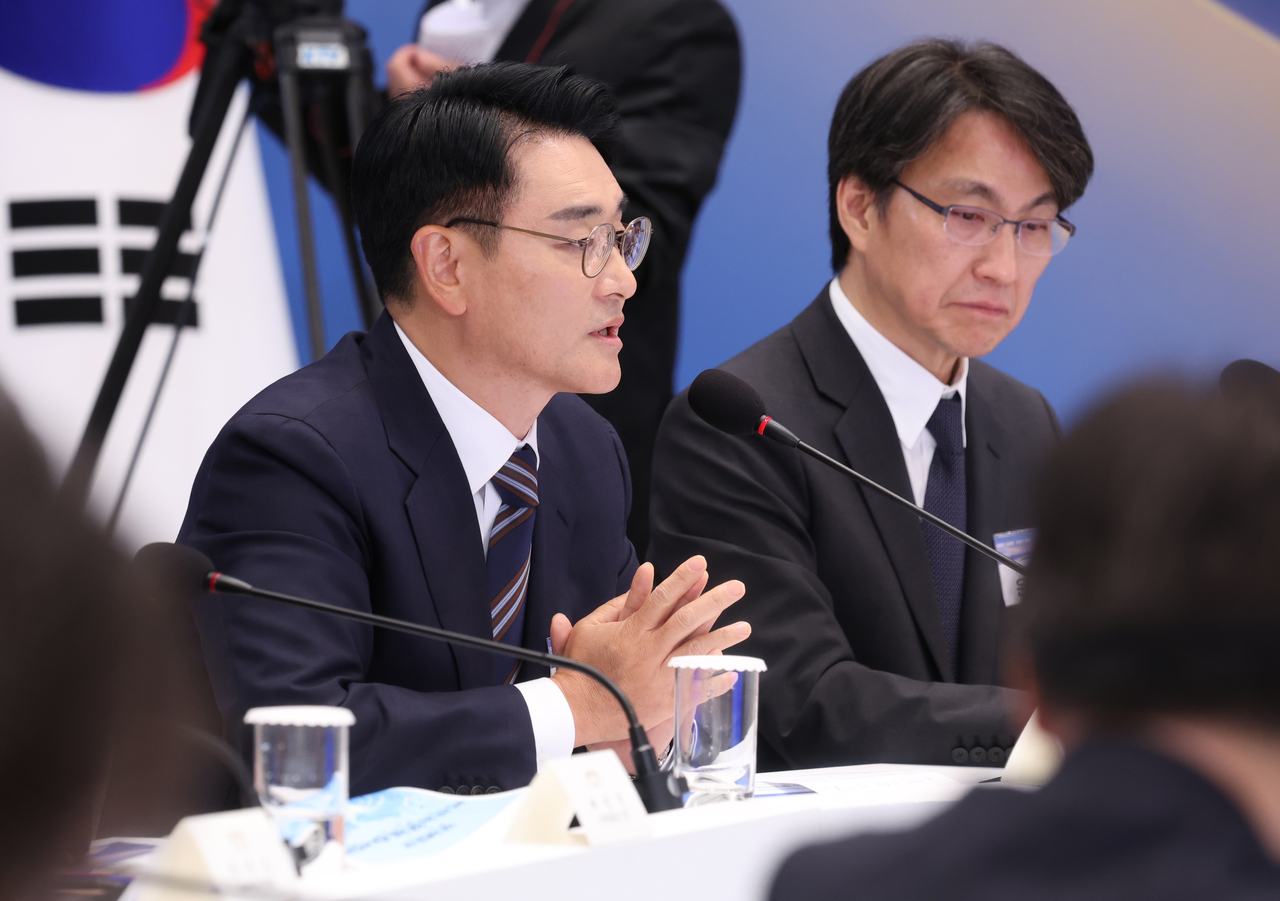
Park Yong-jin, vice chairman of the Regulatory Rationalization Committee, on Wednesday criticized dissent within the Democratic Party of Korea over its decision to pursue a parliamentary investigation of Chief Justice Jo Hee-dae, as well as a string of public attacks on the government by writer Yoo Si-min, calling them "an act that gives citizens double anxiety" and "a pointless ritual dispute that has nothing to do with people's livelihoods."
Speaking on KBS Radio's "Jeongyeok Sisa," Park said that once the party had reached a consensus on the parliamentary investigation, members should abide by it. "If the party leadership has worked hard to forge an agreement and is moving forward with a solution, it must not take actions that amplify controversy," Park said. Park added that some senior party officials had clearly "made up their minds to say something different" by speaking out publicly. "Throwing a wrench like this is not the attitude of leadership," Park said. "The role of the ruling party is to reassure and stabilize the public, yet internally it is creating yet another source of anxiety."
Park was equally blunt about Yoo's criticism. "From the public's perspective, they must be wondering why these people, who worked so hard to come to power, are fighting among themselves — it must look truly pathetic and like they have nothing better to do," Park said. Park said the remarks had been notable enough to write down: "'Same as Yoon Suk Yeol,' 'like a mass dolphin die-off,' 'may not finish the term,' 'the ship could capsize' — none of these expressions contain any affection or concern. They feel like unrestrained emotion and nothing but resentful grievance."
Park went on to warn again that internal conflict risks sapping the government's governing momentum. "What the Democratic Party and the progressive camp need to be debating right now are people's livelihoods and the great national challenges," Park said. Park also warned that if governing momentum falters, it will be harder to withstand serious diplomatic challenges such as unjust pressure from the United States.
Park closed with a historical analogy. "To use a Joseon-era comparison, it feels as though instead of debating the Daedong Law — which was about people's livelihoods — we are having a completely useless ritual dispute," Park said. "Democratic Party lawmakers must become people who focus on livelihood issues, like the Silhak scholars did, if the progressive camp is ever to be seen as competent."
sunpine@heraldcorp.com