KB real estate monthly average apartment jeonse prices: Gangbuk at 602.81 million won, Gangnam at 841.78 million won
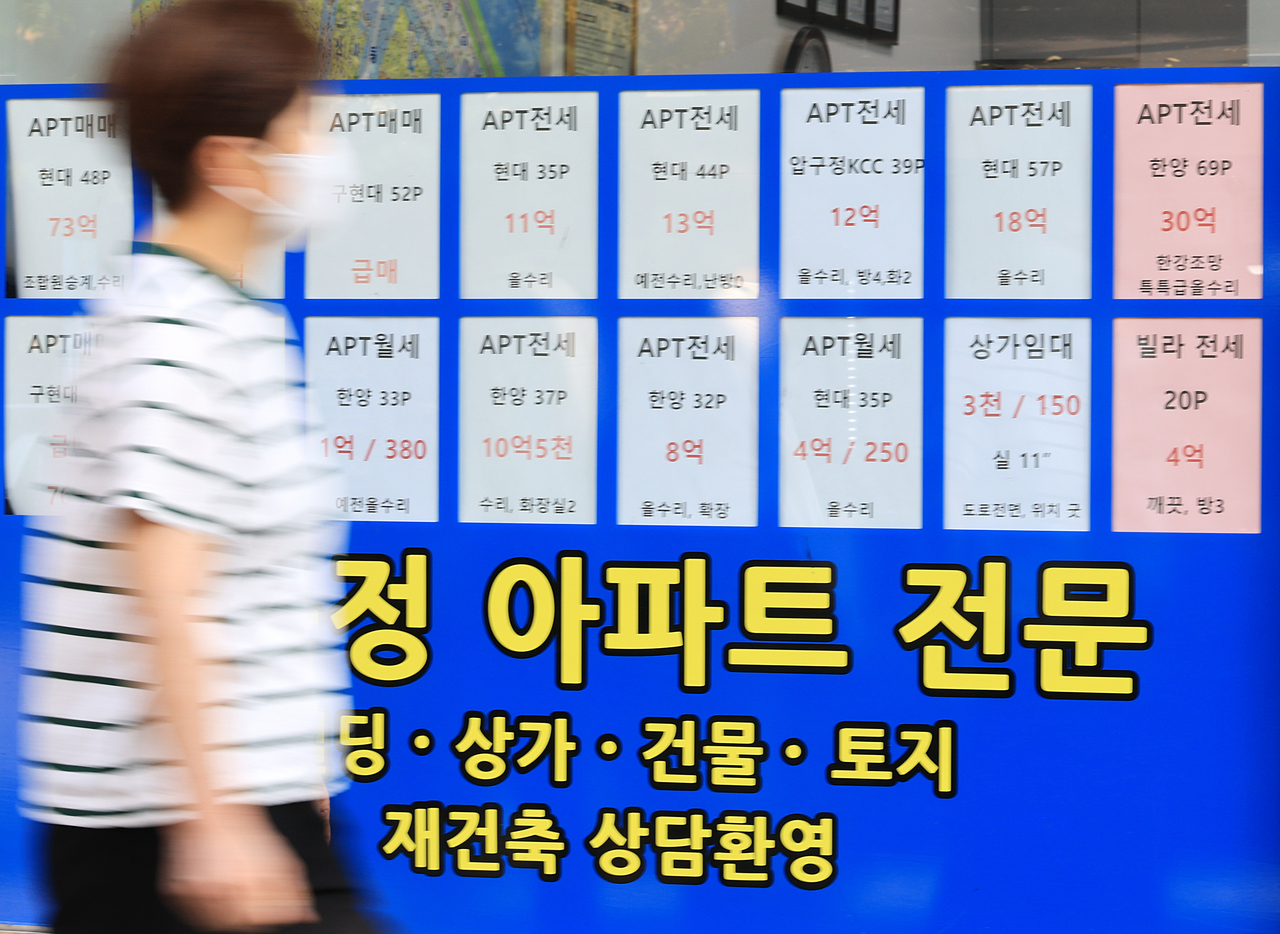
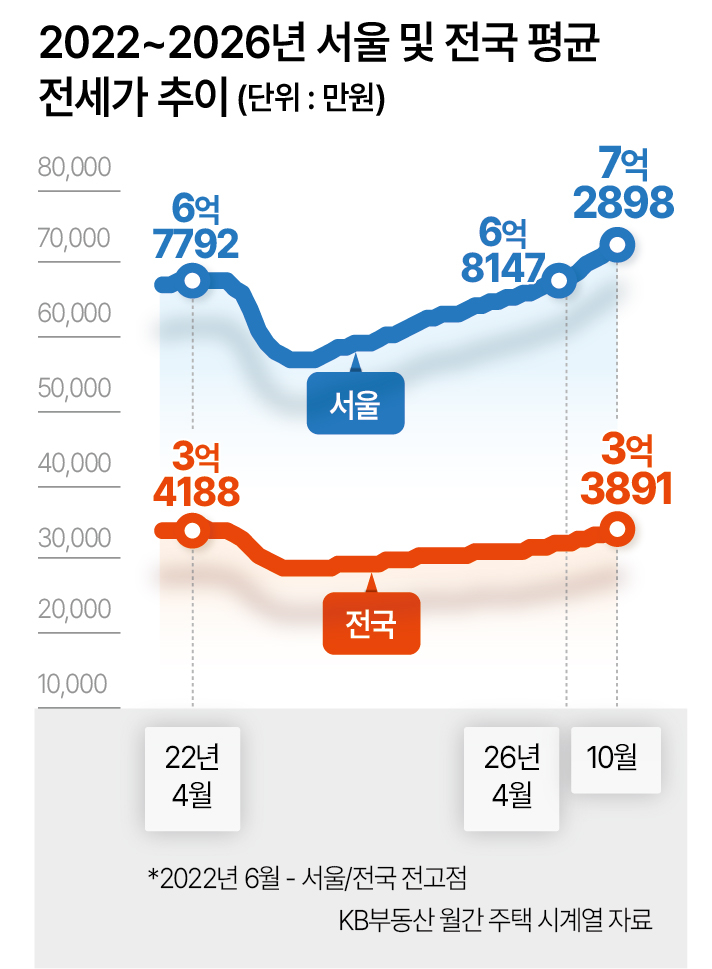
The average jeonse price for Seoul apartments has risen for 39 consecutive months, hitting an all-time high of 728.98 million won ($550,000). The average across Gangbuk's 14 districts topped 600 million won for the first time.
According to KB real estate data released Wednesday, the average Seoul apartment jeonse price stood at 728.98 million won this month. That marks a 9.5 percent increase from 665.98 million won at the end of last December.
The upward trend has been broad-based. The average jeonse price across Gangbuk's 14 districts reached 602.81 million won in October, breaking the 600 million won threshold for the first time. In Gangnam's 11 districts, the average climbed to 841.78 million won, with the pace of gains accelerating. Gangnam apartment jeonse prices first crossed the 700 million won mark in August 2024 at 705.21 million won, and it took roughly two years for them to rise by nearly 100 million won to 801.93 million won in June this year. In just four more months, prices have climbed to just below the mid-800 million won range.
The streak of jeonse price increases has now stretched 39 months since August 2023, outlasting the previous record-setting run. Seoul apartment jeonse prices had risen for 38 consecutive months from May 2019 to June 2022, a period when a low interest rate environment combined with the lease renewal rights law and the jeonse and monthly rent cap system introduced in 2020 to deepen the jeonse shortage.
Park Won-gap, a senior real estate expert at KB Kookmin Bank, said the shortage of jeonse listings had ultimately driven prices higher. "If landlords begin moving back into their own homes in earnest next year, the supply of jeonse units on the market could shrink further," he said.
Park added that interest rate movements next year could be a variable, but said he expected jeonse prices to continue trending upward given limited move-in supply and rising household demand driven by smaller family units.
The jeonse-to-monthly-rent conversion rate — the rate applied when a jeonse contract is converted to a monthly rent arrangement — is also climbing. Seoul's conversion rate this month stood at 4.31 percent, the highest since October 2017. By area, Gangbuk's 14 districts recorded 4.36 percent and Gangnam's 11 districts 4.24 percent, indicating that tenants in Gangbuk, where lower- and mid-priced housing is concentrated, face a heavier burden. A higher conversion rate means tenants pay more in monthly rent when the same deposit is shifted to a monthly arrangement.
Rising jeonse prices are also pushing buyers toward lower- and mid-priced apartments, and the pace of that shift is accelerating. Apartment sale price gains in Gangbuk are in fact outpacing those in Gangnam. The apartment sale price index for Gangbuk's 14 districts rose 0.90 percent this month, more than double the 0.35 percent gain in Gangnam's 11 districts. Seoul's overall apartment sale price index rose 0.61 percent in October.
Among individual districts, Nowon-gu posted the highest gain at 1.52 percent, leading all 25 Seoul districts. It was followed by Jongno-gu at 1.32 percent, Dobong-gu at 1.29 percent, Seongbuk-gu at 1.25 percent, Jungnang-gu at 1.14 percent and Dongdaemun-gu at 1.10 percent. All 14 Gangbuk districts recorded gains, while Gangnam-gu fell 0.33 percent and Seocho-gu slipped 0.04 percent.
Meanwhile, the national average apartment jeonse price this month came in at 338.91 million won, still short of the June 2022 peak of 341.88 million won.
shy@heraldcorp.com