Previous record of 18.94 million visitors surpassed ahead of schedule
Government eyes 23 million arrivals by year's end
Inbound market diversifies as K-culture reshapes travel patterns
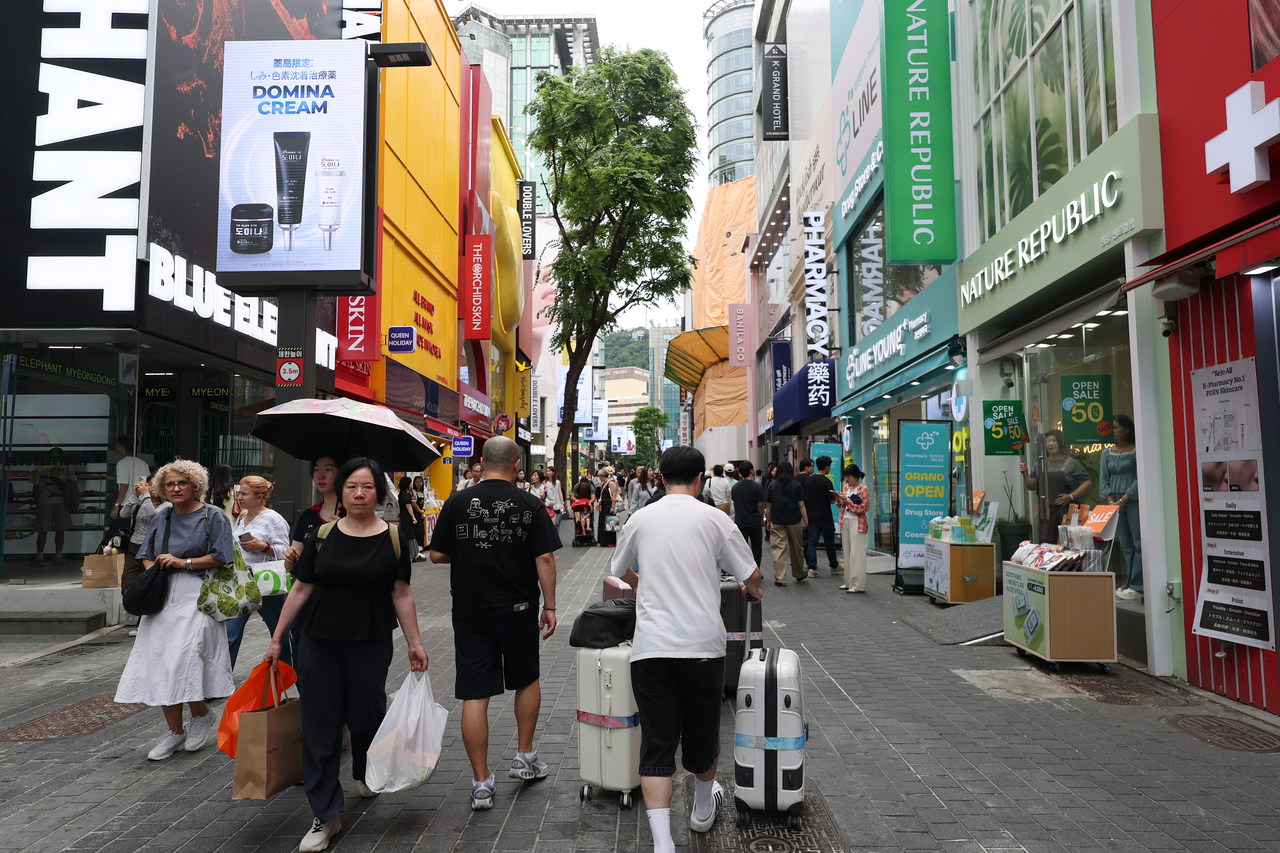
South Korea has broken its all-time record for foreign tourist arrivals in the shortest time ever, surpassing the previous high of 18.94 million visitors with roughly two months still left in the year. With year-end travel demand yet to materialize, the government believes the country is on track to reach not only 20 million visitors but also its official target of 23 million.
The Ministry of Culture, Sports and Tourism said Wednesday that inbound foreign arrivals as of Tuesday had surpassed the previous record of 18.94 million set in 2025, based on a provisional count of about 18.91 million through Monday and a daily average of about 64,000 visitors this year. The record was broken roughly two months earlier than last year, with arrivals up 21.5 percent from the same period a year ago.
International tourism data through September underscores South Korea's standout performance. Japan and Thailand — two of the most popular destinations in Asia — saw arrivals fall 2.9 percent and 3.8 percent, respectively, over the same period. Vietnam posted growth of 14.5 percent, but that was still 7 percentage points below South Korea's pace. The figures suggest South Korea is capturing a disproportionate share of global tourism demand and reshaping the regional travel landscape.
The demographic profile of inbound visitors shows a pronounced skew toward women. Female travelers accounted for 62.4 percent of all arrivals from January through September, up 1.1 percentage points from 61.3 percent in the same period last year. Visitors in their 20s and 30s made up 49.8 percent of the total — nearly half. Analysts attribute the trend to the global surge in female fans of K-pop, drama series and other Korean popular culture who are converting their interest into actual trips.
Women, who tend to be highly attuned to trends and influential in spreading them, are expected to be the primary driver of both the volume and quality of South Korea's inbound tourism going forward. A government survey on foreign visitors' travel behavior last year — the 2025 Survey on Overseas Visitors — found that 40.1 percent of respondents cited exposure to hallyu content as the reason they became interested in South Korea, the highest response rate in the survey. That was up 1.8 percentage points from 38.3 percent in the previous 2024 survey.
By market, arrivals from the greater Chinese-speaking world rose 29.1 percent from a year earlier. Taiwan led the gains at 32.4 percent, followed by mainland China at 29.2 percent, Macao at 27.5 percent and Hong Kong at 18.6 percent. Growth was broad-based across all regions, with Japan up 16.9 percent, the Middle East and Africa up 15.3 percent, and the Americas and Europe up 15.1 percent.
Spending by foreign tourists also surged. Credit card expenditure by inbound visitors from January through September reached about 15.9 trillion won ($12 billion), up 47.7 percent from the same period a year ago — the highest January-to-September total since records began in 2018. The increase far outpaced the 21.5 percent rise in visitor numbers over the same period, signaling that per-visitor spending power and consumption intensity are both rising and marking a shift toward quality-driven growth beyond simple headcount expansion.
Shopping accounted for the largest share of card spending by sector at 37.0 percent, followed by accommodation at 19.6 percent and medical and wellness services at 16.6 percent. The shopping category includes department stores, hypermarkets and duty-free shops. Medical and wellness covers not only hospitals and pharmacies but also cosmetics retail shops and makeup services.
The 16.6 percent share for medical and wellness services represents a sharp rise and reflects a broader shift toward service-oriented spending. What was once the preserve of wealthy travelers from select countries — beauty treatments and medical tourism — has become a standard part of itineraries for visitors across the board, encompassing dermatology and plastic surgery procedures, functional health supplements from pharmacies, spas, and hair and makeup experiences. The trend points to a fundamental reorientation of tourist spending: away from goods-based shopping and toward high-value intangible services rooted in Korea's specialized beauty, medical and lifestyle offerings.
Regional arrivals and visits also increased. About 4.82 million foreign visitors — 28.2 percent of the total — entered South Korea through airports and seaports outside the greater Seoul area from January through September, up 1.7 percentage points from 26.5 percent in the same period last year. Regional visits tracked through mobile data reached 64.72 million over the same period, up 19.7 percent year on year.
The figures align with a broader dispersal of tourist destinations away from Seoul, which still drew 76.8 percent of visits, toward Gyeonggi Province at 11.2 percent, North Gyeongsang Province at 2.3 percent and South Gyeongsang Province at 2.0 percent. The expansion of regional international airports, improvements to intercity transport networks and the nationwide spread of K-content filming locations are together drawing independent travelers deeper into local commercial districts across the country.
Culture, Sports and Tourism Minister Choi Hwi-young said South Korea was entering uncharted territory. "A new future that no one has ever experienced before has already arrived," he said. "South Korea, an irreplaceable travel destination, is fully prepared to welcome 30 million and then 40 million visitors." He added that the ministry would manage not only the headline figure of inbound arrivals but also qualitative indicators to ensure regional tourism drives regional economies, and would actively address concerns about overtourism.
terry@heraldcorp.com