- Nuclear Safety and Security Commission grants approval after four-year safety review
- Gori Unit 3 cleared to operate until 2034, Unit 4 until 2035
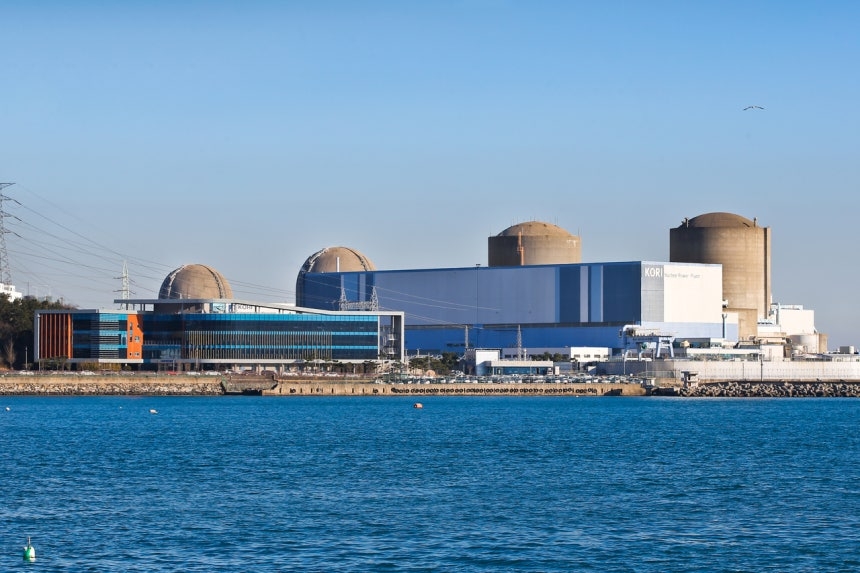
South Korea's two idled Gori nuclear reactors will return to service for another decade after regulators approved a life extension for units that had reached the end of their 40-year design lifespan.
The Nuclear Safety and Security Commission approved the continued operation of Gori Nuclear Power Plant Units 3 and 4 at its 17th meeting of 2026 on Tuesday.
Located in Gijang-gun, Busan, both units are pressurized light-water reactors with an electrical output of 1,025 megawatts each. Unit 3 received its operating license in 1984 and Unit 4 in 1985. The two reactors were shut down in September 2024 and August 2025, respectively, when their 40-year design lifespans expired.
With the approval, Unit 3 may now operate until Sept. 28, 2034, and Unit 4 until Aug. 6, 2035.
Korea Hydro & Nuclear Power submitted a periodic safety assessment report for the continued operation in September 2022 and applied for an operating license amendment in November 2023.
The Korea Institute of Nuclear Safety, an affiliate of the commission, conducted a safety review over roughly four years. The Nuclear Safety Expert Committee also reviewed the findings over six months from March through September and determined that both units met safety standards.
Although the two reactors share an identical design, their operating and maintenance histories differ, so regulators assessed the aging condition of structures and key equipment — as well as their service-life evaluations — separately for each unit.
The commission concluded that sufficient safety margins would be maintained throughout the extended operating period.
A radiological environmental impact assessment found that the maximum radiation exposure during normal operation would be 0.096 millisieverts (mSv), below the regulatory limit of 0.25 mSv. The projected impact of major accidents, including severe accidents, was assessed at a maximum of 103.3 mSv, within the safety standard of 250 mSv.
However, the approval does not mean the reactors will restart immediately. Korea Hydro & Nuclear Power must first carry out equipment replacements and upgrades to ensure safety. The commission must then conduct an on-site inspection to confirm compliance before the reactors can resume operation.
Nuclear Safety and Security Commission Chairman Choi Won-ho said the commission would "thoroughly verify on-site that Korea Hydro & Nuclear Power's equipment improvements are carried out in accordance with safety standards, and take every measure to ensure Gori Units 3 and 4 operate safely."
nbgkoo@heraldcorp.com