Vice chairman of population strategy panel joins Daegu forum to discuss demographic solutions with younger generation
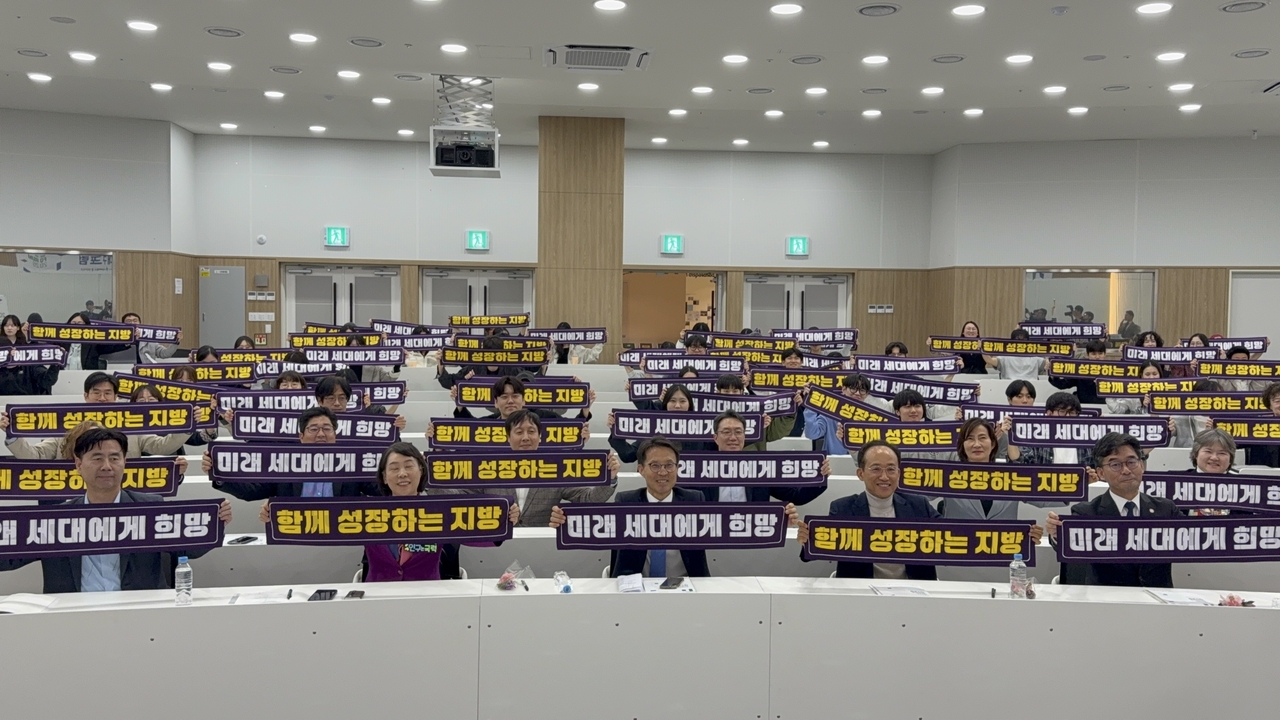
Kim Jin-o, vice chairman of the Presidential Committee on Population Strategy, said Monday that the government will support young people in "stably planning their futures across all stages of life — employment, housing and family formation — so they can settle and grow in the regions of their choice."
Kim made the remarks at a youth roundtable held at Kyungpook National University in Buk-gu, Daegu, under the theme "Youth Speak on the Future of South Korea." He said the core of the national population strategy lies in "building a society where young people can freely choose their own futures."
The roundtable was the first on-the-ground outreach following the Oct. 14 release of the "People's Sovereignty Government Population Vision Roadmap." Kim presided over the session, which was attended by eight local young people representing the region's future generation, including the standing chairperson of the Daegu Metropolitan Youth Policy Network.
Participants — whose backgrounds ranged from social work and broadcast reporting to work-experience programs — shared the challenges they face in employment, housing and settling in the region, and exchanged views on the policy directions they hope to see.
The committee then co-hosted the 2026 Population Issues Daegu Forum with the Korea Institute for Health and Social Affairs, focusing on the theme of building "a city where youth stay and grow."
In the first session, Shin Chang-hwan, a professor in the Department of Social Welfare at Kyungpook National University, presented findings on factors driving youth population outflow from Daegu, while Park Sung-min, the city's special adviser on youth affairs, outlined policy measures tailored to different life stages.
The leading reason young people in Daegu leave the region was employment, cited by 45.8 percent of respondents, followed by the cultural environment at 15.8 percent and housing conditions at 14.5 percent. Some 70 percent of respondents said they would be willing to stay if job opportunities and living conditions improved.
A subsequent case-presentation and panel discussion session brought together two local young people alongside regional experts and business representatives to share a range of ideas on improving settlement conditions and creating quality jobs.
thlee@heraldcorp.com