Investor deposits near year-low at 88 trillion won
Kospi trading volume down nearly 60% from May
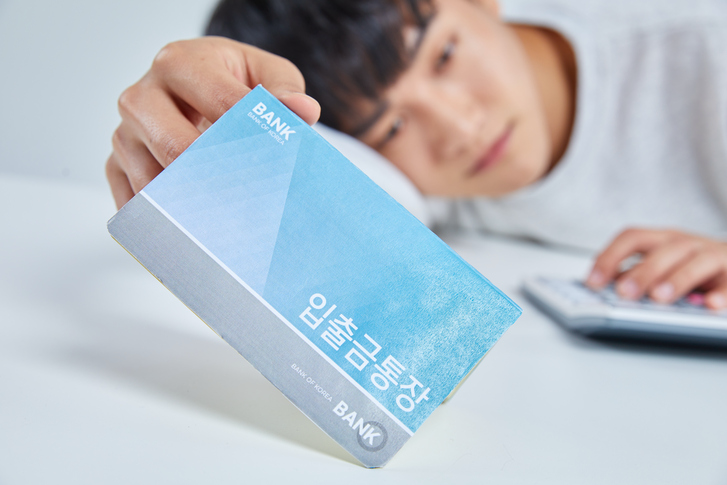
Investor deposits and trading volume in the domestic stock market have fallen to their lowest levels of the year. With foreign investors alternating between buying and selling, analysts say a Kospi rebound will be difficult for now due to a lack of buyers to support the market. Experts are advising a defensive investment strategy centered on dividend stocks and value stocks.
According to the Korea Financial Investment Association, investor deposits stood at 88.68 trillion won ($67 billion) as of Thursday, marking eight consecutive trading days of decline. That is the lowest level since Jan. 13, when deposits hit the year's previous low of 88.05 trillion won.
Investor deposits refer to funds parked in brokerage accounts that investors hold in reserve to purchase equities, bonds and other financial products. Sentiment has soured as the Kospi surrendered the 5,300 level, retreating to territory last seen during the sharp sell-off in July.
Trading volume also hit a year-low. According to Korea Exchange, Kospi trading volume on Thursday came to 14.92 trillion won, the lowest single-day figure recorded this year.
Average daily trading volume has declined every month. After reaching the 50 trillion won range in May and June, average daily Kospi trading volume fell to 36.88 trillion won in July, 25.85 trillion won in August and 21.36 trillion won in September. This month it dropped further to 20.56 trillion won, the lowest level this year — a decline of nearly 60 percent from May's 50.35 trillion won.
Securities analysts expect a Kospi rebound to remain elusive as the buying capacity of major market participants weakens. "Large-scale foreign selling is easing, but there is no buyer to absorb it," said Lee Jae-won, a researcher at Yuanta Securities Korea. "The end of share buybacks, combined with falling trading volume and declining investor deposits, has weakened the market's ability to absorb price shocks."
Na Jeong-hwan, a researcher at NH Investment & Securities, said the recent Kospi decline stems less from deteriorating fundamentals than from the absence of buyers capable of absorbing foreign selling pressure.
The lack of a clear directional commitment from foreign investors adds to the burden. Foreign investors turned net buyers on the Kospi on Oct. 16, purchasing a net 320.4 billion won — their first net buying session in 10 trading days. They have since alternated between buying and selling, and on Friday resumed large-scale net selling.
"With no clear buyer in sight after Samsung Electronics and SK hynix concluded their buyback programs, foreign fund flows are swinging between buying and selling and dictating the direction of the index," said Jo Byeong-hyeon, a researcher at Daol Investment & Securities. "The absence of a dominant buying force to sustain any rebound is a concern."
Experts are recommending a defensive investment posture, citing unresolved external headwinds including rising global oil prices, geopolitical risks and credit concerns surrounding AI companies.
Hwang San-hae, a researcher at LS Securities, said geopolitical uncertainty in France and the Middle East is pressuring discount rates, that AI-cycle stocks are a primary target of the US midterm elections, and that there is insufficient buying capacity to cushion a sharp drop. "Excessive exposure to the AI cycle should be avoided," he said.
He said investors should maintain their allocation to defensive assets rather than simply adding to technology stocks because share prices have fallen sharply.
Kang Hyeon-gi, a researcher at DB Securities, said he leans toward the view that the Kospi will trade in a range at current levels rather than resuming an upward trend. "It would be advisable to diversify into value stocks as well as high-dividend stocks that pay consistent dividends," he said.
moon@heraldcorp.com