Instant in-store exemption scrapped from November
Customs check required before checking luggage
Physical inspection possible if flagged at kiosk
Missing receipt items could void entire refund
Early airport arrival strongly advised
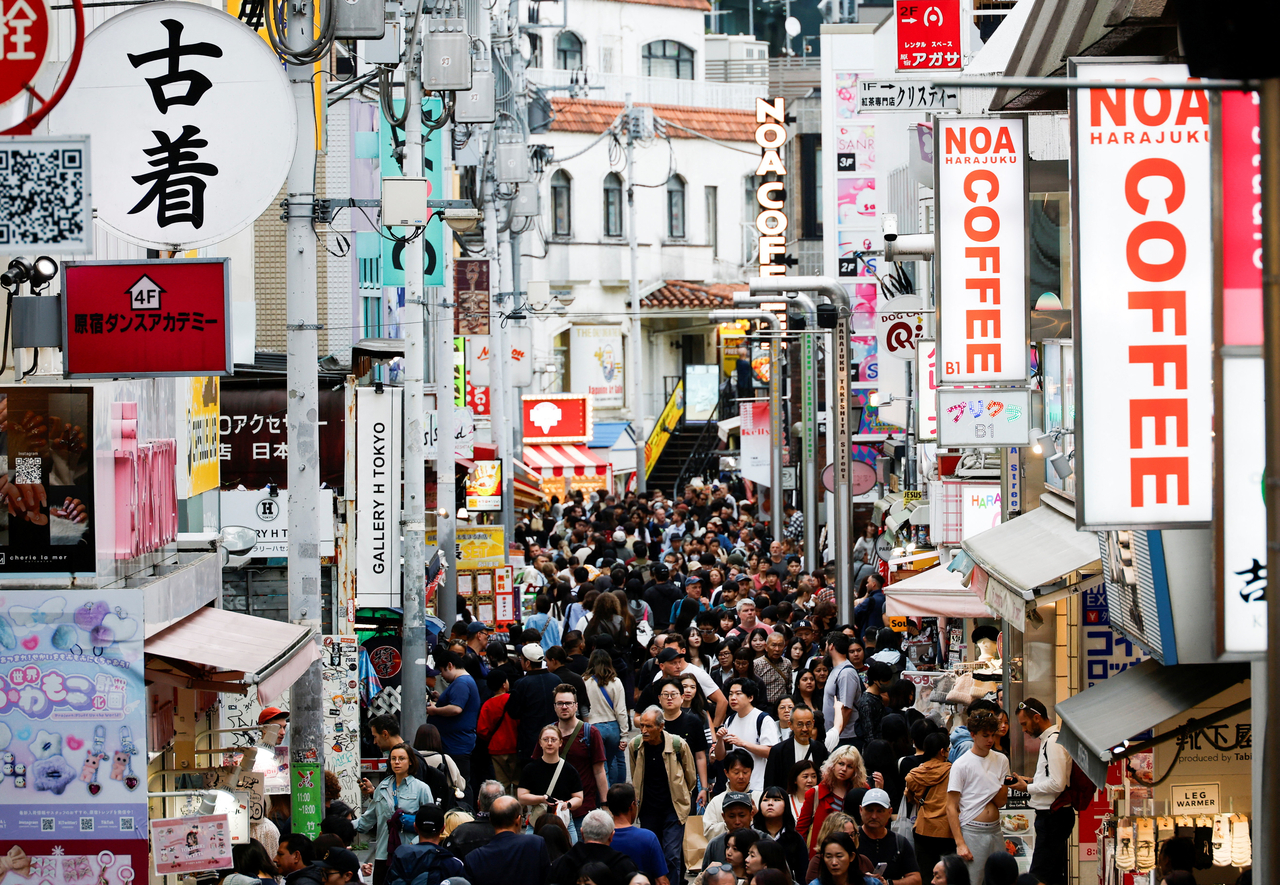
As Korean tourist spending in Japan surges on the back of a weakening yen, the Japanese government is overhauling its consumption tax exemption system for foreign visitors. The existing scheme — which allowed shoppers to receive an instant 10 percent tax exemption at the point of sale — will be abolished. Starting with purchases made Nov. 1, travelers will pay the full price upfront at the store and claim a refund only after customs officials verify that the goods are being taken out of the country upon departure.
The change is expected to bring significant disruption to how visitors to Japan pay, manage their purchases and navigate airport departure procedures.
Japan rolls out post-departure refund system, requiring customs check before baggage drop
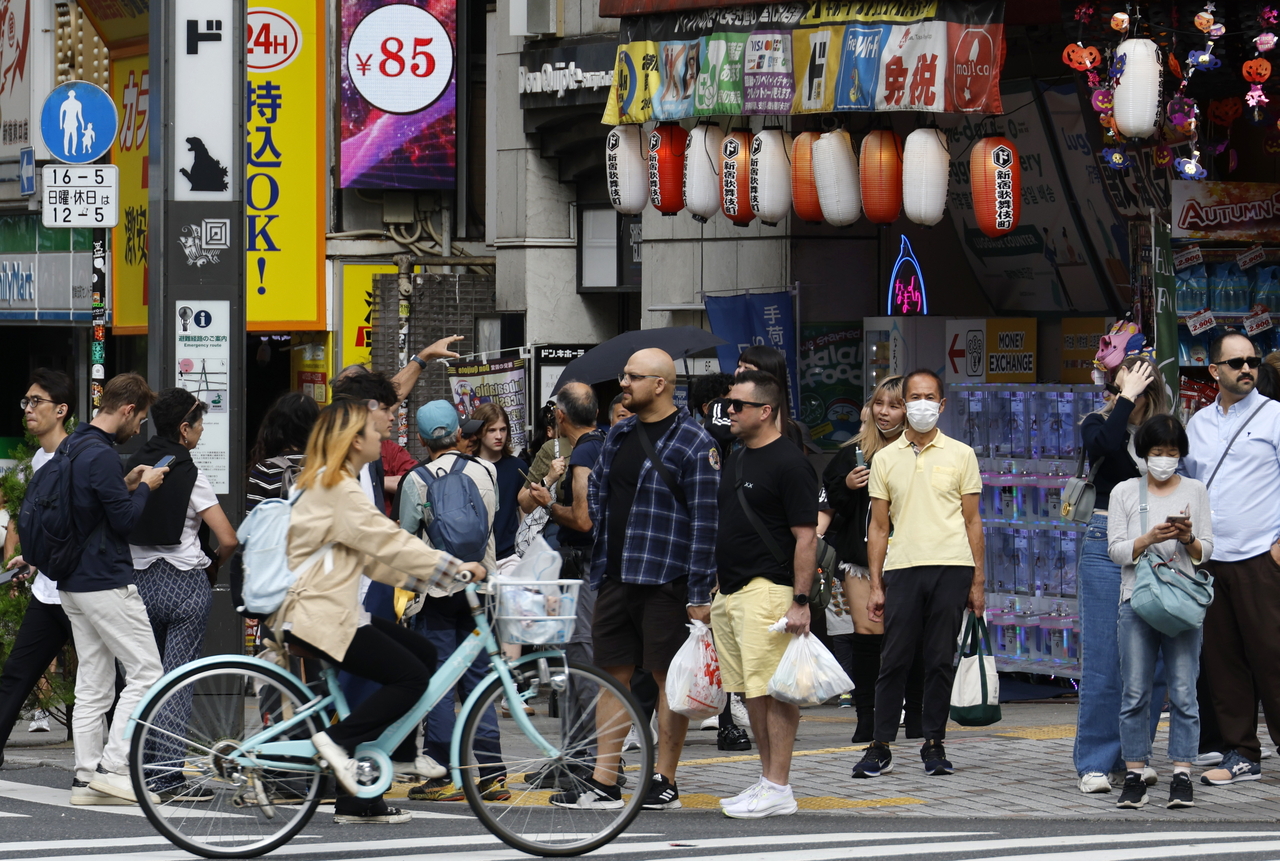
Japan's decision to revamp the tax-free system stems from a drive to stamp out illegal reselling and tax evasion.
Under the old system, foreign visitors could present their passport at any of roughly 64,000 duty-free stores across Japan and receive an immediate 10 percent consumption tax exemption. But purchasing agents and brokers repeatedly exploited the arrangement, buying luxury goods, electronics and pharmaceuticals tax-free and then reselling them on the domestic Japanese market without ever taking them abroad — pocketing the difference illegally. The Japanese government decided to introduce the post-departure refund framework to plug the resulting revenue leakage.
The new tax-free procedure is divided into three stages: payment, export verification and refund. First, travelers pay the full price of goods — including consumption tax — at the store, then register their passport details and the credit card to which the refund will be returned.
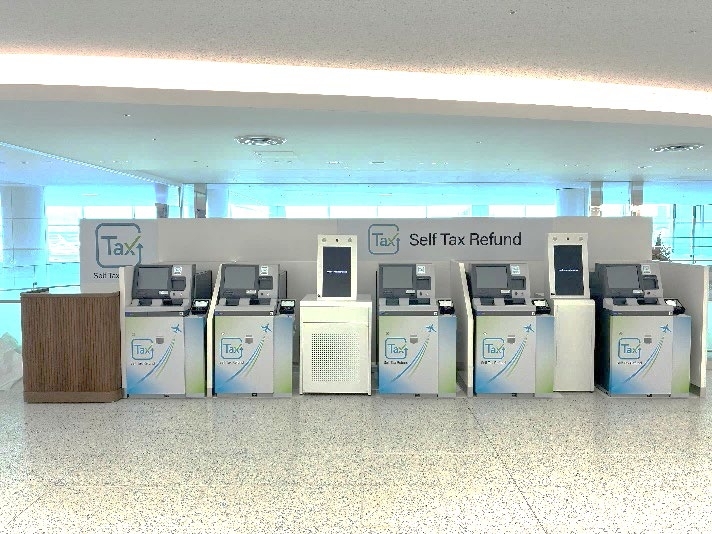
The second stage — export verification — takes place at the airport on the day of departure. From Nov. 1, travelers seeking a refund must scan their passport at a dedicated tax-refund kiosk in the public area of the airport before dropping off checked luggage at the airline counter. A green result on the screen means the traveler can proceed directly to baggage check-in with no further steps. A red result requires a visit to the customs inspection counter, where staff will physically verify the purchased items against the receipts.
Travelers who check their bags at the airline counter first — as was common under the old system — will be unable to present the goods at customs and will forfeit their refund. Since retrieving already-checked luggage is difficult, shoppers with large purchases should plan from the moment they pack to keep tax-refund items accessible for inspection.
Customs checks are conducted strictly on a per-receipt basis, which is another critical point. If even one item listed on a receipt is missing or has visibly been consumed during the trip, the refund for every item on that receipt will be denied. Travelers who open and use consumables — food, medicine or cosmetics — while still in Japan risk losing their entire refund for that purchase. The safest strategy is to separate items intended for personal use in Japan from those being taken home and pay for them on separate receipts from the outset.
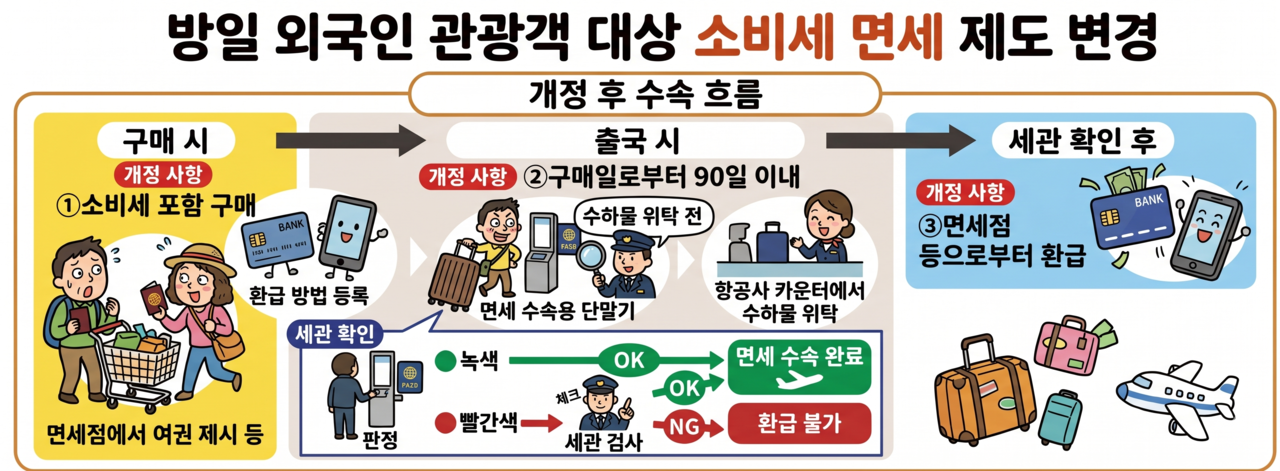
The customs verification window is 90 days from the date of purchase. For high-value items priced at 1 million yen ($6,370) or more before tax, customs may request an appraisal certificate or warranty, so travelers should keep any such documents together with their receipts. Duty-free goods that clear the verification process but are not actually taken out of Japan can result in back-taxation of the exempted amount as well as criminal penalties.
Several measures have also been introduced to make shopping more convenient. The distinction between general goods and consumables will be eliminated, meaning any tax-exempt purchases made at the same store on the same day will qualify for a refund as long as the pre-tax total reaches 5,000 yen or more. The requirement to seal consumables in tamper-evident packaging before departure and the per-person, per-day purchase cap of 500,000 yen will both be scrapped. Travelers connecting from a domestic Japanese flight to an international one need only complete customs verification at the final airport from which they leave Japan.
Smartphone web-based processing will run alongside the kiosks to ease queues. The Japanese government has added a tax-refund function to Visit Japan Web, its online entry and quarantine service. Travelers departing from any of seven major airports — Narita, Haneda, Kansai, Chubu, New Chitose, Fukuoka and Naha — can connect to dedicated Wi-Fi zones in the international departure lobbies and complete the customs verification process on their own phones instead of using a kiosk.
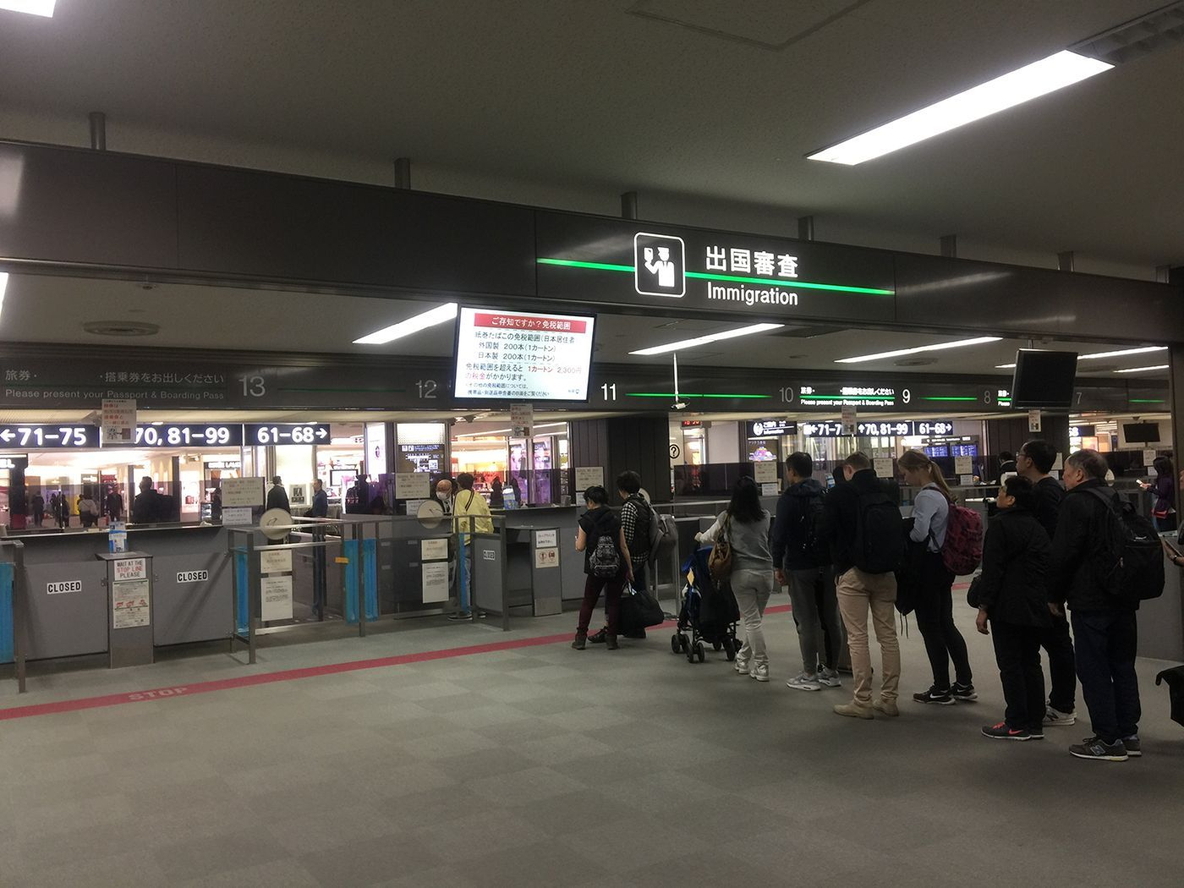
Japanese authorities warn of early congestion, urge travelers to arrive at airports sooner
Japan's shift to a post-departure refund system is already reshaping the local tax-refund services industry. Domestic operators that have long relied on in-store instant exemptions have little experience running large-scale airport-based refund operations, prompting a wave of inquiries to global firms that have built up refund infrastructure expertise in Europe and elsewhere.
A spokesperson for Global Blue, the world's largest tax-refund services company, said partnership requests from Japanese companies had jumped ahead of the system change, adding that the firm was accelerating staff hiring at its Japan unit and upgrading its refund processing systems.
The sweeping policy overhaul comes just as shopping spending in Japan surges on the back of the weak yen, fueling growing anxiety among Korean travelers. According to the Bank of Korea's economic statistics system, the monthly average won-yen exchange rate per 100 yen fell from around 950 won in June to roughly 840 won in October, where it has been fluctuating.

According to the Japan Tourism Agency, total travel spending by Korean visitors in the third quarter reached 293.8 billion yen ($1.87 billion), a 45.8 percent jump from the same period a year earlier. Analysts attribute the surge largely to the weak yen, which has in effect put Japanese goods on a permanent discount for Korean shoppers.
There are concerns, however, that more cumbersome tax-refund procedures could dampen the appetite to shop. Observers warn that long queues at export verification kiosks could leave travelers scrambling to make their flights, and that some visitors — particularly those seeking small refunds — may simply give up on claiming a refund rather than navigate the added complexity.
An official at one tax-refund company said that if the switch to the post-departure system takes effect Nov. 1 as planned, system failures and staff shortages will likely cause confusion in the early days. "When large numbers of foreign visitors all rush to the kiosks and customs counters at once, severe bottlenecks are inevitable," the official said, adding that Japan's appeal as a shopping destination could take a short-term hit as a result.
terry@heraldcorp.com