Compensation ceiling raised from 80% to 90%; first reporters eligible for 100%
Quarantine volume more than doubled in a decade, prompting new animal quarantine officer system
Legal basis established for biosecurity support center operating costs; law takes effect next April
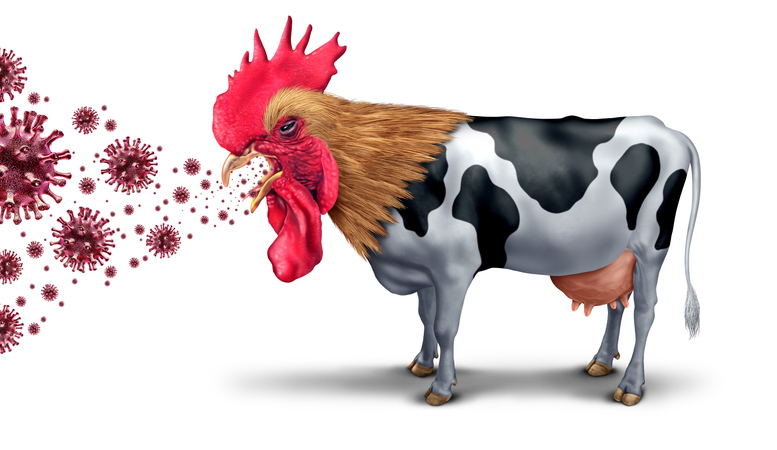
Farms that are the first to report major livestock diseases such as foot-and-mouth disease or highly pathogenic avian influenza (AI) will be eligible to receive compensation of up to 100 percent of their livestock's assessed value for culling and other disposal measures. Even farms that violated biosecurity obligations will see their final compensation ceiling raised from 80 percent to 90 percent of assessed value, provided their active biosecurity efforts are recognized and their penalty deductions are reduced.
The Ministry of Agriculture, Food and Rural Affairs announced Monday that a revised Livestock Disease Prevention Act incorporating these changes will be promulgated Tuesday. The revised law takes effect six months after promulgation, in April next year.
The revision focuses on strengthening compensation for farms affected by livestock disease outbreaks to encourage voluntary reporting and active participation in disease control. It also lays the institutional groundwork for expanding border quarantine staffing and reinforcing field biosecurity systems.
Under the current system, farms that violate biosecurity obligations face reduced compensation. While reductions can be partially offset when a farm is recognized for being the first to report or for making active biosecurity efforts, the final payout cannot exceed 80 percent of the livestock's assessed value. The government will raise that ceiling to 90 percent.
Farms that are the first to report a major livestock disease will be eligible for compensation of up to 100 percent of assessed value. Qualifying diseases include foot-and-mouth disease, highly pathogenic AI and African swine fever (ASF). Specific qualifying diseases and criteria for first-reporter status will be defined in subordinate regulations.
The ministry said the expanded compensation is intended to encourage farms to report outbreaks quickly, supporting early detection and containment of livestock diseases.
The revision also introduces a new "animal quarantine officer" system to assist with border quarantine operations. The ministry said veterinarian staffing for quarantine duties has not kept pace with a sharp rise in demand driven by growing international trade in animals and livestock products and increased overseas travel.
The volume of animal and livestock product quarantine inspections more than doubled over the past decade, rising from 497,000 cases in 2015 to about 1.04 million last year.
The Animal and Plant Quarantine Agency will be able to hire and deploy animal quarantine officers to support the work of veterinary quarantine inspectors.
Working under the supervision of veterinary quarantine inspectors, animal quarantine officers will handle livestock product inspections and entry and exit reporting and disinfection procedures for those in the livestock industry, as defined by ministerial ordinance. Quarantine tasks requiring specialized veterinary judgment will continue to be handled by veterinary quarantine inspectors.
The ministry said the new system will reduce the workload on quarantine inspectors and allow veterinary professionals to focus on specialized quarantine duties.
The legal basis for supporting the Korea Animal Health Products Association, which handles field biosecurity operations, will also be expanded. Previously, the state and local governments could only fund costs directly tied to statutory operations; going forward, they will also be able to cover the association's general operating expenses.
The law will also explicitly codify biosecurity obligations for livestock hygiene inspectors affiliated with the association when traveling abroad. Those who visit or transit through countries with active livestock disease outbreaks will be required to report their travel and undergo disinfection and quarantine procedures.
The revised law takes effect six months after promulgation. The higher compensation ceiling will apply to cases in which grounds for compensation arise after the law enters into force.
The ministry plans to establish subordinate regulations before the law takes effect, covering compensation payment standards, first-reporter procedures, and the qualifications and scope of duties for animal quarantine officers.
"This revision allows us to raise the compensation ceiling for livestock disposal and strengthen support for farms that actively participate in disease control," said Lee Dong-sik, director general for biosecurity policy at the Ministry of Agriculture, Food and Rural Affairs. "We will also work to enhance border quarantine and field biosecurity capabilities through the introduction of the animal quarantine officer system and the improved legal framework for supporting the Korea Animal Health Products Association."
adastra@heraldcorp.com