Phase 2 projects underway in Egypt, Cambodia, Mozambique, Azerbaijan and Paraguay
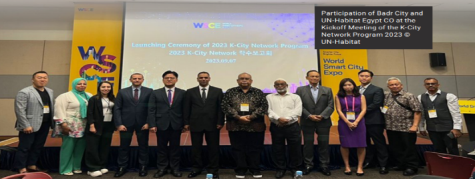
South Korea's Ministry of Land, Infrastructure and Transport announced Monday that it shared the results of its urban policy support work in developing countries and discussed future cooperation with UN-Habitat at the K-NUPP Expert Group Meeting, held Oct. 13-15 at the UN Office in Nairobi, Kenya.
K-NUPP, short for National Urban Policy Program, is a flagship international cooperation initiative that the Ministry of Land, Infrastructure and Transport and UN-Habitat have jointly run since 2016 to help developing countries formulate and implement national urban policies. Under Phase 1, the program supported urban policy development and improvements to drinking water supply and sanitation in Iran, Myanmar and Nigeria. Phase 2 is now underway in five countries: Egypt, Cambodia, Mozambique, Azerbaijan and Paraguay.
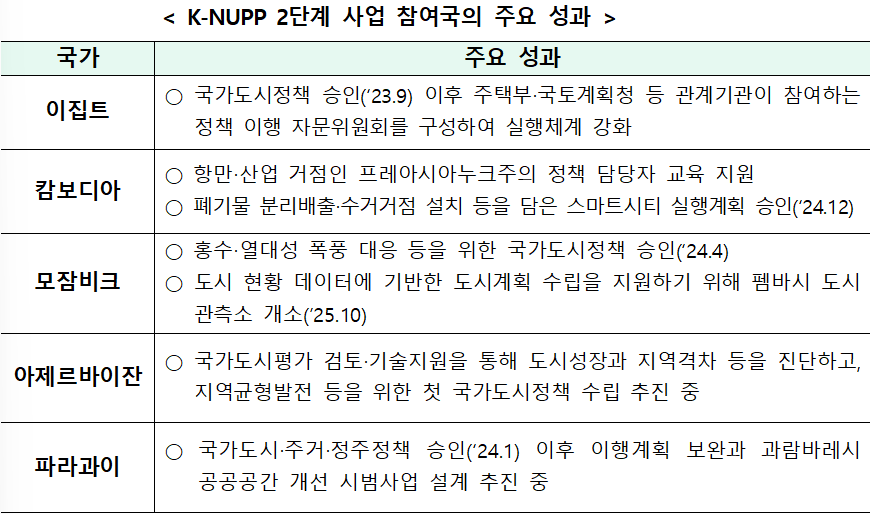
The Nairobi meeting included a midterm review of Phase 2 and an assessment of progress in each participating country. Achievements shared at the meeting included the formation of a policy implementation advisory committee in Egypt, approval of a smart city action plan in Cambodia, and the opening of an urban observatory in Mozambique.
Building on these results, the ministry and UN-Habitat plan to launch Phase 3 in 2028, with a focus on improving housing conditions, addressing climate change and leveraging urban data. The ministry also plans to work with the Ministry of Foreign Affairs and local diplomatic missions to build a network capable of responding promptly to on-the-ground needs and challenges throughout the planning and implementation stages.
The achievements of K-NUPP's first decade and South Korea's urban policy experience are also set to be shared with the international community at the 14th World Urban Forum, scheduled to be held in Mexico City in 2028.
"We will actively support developing countries in formulating and implementing urban policies by sharing the national urban policy experience and local government know-how that Korea has accumulated over the course of its development," said Im Wol-si, director of the Urban Policy Division at the Ministry of Land, Infrastructure and Transport. "We will fulfill a responsible role befitting Korea's economic standing and national stature, and continue to support developing countries in building self-sustaining urban policy capacity."
smh@heraldcorp.com