An appeals court has ruled that authorities acted lawfully when they blocked the installation of stray cat feeding stations near a migratory bird habitat.
The Seoul High Court's Administrative Division 4-2, presided over by Judges Lee Gwang-man, Moon Gwang-seop and Park Yeon-wook, ruled against the Korea Animal Abuse Prevention Association in its suit against the head of the Cultural Heritage Administration, which had refused to permit changes to a nationally designated natural heritage site. The ruling upheld the first-instance decision.
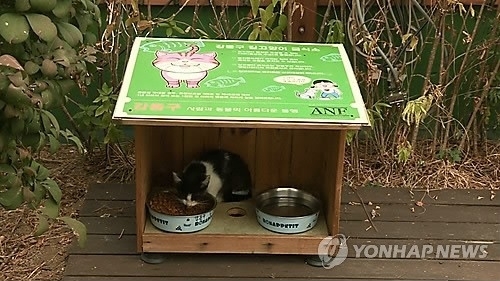
The association had installed and operated stray cat feeding stations on Busan's Eulsukdo Island together with local authorities since July 2016. Eulsukdo is South Korea's largest migratory bird habitat and is designated as a natural monument.
Seven years later, in October 2023, a complaint was filed through the government's public petition portal alleging that the feeding stations near Eulsukdo were causing the stray cat population to grow, raising concerns about damage to the local ecosystem.
In response, the Cultural Heritage Administration notified the relevant local government to remove unauthorized cat feeding stations within the migratory bird habitat. The local government demolished 15 stations it had directly installed and asked the association to do the same with its own.
The association, however, applied to the Cultural Heritage Administration in February 2024 for permission to install additional feeding stations, seeking approval for alterations to a nationally designated cultural heritage site. Under the Cultural Heritage Protection Act, any act that changes the condition of a nationally designated cultural property or risks affecting its preservation requires prior government approval.
After an on-site investigation, the Cultural Heritage Administration rejected the application, citing concerns that it could negatively affect preservation of the natural heritage site. The association then filed suit challenging the decision.
During the trial, the association argued that the feeding stations had no impact on the conservation and management of the migratory bird habitat. It said the stray cat population had fallen from about 200 to 60 over the eight years the stations had been in operation, and that cats had been attacking migratory birds less frequently. The association contended that removing the stations would cause cats to attack birds more often, harming the ecosystem.
The court sided with the Cultural Heritage Administration, citing overseas research and expert investigation reports indicating that the feeding stations could drive a rise in the stray cat population and increase the risk of cats preying on migratory birds.
The first-instance court said it was difficult to attribute the decline in the stray cat population on Eulsukdo to the operation of the feeding stations. It found it more reasonable to conclude that the decrease reflected cat neutering programs carried out with local government support during the same period.
The appeals court echoed that reasoning, saying that ecosystems such as the migratory bird habitat on Eulsukdo involve complex interactions among countless organisms and environmental factors, meaning even small changes can have significant long-term effects — and that once damaged, restoration requires enormous cost and time. "A cautious, preventive approach is needed when assessing the potential impact on an ecosystem," the court said.
123@heraldcorp.com