Following a youth-participation drill, the district pushes ahead with a nighttime field exercise in the Sugung-dong area — testing response systems built on cooperation among police, volunteer patrols and residents
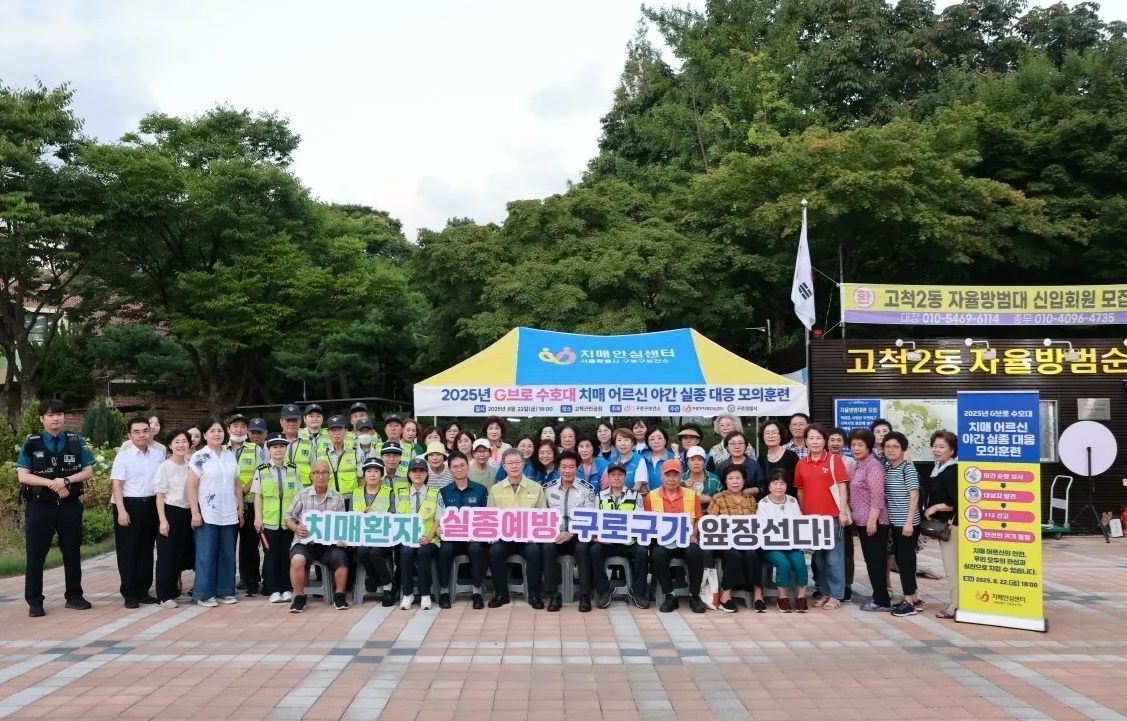
The Guro-gu Dementia Care Center will hold a nighttime missing-person simulation drill Wednesday as part of its G-Bro Project, targeting scenarios in which elderly residents with dementia go missing after dark, the center said. The exercise will take place around Gungdong Ecological Park.
The drill is designed to test coordination among community partner organizations and strengthen field-response capabilities for conducting rapid searches and safely returning missing residents to their homes.
The G-Bro Project is a public-private-police partnership involving police, volunteer neighborhood-watch groups, schools and local residents, with the goal of building a community safety net to prevent dementia patients from going missing and ensure a swift response when they do. Guro-gu became the first district in the country to conduct a nighttime missing-person simulation drill last year and is continuing the field-focused exercise this year on the same cooperative framework.
Participants in Wednesday's drill will include the Guro Police Station and its precinct units, the Sugung-dong Community Service Center, the Sugung-dong Volunteer Patrol and the Dementia Overcome Volunteer Corps. Stand-in actors will play the role of missing elderly residents to recreate realistic scenarios, and the full response sequence — from the initial missing-person report through the search, discovery, protection and police handoff — will be reviewed. Particular attention will be paid to the challenges of nighttime searches, with plans to reinforce role assignments among participating agencies, on-site coordination and rapid information sharing.
Earlier, the center held a youth-participation missing-person simulation drill on Oct. 8 for first-year students at Wooshin Middle School. Students took part in a range of hands-on activities — starting with education on dementia and missing-person response, then moving on to searching for information about a missing elderly resident, a dementia-awareness quiz and writing up situational response plans — learning about the importance of preventing elderly dementia patients from going missing and their own role as members of the community.
The center plans to link the youth education program with field drills involving community partner organizations, broadening interest and participation across generations while continuously strengthening the cooperative foundation that allows the community to respond together when an elderly dementia patient goes missing.
"Preventing elderly dementia patients from going missing and ensuring they return home safely requires the attention and cooperation of the entire community," Guro-gu District Mayor Jang In-hong said. "We will continue to work closely with police, volunteer patrols and local residents to build a safe community where elderly residents with dementia and their families can live with peace of mind."
seouldream01@heraldcorp.com