Chinese Communist Party holds 5th plenum in Beijing from Monday through Thursday
Meeting to focus on party discipline; massive leadership reshuffle expected to be formalized
US think tank projects record-low attendance, with only 291 of 376 central committee members present
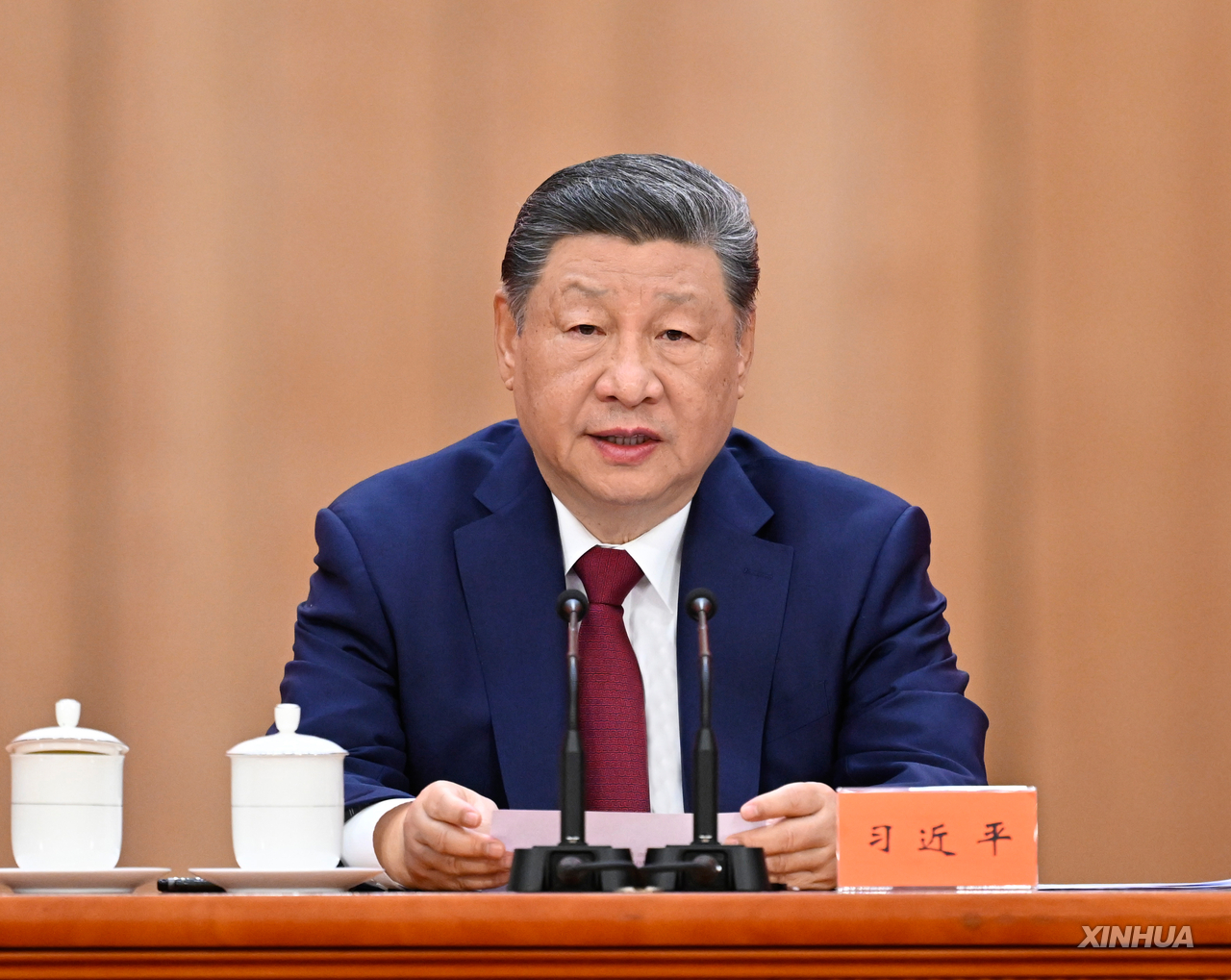
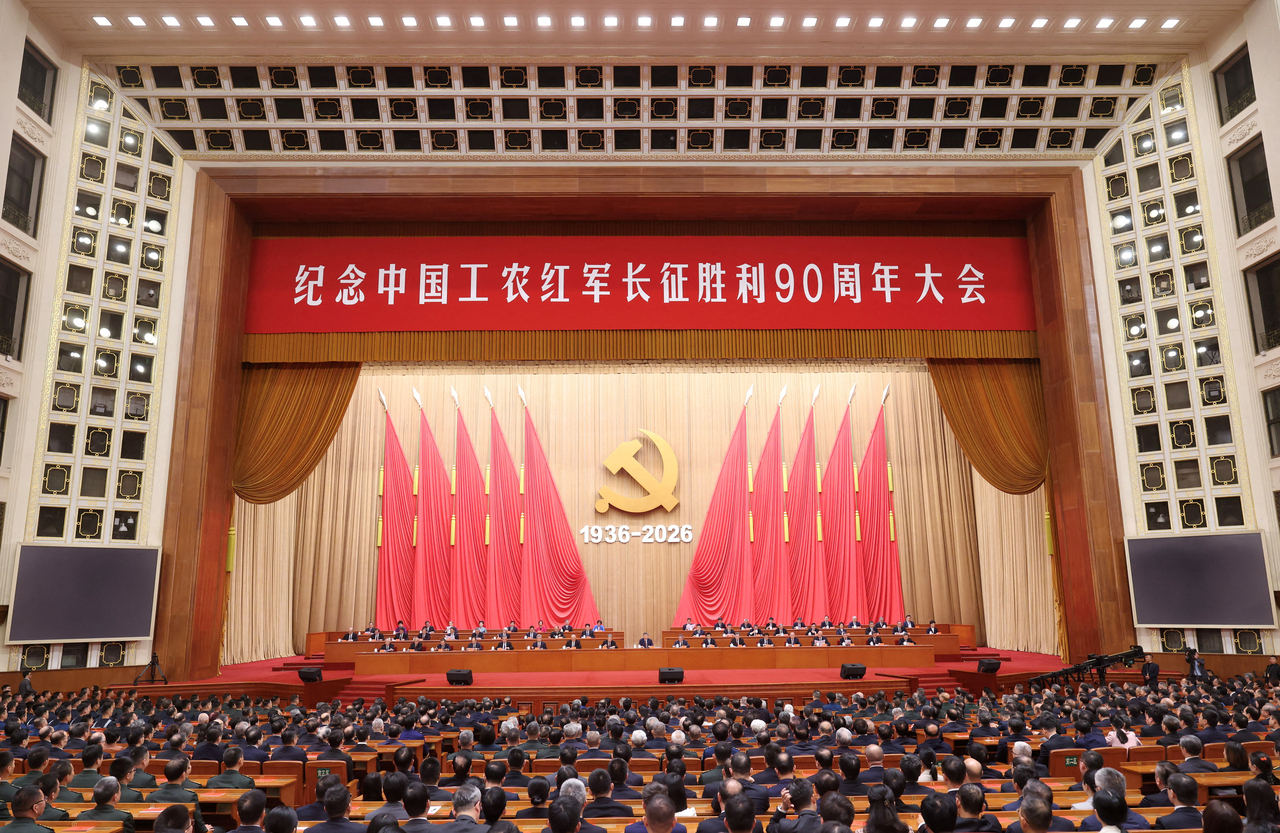
The Chinese Communist Party opened the fifth plenary session of its 20th Central Committee on Monday (local time), kicking off a four-day meeting in Beijing ahead of next year's party congress, where Xi Jinping is expected to seek a fourth term as general secretary. The session is expected to focus heavily on "comprehensively and strictly governing the party" — a signature Xi-era discipline campaign — while a large-scale leadership reshuffle could also be formally announced.
The plenum runs through Thursday.
The party typically uses fifth plenary sessions to deliberate on five-year plans for economic and social development. However, since the 15th Five-Year Plan's basic direction was already set at last year's fourth plenum, analysts expect this session to center on intraparty discipline and cadre oversight rather than economic policy.
The CCP Politburo confirmed the plenum's schedule on Sept. 21, announcing that delegates would review a document titled "Decision of the CCP Central Committee on Several Major Issues in Continuously Advancing the Comprehensive and Strict Governance of the Party."
Xi reinforced that theme in a speech Thursday at a ceremony marking the 90th anniversary of the Red Army's Long March victory, saying the party must "uphold party leadership and strengthen party building" and "consistently advance the comprehensive and strict governance of the party."
The Chinese-language outlet Lianhe Zaobao noted that when the plenum's "comprehensive and strict governance" agenda was first made public, many observers expected it to focus narrowly on anti-corruption efforts — but the actual scope may be considerably broader.
The paper added that the party appears intent on comprehensively strengthening oversight and constraints on cadres' performance of duties, and that evaluation mechanisms are likely to be made more granular.
Lianhe Zaobao also cited expert opinion that Xi's Long March speech "used historical narrative to lay the groundwork for the fifth plenum."
The plenum is also expected to produce additional personnel actions targeting senior officials removed on corruption charges and military figures caught up in an intensifying anti-graft campaign.
The South China Morning Post said the session is likely to formalize "one of the most sweeping high-level leadership reshuffles in the history of modern Chinese politics."
According to the Post's tally, about 20 of the 205 full Central Committee members and roughly seven of the 171 alternate members are under investigation on corruption charges and awaiting expulsion from the committee.
The paper also noted that around 35 full and alternate members who were absent from last year's fourth plenum have continued to keep a low profile, raising the possibility that their political standing has come into question.
The Asia Society Policy Institute, a US think tank, projected that only 291 of the 376 full and alternate Central Committee members would attend — an attendance rate of 77 percent, which would fall below 80 percent and set a record low. The analysis estimated that 44 full members and 41 alternate members would be absent.
The previous record low was set at last year's fourth plenum, when 315 members attended for an attendance rate of 83.8 percent.
The Post further noted that the plenum is expected to lay the groundwork for filling hundreds of key positions ahead of next year's party congress, with analysts watching for possible shifts in the composition of China's leadership — including a greater role for officials born in the 1970s.
The party has long applied an informal retirement norm of around age 65 for Central Committee members at party congresses. Under that standard, roughly two-thirds of the current Central Committee could be up for replacement at next year's congress. Observers say that could significantly raise the share of so-called "seventh-generation" cadres — those born in the late 1960s and 1970s — who currently make up only about 8 percent of the central leadership.
mokiya@heraldcorp.com