As renting a studio apartment in Tokyo now costs close to 1 million won ($755) a month, Japanese companies are reviving employee dormitories and company housing. Some large corporations are offering new hires dormitories equipped with dining halls and saunas for as little as 130,000 won a month. With soaring housing costs adding to the financial burden on young workers entering the job market, companies are competing to attract talent by offering residential support.
Corporate housing and dormitories in Japan have returned to growth for the first time in about 30 years, according to the Nikkei and other Japanese media outlets. Companies that had previously shed company housing to cut costs and streamline operations are now expanding residential welfare programs to recruit young employees and encourage longer tenures.
The trend is spreading beyond large corporations to small and medium-sized enterprises. Inquiries about introducing company housing have risen more than fivefold compared with three years ago, signaling that residential support is emerging as a new competitive edge in hiring.
The primary driver behind the push to expand company housing is a sharp rise in housing costs.
According to Japanese real estate information firm At Home, the average monthly asking rent for a single-person rental apartment of 30 square meters or less in Tokyo's 23 wards stood at 114,339 yen ($730) — about 960,000 won — in August, the most recent month surveyed.
That was up 10 percent from the same month a year earlier and the highest level since the survey began in 2015.
Compared with the average monthly rent of 88,440 yen in August 2021, rents have climbed roughly 29 percent over five years. Young workers starting their careers in Tokyo now face spending a significant portion of their salary on housing.
Companies are easing that burden by offering affordable dormitories. A leading example is Itochu Corp., one of Japan's major general trading companies.
The monthly fee at the Hiyoshi Dormitory the company operates in Yokohama, Kanagawa Prefecture, is 15,000 yen (about 130,000 won), utilities included.
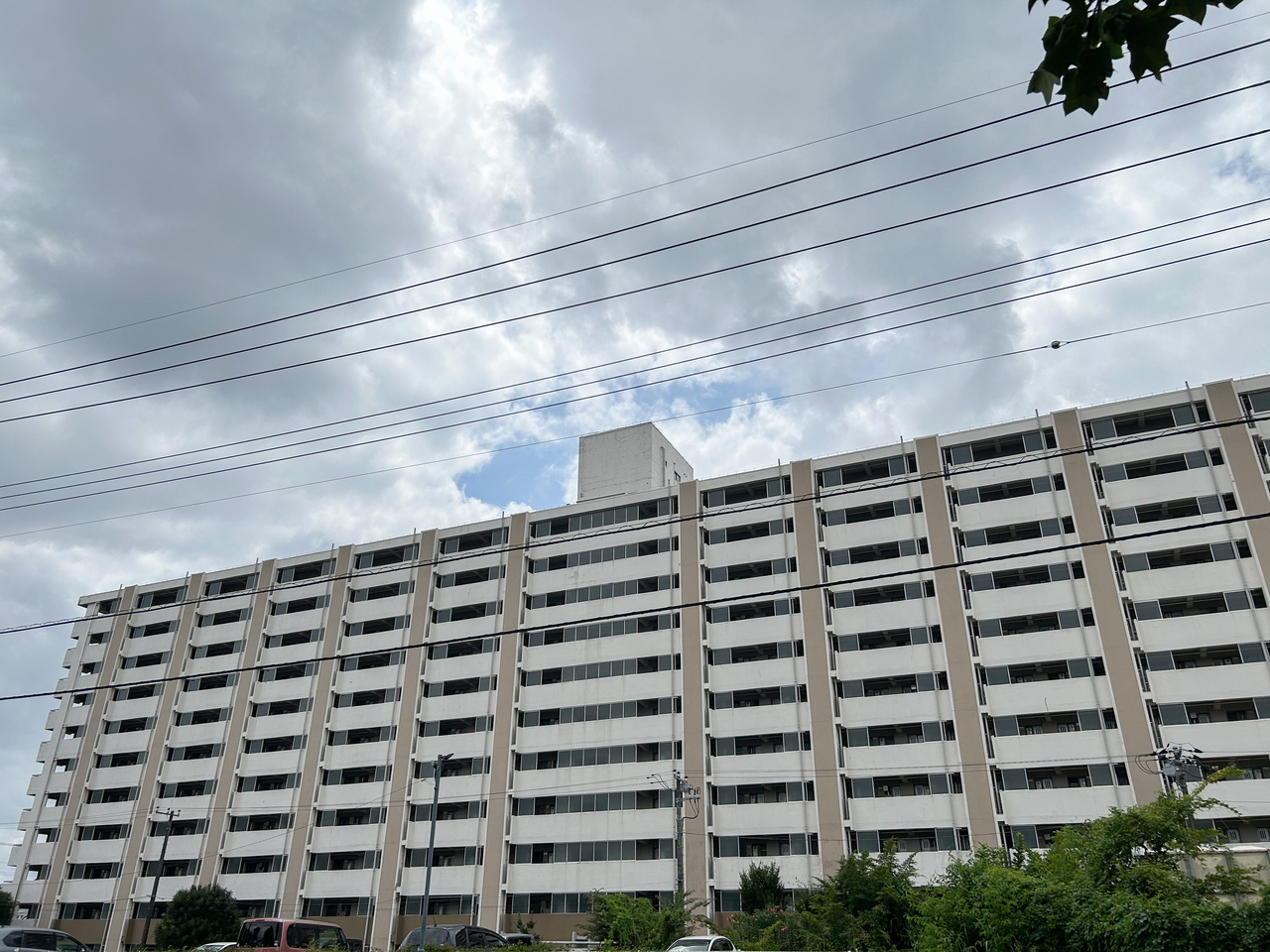
Located about a three-minute walk from a nearby train station, the facility features a dining hall, a large communal bath with a sauna, a shared kitchen and a multipurpose room. Breakfast and dinner are served in the dining hall.
Each floor also has a common area where employees can chat or study.
Itochu consolidated its dormitories for young male employees into the Hiyoshi facility in 2018. Last year it opened a separate dormitory for female employees, and in March it added a single-occupancy dormitory for clerical staff.
The company requires new hires to live in the dormitory in principle. Beyond cutting housing costs, the arrangement is designed to help employees from different departments and age groups build relationships within the organization.
In effect, the company is transforming its dormitories from simple accommodation into spaces for developing talent.
Nippon Life Insurance is also strengthening its residential welfare offerings.
In 2023 it opened a large single-occupancy dormitory and set the monthly fee at roughly one-third of comparable rents in the surrounding area. The facility, located in the Shin-Urayasu area of the Greater Tokyo metropolitan region, has about 200 rooms and operates a shared lounge where employees can socialize.
Company-provided housing in Japan had been declining for a long time.
After the collapse of the bubble economy in the 1990s, companies sold off or shut down existing housing and dormitories as they pursued cost cuts and asset efficiency.
But rising housing costs and intensifying competition for workers are now reversing that trend.
According to Japan's Ministry of Internal Affairs and Communications housing and land survey, conducted every five years, the number of company-owned employee housing units nationwide reached about 1.302 million in 2023 — an increase from the previous survey and the first such rise in roughly 30 years.
Rental-type company housing — where companies lease units from the open market and provide them to employees — is also growing rapidly. The number of such units managed by Relocation Japan, a Japanese housing management firm, surpassed 300,000 as of the end of June, up 25 percent from three years ago.
Particularly notable is that 74.1 percent of new contracts signed between April and August this year were for small units — a single room or a one-bedroom apartment with a living and dining area. That points to demand for company housing being concentrated among young and single employees.
Inquiries from small and medium-sized enterprises are also surging. New inquiries received by Relocation Japan rose 5.6 times compared with fiscal 2023, with about 70 percent of the inquiring companies having fewer than 500 employees.
To meet growing demand, the firm launched a new service in June to help small and medium-sized enterprises introduce rental-type company housing.
Kyoritsu Maintenance, a corporate dormitory management company, also said new inquiries in the January–August period this year rose 15 percent from the same period a year earlier. Startups as well as large corporations are increasingly exploring dormitory options.
Companies looking to recruit young workers from regional areas to workplaces in the Greater Tokyo metropolitan region have shown particularly strong interest.
Finding work in Tokyo means covering monthly rent, a security deposit and moving costs, but when a company provides housing, those upfront burdens are significantly reduced.
Company housing can also offer tax advantages for both employers and employees. In Japan, providing qualifying company housing to employees can reduce the payroll tax burden on residential support — potentially more beneficial to workers in real terms than paying a housing allowance in cash.
Kawashima Yumiko, editor of Toda Campus, a job-search service run by Benesse i-Career, told the Nikkei that creating a welfare environment that eases the financial burden on young employees is becoming increasingly important for attracting and retaining talent.
As company housing regains attention, the way companies structure their residential support is also changing.
Japanese companies once commonly operated large housing complexes where employees could live with their families. Recently, investment has shifted toward smaller units for young single workers and new hires.
Even within the same company, a pattern is emerging of maintaining single-occupancy dormitories while scaling back family housing. East Japan Railway (JR East) has decided in principle to abolish its family housing while keeping its single-occupancy dormitories.
Occupancy at some previously popular family housing units had fallen to about one-third, making them inefficient to operate.
JR East plans to develop the sites of its existing family housing for sale or rental housing.
Rather than expanding company housing across the board, companies are restructuring the types of housing they offer to match the actual needs of their employees.
Some companies are adding new functions to their dormitories. Itochu's Hiyoshi Dormitory is designed to double as a temporary work facility in the event of a disaster.
The facility is stocked with emergency power supplies capable of running for three days and emergency food rations sufficient for about 450 people for three days. It also has a conference room that can accommodate about 40 people working at once.
A shared dormitory model for startups has also emerged. In Tokyo, multiple companies lease rooms within a single building to house their employees — a solution for smaller firms that cannot set up their own dedicated dormitories.
The facilities are designed with shared kitchens, laundry rooms and communal spaces so that employees from different companies can live together.
Companies are using these facilities to provide housing for workers recruited from regional areas or overseas.
As competition for talent intensifies, housing support is establishing itself alongside salary and performance bonuses as a key factor in hiring.
With housing costs rising, particularly in Tokyo, companies are strengthening dormitory and company housing support to ease the financial burden on employees and foster connections within their organizations. The expansion of company housing in Japan illustrates how rising housing costs are reshaping labor market dynamics and corporate talent strategies — and as the housing burden on young workers grows, the ability to offer affordable, stable accommodation is set to become an increasingly important competitive advantage.
rainbow@heraldcorp.com