Ages 13–34 average 4.5 hours of daily audio listening
'About 90% of college students walk around with headphones on'
Experts warn habit blocks social interaction, weakens focus
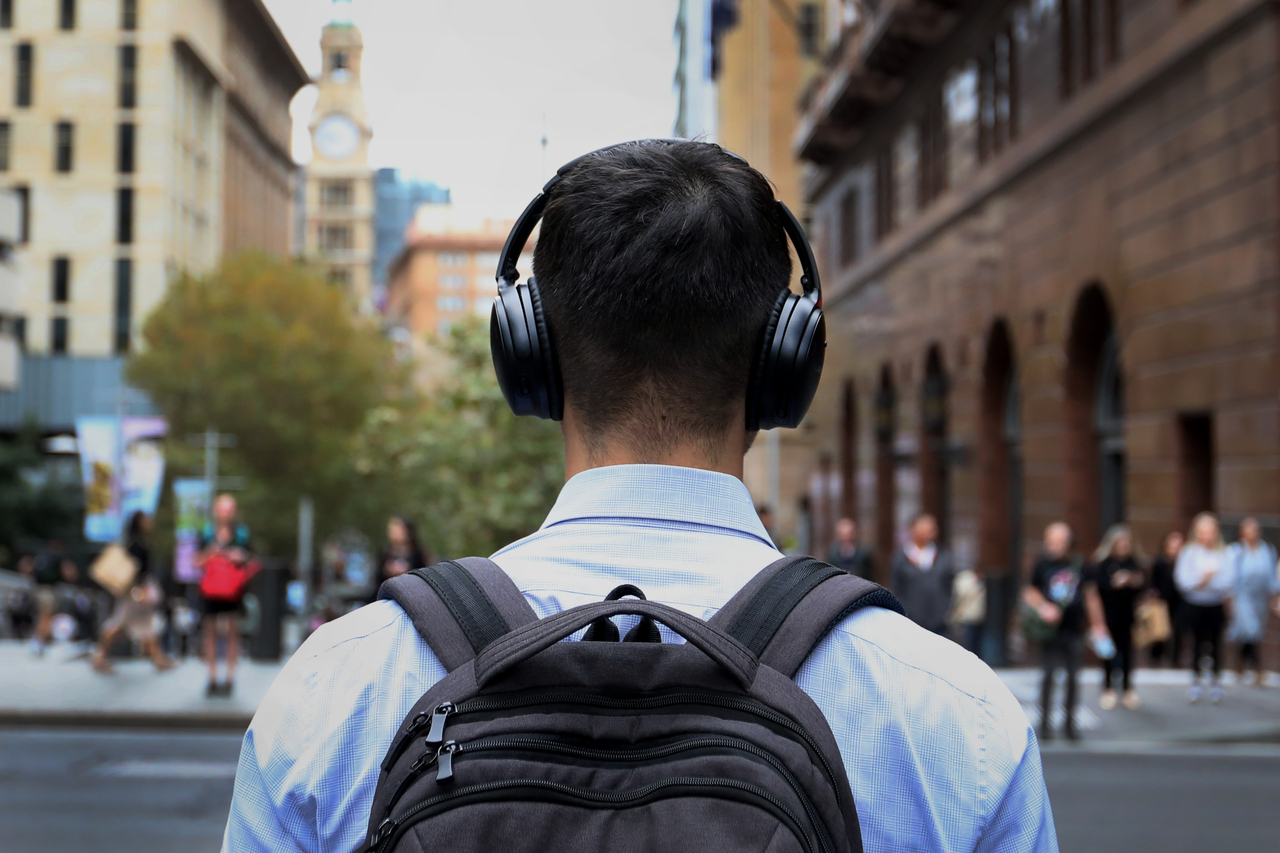
As more young people make headphones a fixture of daily life, experts are warning that excessive audio consumption may be taking a toll on their social relationships and ability to concentrate.
CNN recently reported that headphone use has become routine among Generation Z — those born in the late 1990s to early 2010s — and that the habit may be reducing opportunities for real-world interaction while weakening people's capacity to regulate their own thoughts and emotions.
Data on how long young people spend with headphones on points to a striking level of use.
A survey by market research firm Edison Research released in May found that people ages 13 to 34 listen to music, podcasts and other audio content for an average of 4.5 hours a day. Music streaming service Spotify also said Generation Z accounted for roughly 56 percent of global music streaming between Jan. 1 and Nov. 25, 2025.
Experts have expressed concern that Generation Z's habit of wearing headphones for extended periods goes beyond simply enjoying music and may be cutting young people off from those around them.
Gloria Mark, a distinguished professor of informatics at the University of California, Irvine, said "people are using headphones to block themselves off from other people," adding that on college campuses in particular, the normalization of headphone use is reducing the natural, spontaneous interactions that once occurred between students.
Richard Davidson, founder and director of the Center for Healthy Minds at the University of Wisconsin-Madison, estimated that about 90 percent of students he sees moving around campus are wearing headphones. "That wasn't the case 10 years ago," he said. "One of the remarkable opportunities that a university education offers is meeting a diverse range of people from different backgrounds than your own — but if everyone is walking around with headphones on, those chances for conversation disappear."
Davidson noted that young people wear headphones for long stretches not just on college campuses but in everyday settings such as cafes. "These days, people immediately reach for their phones even when they're waiting briefly at a coffee shop," he said. "They find it hard to simply sit and wait, to smile at the person next to them, or to strike up a light conversation with a stranger."
There are also concerns that excessive headphone use may deepen loneliness. With as many as one in five Americans reporting feelings of loneliness, researchers say even brief exchanges with strangers — a short conversation or a passing greeting — can play a meaningful role in mental well-being.
"These simple human connections in everyday life, particularly brief interactions with strangers, can be very important to our happiness," Davidson said. "These opportunities are readily available in daily life, but if we don't take advantage of them, we miss out on something significant."
Concerns have also emerged that headphone use may affect people's ability to tolerate boredom and regulate their own thoughts and emotions. Experts say the constant stream of external stimulation from music and smartphones can make it harder to stay fully present in whatever one is doing.
"People seem to have lost the ability to merely sit quietly, to let their thoughts wander freely, to accept boredom," Mark said.
She added, "There is always something at our fingertips to relieve boredom and fill the void. But the time that people think of as a void to be filled can actually be a very rich experience."
yckim6452@heraldcorp.com