OCC finalizes GENIUS Act rules, effective Jan. 18
Interest payment ban upheld; reserve asset and custody standards detailed
Korea's basic digital asset bill stalled; post-audit public hearing eyed
The United States is accelerating the legitimization of its digital asset market after finalizing implementing regulations for the GENIUS Act, its landmark stablecoin legislation. Financial regulators have been moving in quick succession to establish new rules, fueling growing expectations across the industry. South Korea, by contrast, faces mounting concern that it is falling behind the global trend as legislation for a basic digital asset law remains stalled.
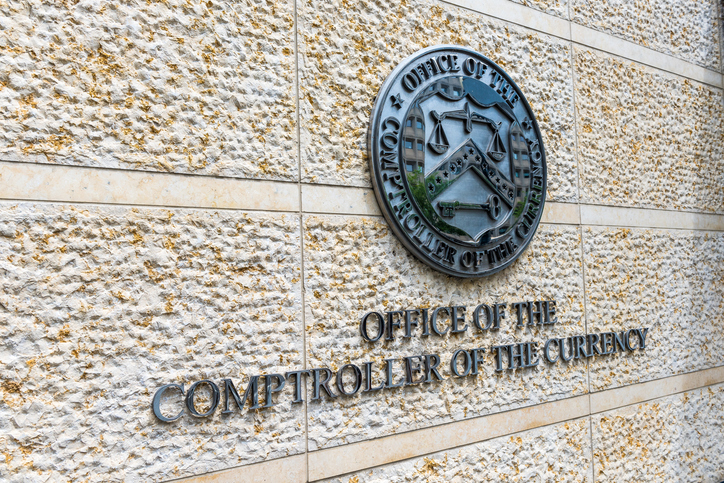
According to industry sources, the Office of the Comptroller of the Currency finalized its implementing regulations for the GENIUS Act on Wednesday, with the rules set to take effect Jan. 18. The regulations uphold a ban on stablecoin issuers paying interest while spelling out standards for reserve asset management, issuance and custody. Issuers must hold reserve assets on a one-to-one basis matching the amount in circulation, with at least 5 percent secured in immediately withdrawable deposits or equivalent instruments.
The OCC decided to assess the legality of stablecoin reward programs offered by third parties such as exchanges on a case-by-case basis, examining the structure of each payment arrangement. The agency had initially considered treating any interest paid by issuers through affiliates or other indirect channels as a presumptive violation, but dropped that approach in the final rules.
The fate of stablecoin reward services currently operated by exchanges has drawn considerable attention as a result. Kim Ji-won, a researcher at KB Securities, noted in a report that "PayPal currently offers PYUSD holders a 4 percent reward, Coinbase One offers 3.75 percent on USDC, and Kraken Plus offers up to 4.5 percent on USDG," adding that "whether these programs fall under the new regulations will be a key variable going forward."
US Treasury Secretary Scott Bessent said the GENIUS Act "establishes a federal regulatory framework for stablecoins, much as President Lincoln's National Currency Act of 1863 laid the institutional foundation for bank-issued currency," calling it "an important turning point in positioning the United States as the world's center for digital assets."
OCC Comptroller Jonathan Gould said the final rules "advance the vision of President Donald Trump and Secretary Bessent to secure US leadership in the digital asset sector."
Amid delays in passing the CLARITY Act, US regulators including the SEC and the Commodity Futures Trading Commission have been using their existing legal authority to build out the regulatory framework. The SEC last month introduced an "Innovation Exemption" that temporarily waives certain regulations for tokenized stock trading for five years, opening the door for platforms meeting specified requirements to tokenize and trade US-listed equities.
Three platforms — including global exchange OKX and OKXICE, a joint venture between OKX and Intercontinental Exchange, the parent company of the New York Stock Exchange — announced plans to operate tokenized securities trading platforms following the SEC's announcement. However, if a listed company objects to the tokenized trading of its own shares, those shares will be excluded from trading.
The CFTC also began work this month on new rules to govern digital asset trading for retail investors. The agency is considering, among other options, creating a new category called "Crypto Asset Market" within its existing exchange registration framework — a move aimed at bringing digital asset trading under the existing financial market supervisory structure.
Caroline Pham, CEO of Moonpay Institutional and a former acting CFTC chair, said she expects "the SEC and CFTC to take the lead in establishing clear regulatory standards for the digital asset market," adding that "while Congress may eventually codify these into law, the result will likely look different from the CLARITY Act currently under discussion."
Pham said regulators already have sufficient legal authority under existing statutes to craft digital asset rules. "The CFTC already has the authority to regulate a wide range of assets, from agricultural commodities like wheat to oil and gold," she said. "Digital assets are no different. It is preferable for regulators with market expertise to establish appropriate rules first, and for Congress to codify them afterward."
Joseph Shalom, CEO of Shafrink, said in a recent interview that "the SEC and CFTC are working together for the first time in history," adding that he sees "a green light for the US crypto and financial industries."
Meanwhile, legislation for a basic digital asset law in South Korea remains delayed. The Financial Services Commission announced plans in July during a presidential briefing to draft a bill within the year, but has yet to submit even a government proposal to the National Assembly. FSC Chairman Lee Eok-won told the National Assembly's Political Affairs Committee during a comprehensive national audit on Thursday that the digital asset bill is "in the final stages of consultation" and that he would "work to advance discussions as quickly as possible."
Democratic Party of Korea lawmaker Min Byeong-deok had earlier pushed to hold a public hearing on the basic digital asset bill in September, saying he expected "full-scale bill deliberations to begin around November, once the national audit is over." Some in the industry have suggested a public hearing could be held around the time the national audit concludes.

kyoung@heraldcorp.com