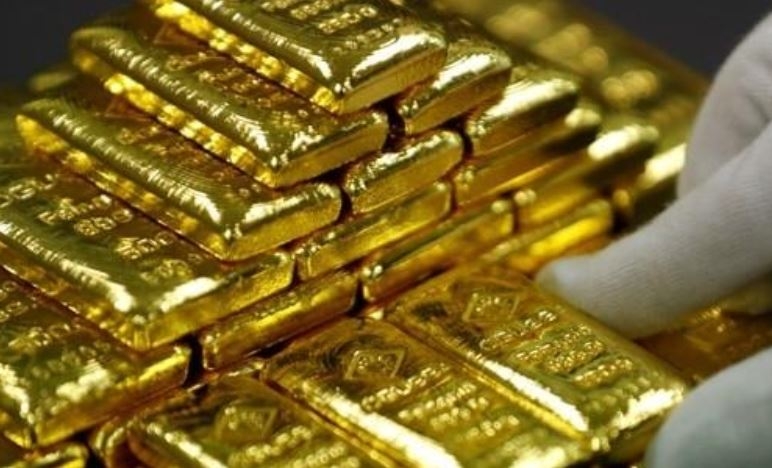
Gold, long regarded as the go-to safe haven when stock markets tumble, fell alongside equities this time. Even as a sell-off in US technology stocks sent government bond prices surging, gold continued to slide, dropping below $4,000 per ounce. Analysts say the decline was driven by a combination of cash-raising demand amid financial market stress, rising oil prices and the prospect of higher US interest rates.
International spot gold prices fell as low as $3,975.23 per ounce during trading Thursday (local time), according to the Financial Times and Reuters. It was the first time the $4,000 level had been breached in more than three months since July.
Gold had tumbled about 2.8% on Saturday before falling roughly 4% this week alone, marking its steepest weekly decline since June. The metal set an all-time high above $5,400 in January and is now down about 29% from that peak.
Other precious metals, including silver and platinum, also weakened. Analysts say selling pressure in global gold markets is increasingly driven not by a desire to hold safe assets but by the need to liquidate positions to cover losses elsewhere.
The sharp drop in gold has drawn attention precisely because it moved in the opposite direction from US Treasurys. When stocks fell, bond prices rose — but gold fell too, an unusual divergence.
On Wednesday, a broad sell-off swept through New York stock markets, centered on technology shares, as concerns mounted over the enormous costs and uncertain profitability of AI investment.
The Nasdaq Composite tumbled 2.6% as the AI spending burden at major tech companies including Meta came into focus. As investors rotated out of equities and into US Treasurys, the 10-year Treasury yield dropped 19 basis points in a single session (one basis point equals 0.01 percentage point).
Under normal circumstances, falling Treasury yields increase the relative appeal of gold, which pays no interest. Gold has also historically served as a refuge during periods of financial market stress.
This time, however, selling hit both equities and gold simultaneously.
German investment bank Berenberg said it was the first time since December 2008 — during the global financial crisis — that gold had fallen while US Treasury yields dropped so sharply.
Markets are pointing to forced selling for liquidity as the primary cause of the gold decline.
Justin Lin, a strategist at Global X, told Bloomberg the drop appeared to be driven by selling to raise cash.
When stock prices fall sharply, leveraged investors can face margin calls requiring them to post additional collateral. To meet those demands, investors tend to sell their most liquid assets first. Gold, being actively traded and highly liquid, becomes a natural target.
The result is a spillover of equity losses into the gold market.
Lin also said gold could test the key $3,900-per-ounce level.
Berenberg added that speculative money that had flowed into gold during its sharp rally earlier this year is now unwinding. The bank warned that if the decline continues below $4,000, gold ETFs could see outflows, adding further selling pressure.
Rising energy prices from the Middle East are adding another layer of pressure on gold.
Yemen's Houthi rebels, who are aligned with Iran, recently struck oil-related facilities in Saudi Arabia, stoking fears of supply disruptions. Attacks targeting the port of Yanbu and oil fields along the Red Sea coast have heightened regional tensions.
International oil prices surged Thursday as a result. Brent crude climbed above $113 per barrel, reaching its highest level in more than five months during intraday trading.
The rise in oil prices is feeding inflation concerns in the United States, with implications for Federal Reserve monetary policy.
Recent US consumer and producer price data came in above expectations, prompting markets to focus on the possibility of additional Fed rate hikes.
According to CME FedWatch, market participants put the probability of the Fed holding rates steady at the FOMC meeting Wednesday through Thursday at 92%. The probability of a rate hike at the December meeting was assessed at 78%.
The figures reflect expectations that persistent inflation driven by higher oil prices could prolong the Fed's monetary tightening cycle.
Unlike deposits or bonds, gold generates no interest income. When rates rise or remain elevated, the opportunity cost of holding gold increases, weakening investment demand.
The simultaneous pressure from the prospect of US rate hikes and cash-raising demand triggered by the equity sell-off has concentrated downward pressure on gold prices.
However, some analysts note that if the technology stock decline deepens recession fears, expectations for further Fed rate hikes could fade, which would be supportive for gold.
Lin said easing rate-hike expectations and a weaker dollar could underpin a gold recovery, and he raised the possibility of a sharp rebound following the recent sell-off.
Markets are watching Thursday's US personal consumption expenditures price index release as a key indicator for the interest rate outlook.
The international gold price decline is also weighing on South Korea's domestic gold market.
On the Korea Exchange gold market, the price of 99.99% pure gold fell to 171,250 won ($129) per gram Thursday. That represents a decline of about 36.5% from the all-time high of 269,810 won recorded on Jan. 29.
Prices for physical gold in South Korea also moved lower.
The Korea Gold Exchange quoted the retail buying price for one don (3.75 grams) of pure gold at 751,000 won Thursday morning, with the selling price at 642,000 won.
Given that the price of one don of pure gold exceeded 1 million won at some exchanges in January, investors who bought at the peak are likely sitting on substantial paper losses.
Domestic physical gold prices reflect differences between buying and selling rates, as well as value-added tax and distribution costs. Exchange rates and transaction structures must also be taken into account when comparing international spot prices with domestic trading prices.
Despite the near-term price decline, major central banks have continued buying gold.
According to a Goldman Sachs analysis released Tuesday, global central banks purchased an estimated 79 metric tons of gold in August — more than four times the pre-2022 monthly average of 17 metric tons.
The seasonally adjusted monthly average over the past three months reached 85 metric tons.
Analysts say central banks in emerging markets, led by China, are buying gold to diversify foreign exchange reserves away from the dollar and other major currencies.
Goldman Sachs maintained its end-2027 gold price target of $5,400 per ounce, citing structural central bank demand. However, it flagged downside risks to its year-end target of $4,650, pointing to the US monetary tightening outlook and declining demand for gold-related options.
Bargain hunters have also emerged in the physical gold market amid the price decline.
Reuters reported that gold purchases rose in India ahead of Dussehra, a major festival, as lower prices spurred demand for physical gold. In China, however, precious metal consumers remained cautious, keeping jewelry demand subdued.
In the near term, US interest rate policy, international oil prices and equity market volatility are expected to be the main drivers of gold prices.
Analysts warn that if investors continue selling gold to raise cash, price volatility could increase despite central bank buying and bargain-hunting demand. Whether gold can reclaim the $4,000 level or will fall further to find a new floor has become the central question for markets.
rainbow@heraldcorp.com