"Disregarded hierarchy, but not enough to undermine chain of command," court says
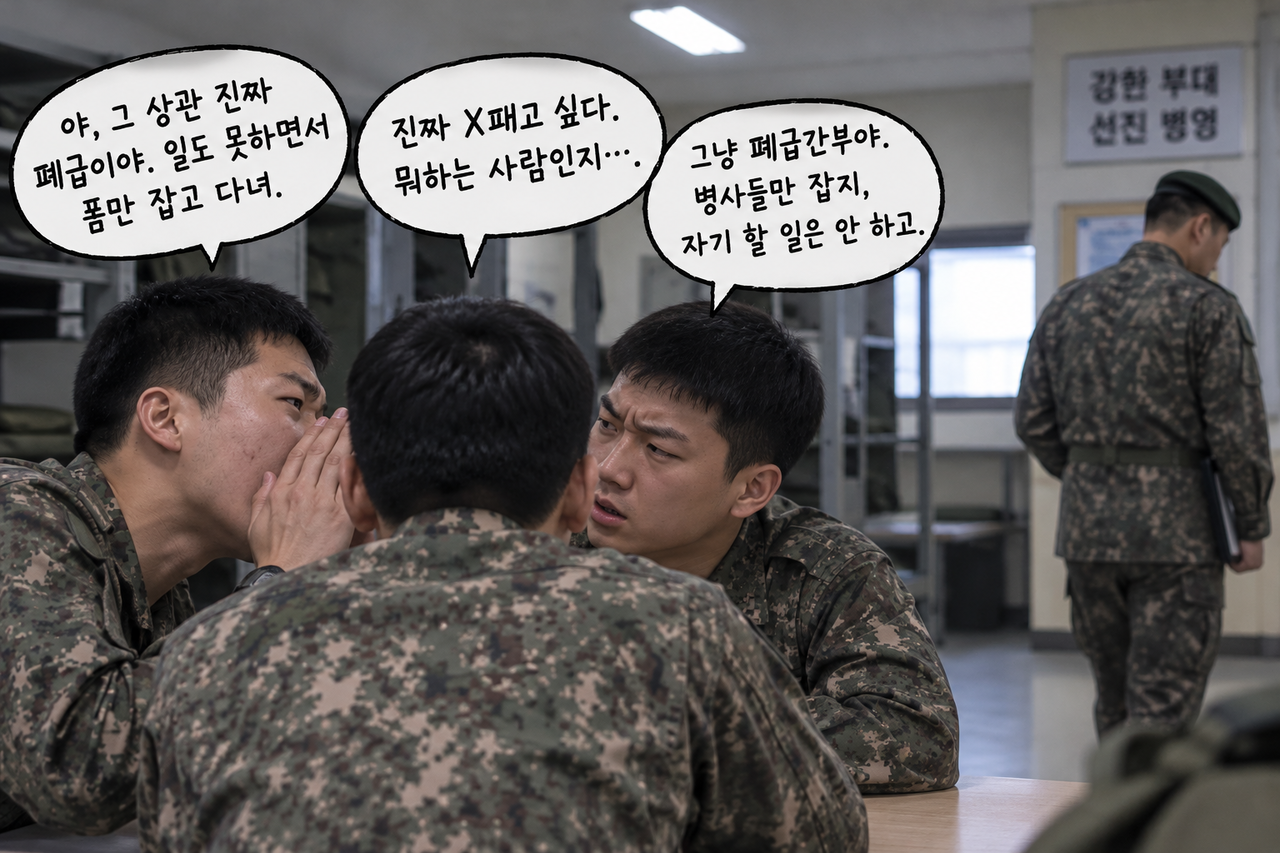
A court has ruled that demoting a soldier by one rank for badmouthing a superior — calling him a "waste of an officer" and saying he wanted to "beat him up" — was an excessive punishment.
According to legal sources Sunday, the 12th Administrative Division of the Seoul Administrative Court, presided over by Chief Judge Kang Jae-won, ruled Oct. 15 in favor of the plaintiff, identified only as A, in a lawsuit seeking to overturn a disciplinary action imposed by the Air Force brigade commander under whom A served.
In 2024, A was reported after making remarks about his superior, identified as B, in front of soldiers waiting for pre-leave training. The comments included that he wanted to "beat him up," that B's unit "does nothing," and that B was a "waste of an officer." A disciplinary committee subsequently demoted A one rank.
A then filed suit, denying he had made the remarks and contesting the disciplinary action.
A argued that abstract and emotional expressions alone did not constitute grounds for discipline such as insulting a superior or violating the duty of obedience — and that even if they did, demotion was an unduly harsh penalty.
The court acknowledged that some soldiers present gave consistent and detailed accounts of A's remarks, lending them credibility, and that the comments were inappropriate in that they disregarded the military's hierarchical structure.
However, the court ruled that A's remarks could not be seen as specifically denigrating B to a degree that would undermine the military's chain of command.
"The remarks can be characterized as careless, rude and made with a self-aggrandizing intent," the court said, "but it falls short of showing a direct intent to disrupt military discipline or to demean the superior's standing within the unit."
The court also noted that B had not heard the remarks directly, and that there was no evidence the comments had actually disrupted military discipline or the chain of command within the unit. It determined that A's conduct fell under the category of "minor misconduct amounting to negligence."
Under the enforcement rules of the Military Disciplinary Decree, offenses classified as "minor misconduct amounting to negligence" are subject to penalties ranging from confinement to quarters to a reprimand.
sun@heraldcorp.com