Trump says another 'Magnificent Fury' operation is possible
US midterms 10 days away as president openly discusses Middle East military action
Washington reduces embassy staff in four more Middle Eastern countries after Saudi Arabia
Oil prices soar; Middle East and European nations form rare anti-war coalition
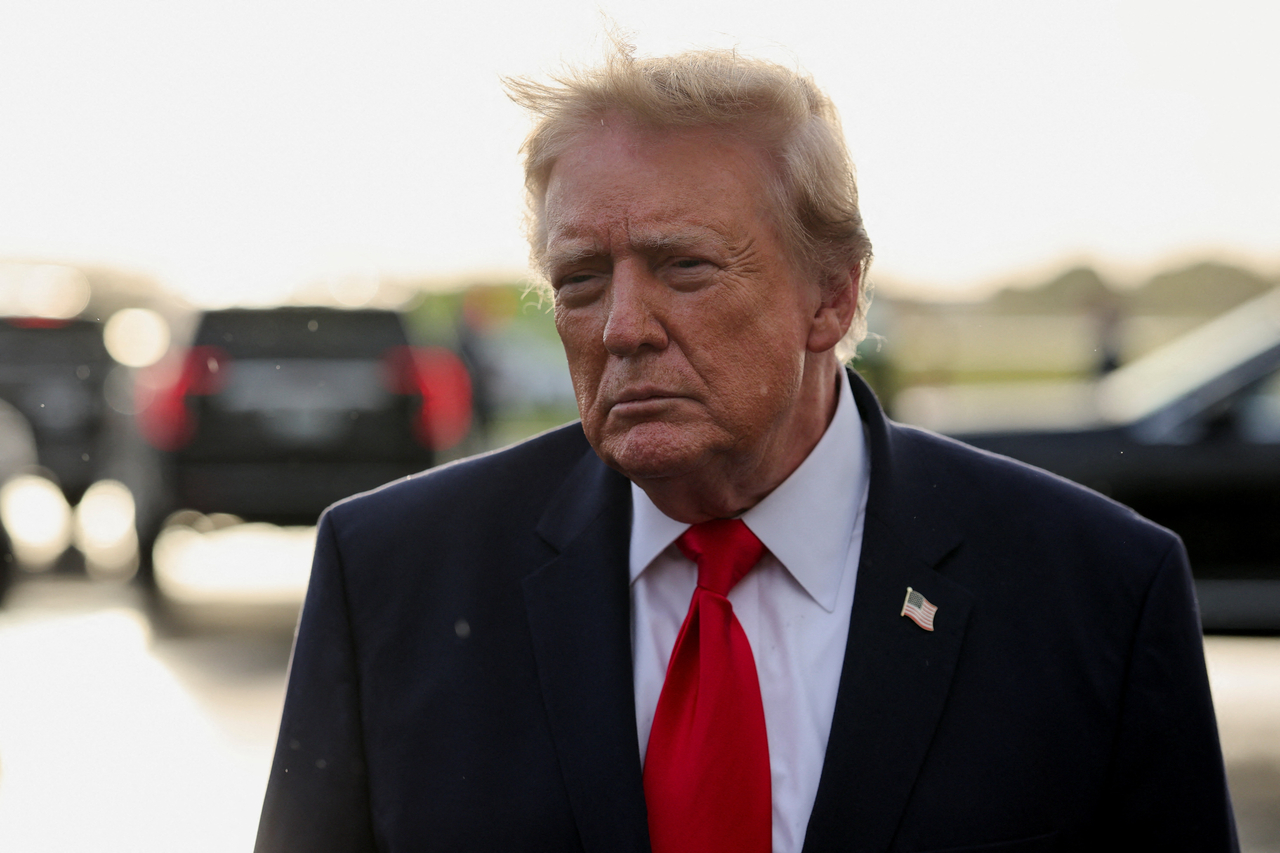
Tensions between the United States and Iran are escalating sharply as the US midterm elections draw near, with both sides locked in a standoff over the Strait of Hormuz. President Donald Trump publicly raised the possibility of striking Iran again after the midterms, while Tehran warned that any new attack would be met with retaliation without limit.
Trump, speaking at a midterm campaign rally in Fort Myers, Florida, on Friday (local time), said the US could carry out "another little 'Magnificent Fury' operation." Operation Magnificent Fury was the name of the large-scale joint US-Israeli air campaign that launched the war against Iran in late February.
The remarks came as observers increasingly expect the US and Israel to strike Iran again after the Nov. 3 midterm elections. On Wednesday, The New York Times, citing US officials, reported that American and Israeli forces had been conducting practice flights with fighter jets over Iraq in preparation for a short, intensive strike campaign against Iran.
Iran responded with threats of a far larger counterattack. Two senior Iranian officials told Reuters on Friday that Tehran had drawn up detailed plans to target undersea cables in Gulf waters if the US and Israel struck again. One senior official warned that "if Iran is attacked, there will be no more red lines."
Iran is also threatening oil tanker traffic through the Strait of Hormuz. The Islamic Revolutionary Guard Corps said Friday that two supertankers that had strayed from designated shipping lanes while transiting the southern part of the strait had struck mines.
Yemen's Houthi rebels, an Iranian proxy force, continued attacks on Saudi Arabia, adding to the flames spreading across the region. Turki al-Maliki, spokesperson for the Saudi-led coalition, said Friday that air defense systems had intercepted and destroyed a ballistic missile fired by "Houthi terrorist rebels" toward Riyadh, according to AFP.
The renewed military tensions pushed international oil prices back to levels last seen in April, when the conflict was at its height. Brent crude for December delivery rose as much as 3.5 percent during trading Friday to $117.14 a barrel, according to the Financial Times — the first time Brent has topped $117 since April.
Analysts pointed to additional US military assets moving into the Middle East and a drawdown of ground forces in the region as signs that a renewed clash between Washington and Tehran after the midterms was increasingly likely. The Associated Press reported Friday that the US government was reducing embassy staff in Jordan, Lebanon, Qatar and the UAE.
Jason Campbell, a senior fellow at the Middle East Institute, a Washington think tank, said the Trump administration's moves were "clearly excessive if the intent is simply to bring Iran to the negotiating table."
Alarmed by the prospect of a new US strike on Iran, Middle Eastern and European nations formed an unprecedented anti-war coalition. The foreign ministers of Saudi Arabia, Egypt, Pakistan, Turkey, France, Germany, Britain and Italy gathered in Istanbul on Friday for talks, appealing that a new round of conflict would solve nothing and would only deepen the crisis and push oil prices higher.
The meeting was convened at the initiative of Turkey and Germany. The Guardian noted that European countries had largely remained on the sidelines throughout the Iran conflict, and that it was unusual for them to sit alongside Middle Eastern diplomatic leaders to discuss a regional crisis.
eyre@heraldcorp.com