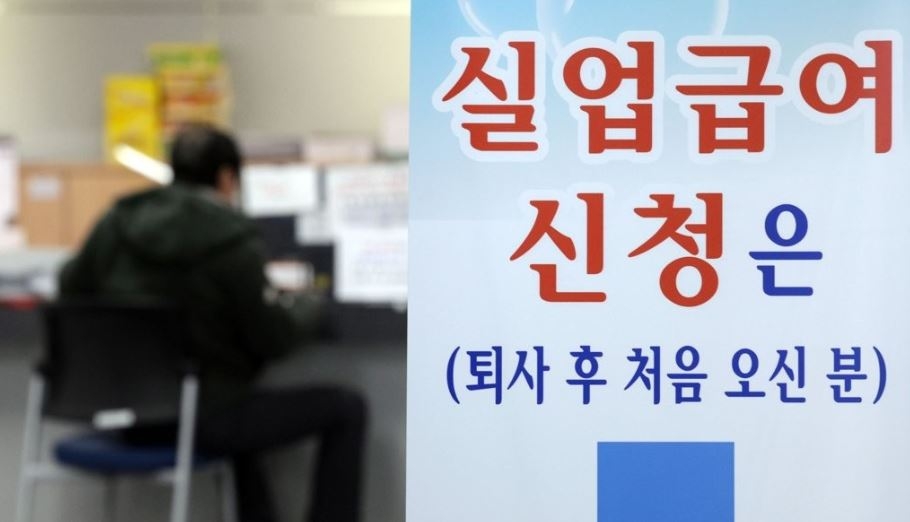
As the government pushes to extend unemployment benefits to workers under 35 who voluntarily quit their jobs, a public petition has emerged calling for the system to be redesigned to reward swift re-employment and long-term job retention rather than simply providing cash support to the unemployed. The petition argues that economic incentives should be concentrated on those who successfully find new work and stay in it for a set period, rather than on those who remain out of work the longest.
The petition, titled "We urge a comprehensive review of the unemployment benefit and national employment support systems and a shift to a tenure- and re-employment reward model," was posted recently on Cheongwon24, the government's online public petition platform.
The petitioner questioned the effectiveness of the existing employment support system, arguing that it should be redesigned around actual re-employment and job retention outcomes rather than the amount of benefits paid out.
The core of the petitioner's proposal is to convert unemployment benefits into a reward for re-employment and long-term job retention.
Under the proposed model, a person who finds a new job within one month of becoming unemployed would receive the highest reward, with the payout decreasing the longer it takes to secure re-employment.
The reward would not be paid immediately upon re-employment. Instead, the government would hold the funds in a separate account and release the full amount as a lump sum only after the recipient has remained at the new workplace for at least two years.
The intent is to make financial rewards contingent on meeting both conditions: finding work quickly and staying in it.
The petitioner also called for changing the benchmarks used to evaluate the effectiveness of unemployment benefits and other employment support programs. Rather than measuring how much money has been disbursed, the system should assess whether recipients found new jobs, how long they stayed in them and whether they achieved financial independence after support ended.
The petitioner said that when the perceived value of post-resignation benefits exceeds the financial rewards of staying employed, it could influence some workers' decisions to change jobs.
The petition also called for stricter oversight of repeated short-term resignations — cases where a person collects benefits, works briefly, then quits again. It proposed limiting support for a set period or tightening eligibility screening when such patterns recur.
With public finances limited, the petitioner argued that benefits should be more closely tied to actual earned income and length of employment. The system should be reformed to stay true to its original purpose: serving as a social safety net that helps unemployed people return to work.
The petition emerged as the government pursues a plan to extend job-seeking benefits to young workers who voluntarily leave their jobs.
The Ministry of Employment and Labor announced at a presidential policy briefing on Aug. 4 that it was considering allowing workers under 35 to receive job-seeking benefits once in their lifetime if they voluntarily resign after working for a set period.
Under the current employment insurance system, job-seeking benefits are in principle paid only to those who lose their jobs involuntarily — through recommended resignation, contract expiration and similar circumstances. Voluntary resignations can also qualify if a recognized reason for leaving is established, such as unpaid wages or workplace harassment.
The proposed reform would extend eligibility to voluntary resignations where no such exceptional circumstances exist.
The aim is to ease the burden on young workers who feel trapped in their first jobs — stuck in roles that do not suit them or that fall short of their expectations — because they cannot afford to quit.
At the time, the government was considering paying up to 60 percent of the worker's average pre-resignation wage, capped at 1 million won ($755) per month. A shorter benefit period than the existing job-seeking benefit was also under discussion.
However, the specific eligibility requirements and benefit duration have not been finalized.
The budget for a job-seeking benefit program targeting young voluntary resignees was not included in the 2027 government budget plan approved at a Cabinet meeting on Sept. 1.
Implementing the policy would require amending the Employment Insurance Act and securing funding. Uncertainty has grown around the government's original timeline of introducing the measure next year.
Short job tenures among young workers have also emerged as a key issue in the debate over reforming unemployment benefits.
Among the 146,418 workers under 35 who voluntarily resigned as of June, 97,437 — or 66.5 percent — had been in their jobs for less than a year, according to statistics reported by the Korea Economic Daily.
Among those aged 20 to 24, the share with less than one year of tenure reached 80.1 percent.
Given how frequently young workers leave jobs relatively early in their tenure, how an expansion of benefits for voluntary resignees would affect job retention has become a central design question for any reform.
The fiscal health of the employment insurance fund is another concern.
Last year, about 113,000 people received unemployment benefits three or more times over five years, and the total paid out to these repeat recipients reached 599.7 billion won.
The employment insurance fund recorded a current-year deficit of 592 billion won in 2025. Excluding borrowings from the Public Fund Management Fund, the real deficit in the unemployment benefit account stood at 5.99 trillion won.
Any expansion of eligibility would require not only additional funding but also measures to curb repeat claims and improve the effectiveness of re-employment support.
Using re-employment speed and job tenure as the basis for rewards also raises questions, however. The time it takes to find work varies by region and occupation, and workers who resign due to unpaid wages or workplace harassment would need adequate protections under such a system.
The government's proposed job-seeking benefit for voluntary resignees focuses on reducing income gaps during career transitions for young workers. The petition, by contrast, proposes concentrating rewards on job retention after re-employment.
As policymakers weigh the need to support smooth career transitions for young workers, maintain employment stability and preserve the fiscal soundness of the employment insurance fund, how to balance income support during unemployment against rewards for staying employed after re-employment is emerging as a central challenge for any future reform.
rainbow@heraldcorp.com