Agency sought 25 new counter-espionage officers
but public-safety hiring takes priority
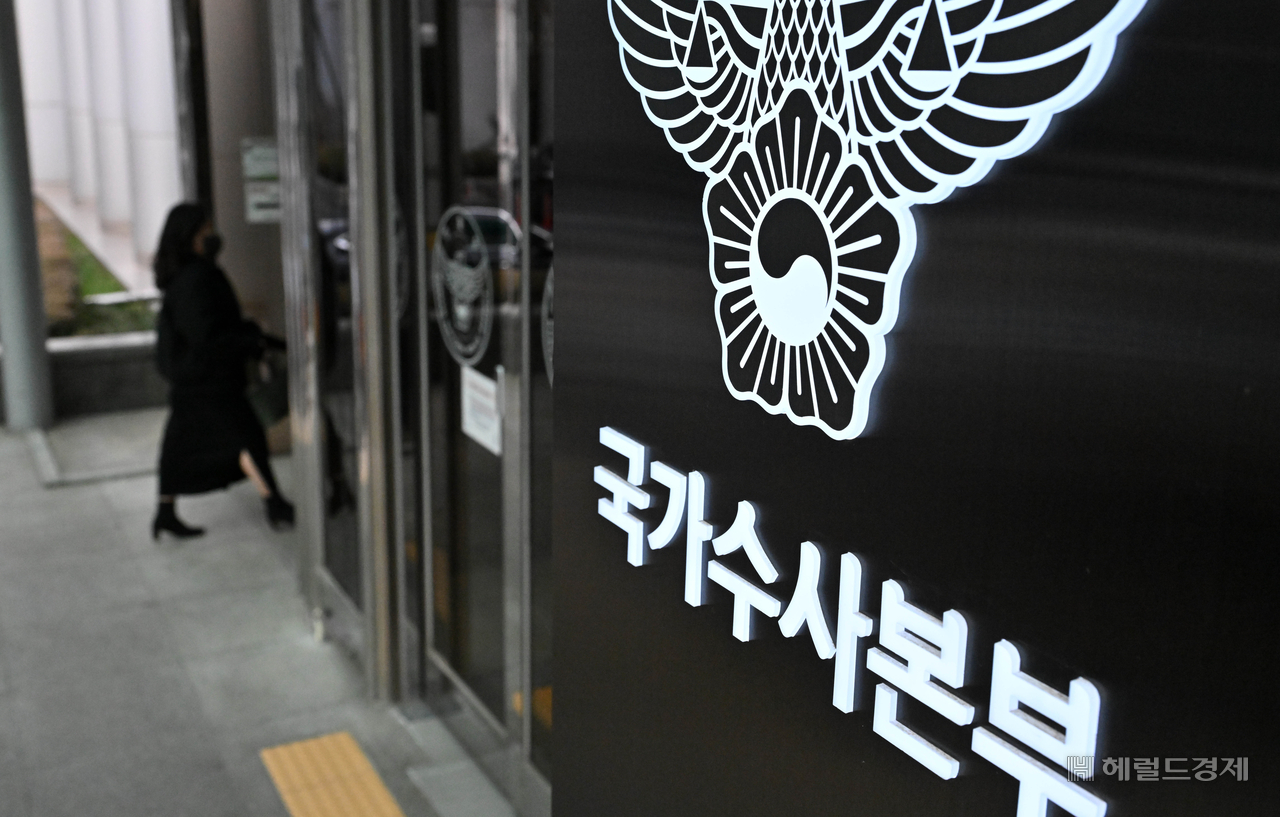
Plans to expand the police's counter-espionage investigative staff next year appear unlikely to move forward, as hiring priorities remain focused on public-safety policing.
The Korean National Police Agency's Security Investigation Bureau had requested 25 additional dedicated counter-espionage officers in connection with the enforcement of the revised espionage law — specifically, the newly added Article 98-2 of the Criminal Act — but the increase is not expected to be reflected in next year's staffing plan. A policy of directing new hires primarily to general criminal investigation units has taken hold, driven by the push to strengthen responses to relationship-based crimes, random-motive offenses and missing-persons cases.
The revised Criminal Act, which took effect Sept. 13, broadened the scope of espionage offenses from acts committed on behalf of "enemy states" to those carried out for "foreign countries or organizations equivalent thereto." The change also expanded the investigative reach over national-security violations such as the leaking of state secrets. The dissolution of the Defense Counterintelligence Command on June 10 further transferred a portion of that agency's investigative responsibilities to the police.
In anticipation of the new foreign espionage provisions, the Security Investigation Bureau submitted a request to the agency's organizational planning division around August for a total of 25 new positions — one investigative review officer for the counter-espionage and anti-terrorism unit and 24 dedicated counter-espionage investigators. The request targeted provincial and metropolitan police agencies with high counter-espionage demand, factoring in the presence of foreign diplomatic missions, military bases, registered foreign nationals, and the concentration of businesses and research institutes.
The direction has nonetheless been set: security investigation staffing, including counter-espionage, will not be increased next year. The Ministry of Interior and Safety announced regular organizational staffing increases for next year on Sept. 1, adding a total of 215 police officers, with new positions concentrated in civil complaint cases, cybercrime including phishing, and drug investigations — security was excluded. Additional mid-cycle staffing increases also being pursued are expected to focus on absorbing the supplementary investigation burden arising from the abolition of the prosecution service.
"The security investigation unit was not included in the regular staffing increase plan that has been under discussion since the first half of this year," a Korean National Police Agency official said. "Demand for additional general investigation staff is so large — driven by the overhaul of the criminal justice system in the second half of the year — that we plan to direct resources there for the mid-cycle increase as well."
The official added that security personnel increases are being planned for inclusion in staffing reviews from 2028 onward.
Foreign espionage and technology leaks on the rise
'Security always ends up last in line behind general policing'
In February, police established a Counter-Espionage Investigation Division at the Korean National Police Agency headquarters and set up counter-terrorism and counter-espionage units at the Seoul and Gyeonggi Province South metropolitan police agencies. By redistributing existing security investigation personnel, the number of counter-espionage investigators across provincial and metropolitan agencies nationwide rose from 72 to 113, an increase of 41. In August, 79 officers were separately reassigned to handle investigations into industrial technology theft.
These moves, however, represent internal reshuffling within the security investigation function rather than a net increase in overall staffing. "It is an internal reallocation, not an expansion — officers from security units at local police stations are being sent to major metropolitan agencies," one police official said.
According to data the Korean National Police Agency submitted to the office of Rep. Kwon Young-jin of the National Assembly's Interior and Safety Committee, security investigation personnel stood at 2,247 as of last month, including 1,089 officers with a security investigation specialty and 112 senior officers at the rank of superintendent or above. The total stood at 2,307 when full counter-espionage investigative authority transferred to the police in 2024, fell to 2,253 last year, and has continued to decline this year.
Even as staffing has shrunk, caseloads have grown. According to the Korean National Police Agency, the number of investigations opened into foreign intelligence activities has increased every year for the past three years. Detected cases of industrial technology theft rose to 179 last year, up 45 percent from 123 the year before.
"Everyday crimes feel like an immediate reality, while security crimes feel like something in the distant future — so demands naturally concentrate there," said one security officer from the greater Seoul area. "With attention recently shifting toward public-safety issues, security seems to be getting pushed further down the priority list."
Another security officer was more blunt. "It seems they judged that expanding the integrated investigation teams at local police stations was more urgent because cases keep coming in — but if that logic holds, security will always end up last in line," the officer said.
A senior security officer acknowledged the strain but expressed cautious optimism. "With investigative authority over espionage cases now concentrated in the police following the legal revision, counter-espionage and security investigation workloads have broadly increased, and the conditions need to catch up," the officer said. "We will hold the line and work to persuade the National Assembly and the public of the need for the resources we require."
arin@heraldcorp.com