
PM again points to far-left as instigators; night curfews extended for second day; petroleum and gas banned
Riot damage nears 2 trillion won; government announces aid package for affected businesses
10-year bond yield hits 4.96%; spread with Germany widens to 1.54 percentage points
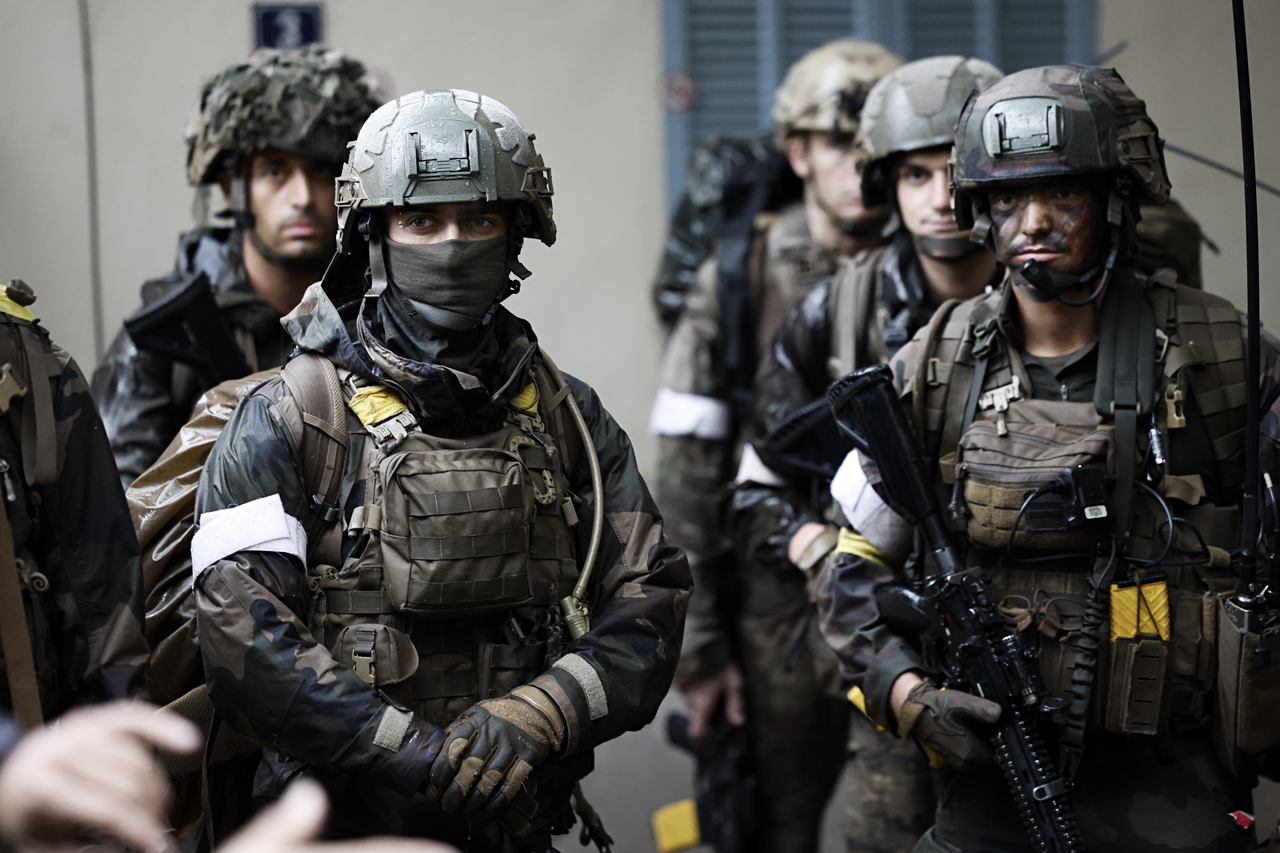
France entered a second day of partial regional curfews on Tuesday (local time), following a weekend of violent protests, and announced it would deploy large numbers of security personnel — including military forces — for demonstrations planned for Saturday.
Prime Minister Sébastien Lecornu said on X (formerly Twitter) on Tuesday morning that overnight curfews imposed on certain areas had helped calm the situation. "There will be new curfew measures tonight where necessary," he said, adding that decisions on curfews would be made on the ground by regional administrators in consultation with mayors.
Paris police said a second curfew in the capital would begin at 11 p.m. Tuesday.
On Saturday, roughly 500,000 people took to the streets across France to protest insufficient public-sector investment — including in education — and high prices. The demonstrations turned violent when some participants set fire to public facilities, looted stores and vandalized property. The looting continued through Sunday night.
In response, the French government recommended that local authorities impose restrictions such as curfews. Partial curfews were enforced overnight Tuesday in Paris and the northern city of Lille, among other areas. Bordeaux in the southwest and Nice in the south said they would maintain curfews for several more days.
According to AFP, a helicopter hovered over Paris's Place de la République — which had been placed under curfew from Monday night through early Tuesday — shining lights to monitor compliance. Sylvain Courant, a resident of Les Halles, told AFP: "Hearing a helicopter at 1 a.m. is a bit suffocating. It's something you only see on TV or in war movies."
In Lyon, where a ban on public gatherings was in place, about 500 people nonetheless assembled in front of the local tourism office — a building that had been set on fire during the weekend protests — holding candles in solidarity with local merchants who had suffered looting, organizers said.
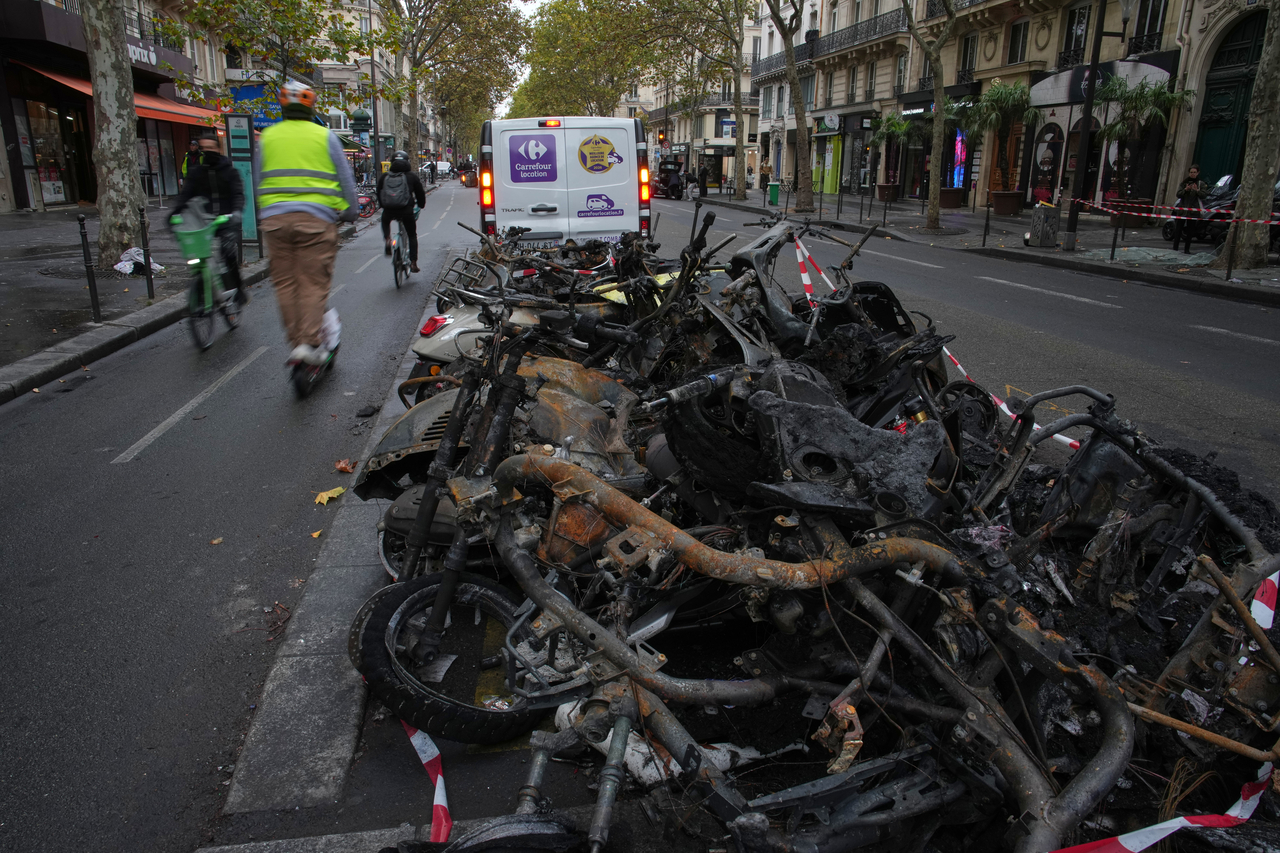
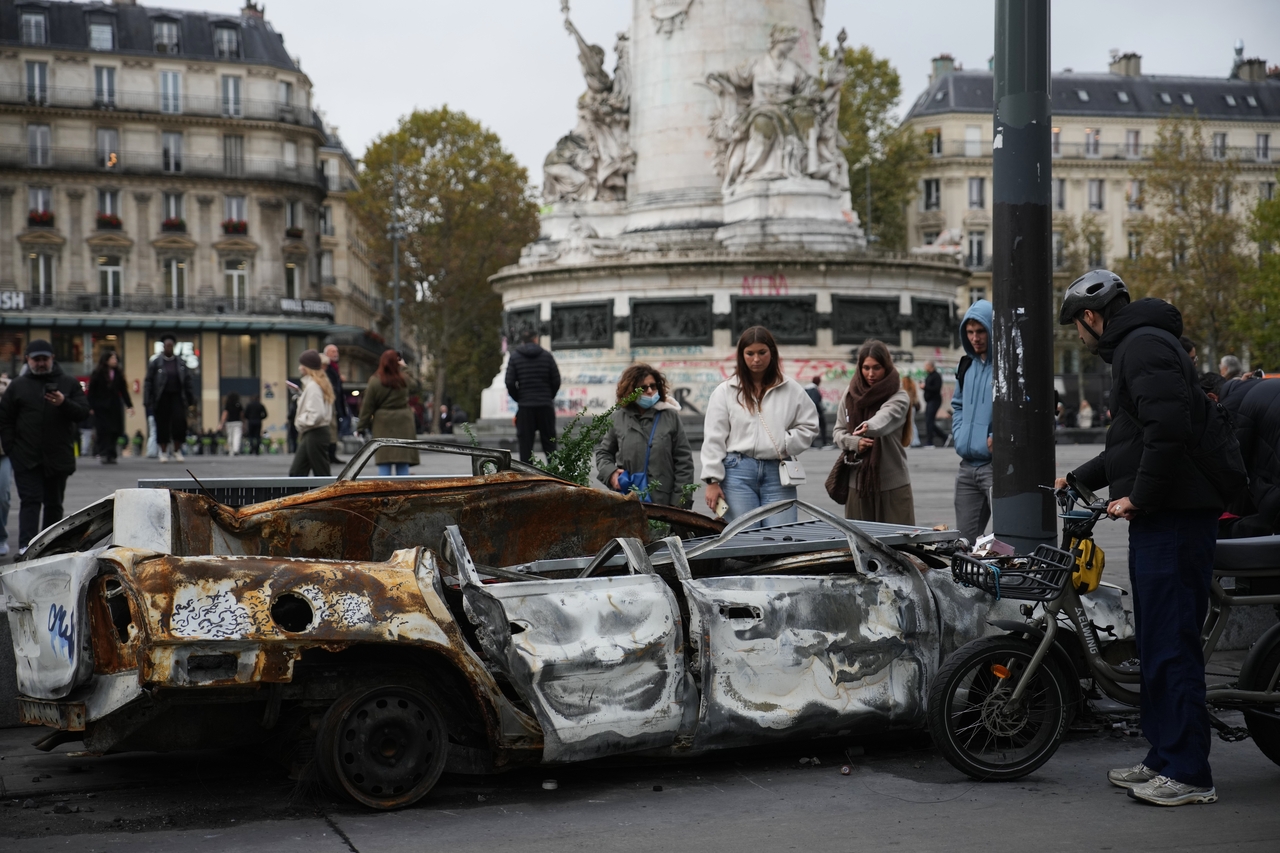
French authorities and local governments say they will maintain a firm stance and respond forcefully to any further unrest.
The "Yellow Vest" movement announced Tuesday that a second wave of protests would take place Saturday. David Lisnard, the mayor of Cannes, told RTL radio: "I'm glad last night was calmer, but I expect another wave to come."
According to AFP, AP and Reuters, Prime Minister Lecornu acknowledged in parliament Tuesday that the authorities' initial response had been inadequate, and pledged to deploy police "in massive numbers" for Saturday's protests. He again insisted the violence had been organized and orchestrated by far-left groups.
Interior Minister Laurent Nuñez said the government would deploy Sentinelle forces — the military's domestic counterterrorism operation — as a substitute for internal security troops, so that police and gendarmerie could focus on maintaining order.
Paris police announced a temporary nationwide ban on carrying bottles or cans containing petroleum or gas, as well as fireworks. Wearing protective gear such as helmets was also banned in zones near high schools and universities.
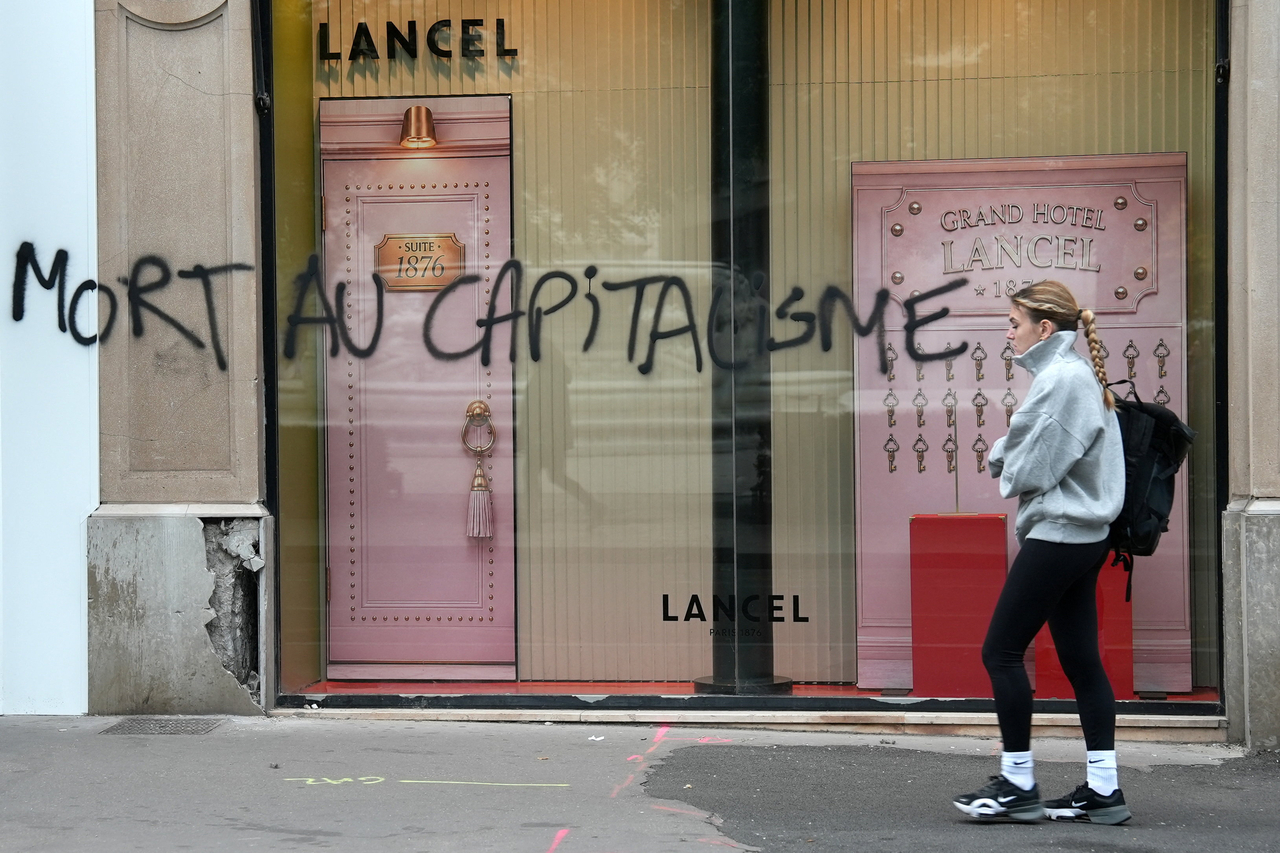
Around 3,000 stores across France were reported to have sustained damage in the unrest.
According to Bloomberg, the head of global insurance at Morningstar DBRS estimated in a report that the economic cost of the unrest would reach between 1 billion and 1.2 billion euros ($1.12 billion to $1.35 billion).
The Paris Merchants Association, in a statement issued Tuesday, urged the government to act, saying: "It is not normal that we have to hire private security firms to protect our facilities. Paris and our neighborhoods represent the image of France, and what is happening is damaging our country's reputation."
Patrick Martin, president of the French employers' federation MEDEF, condemned the state's failure to contain the riots.
Retailer Carrefour lowered its earnings outlook for this year, citing a drop in customer traffic, damaged consumer confidence and rising costs stemming from the violence.
Economy Minister Roland Lescure met Tuesday with business associations, banks and insurers, and pledged to announce measures to support merchants affected by the unrest. The government said it would offer interest-free loans of up to 50,000 euros to businesses that suffered looting or vandalism, along with deferrals of overdue taxes and social security contributions, and support for workers affected by the violence.
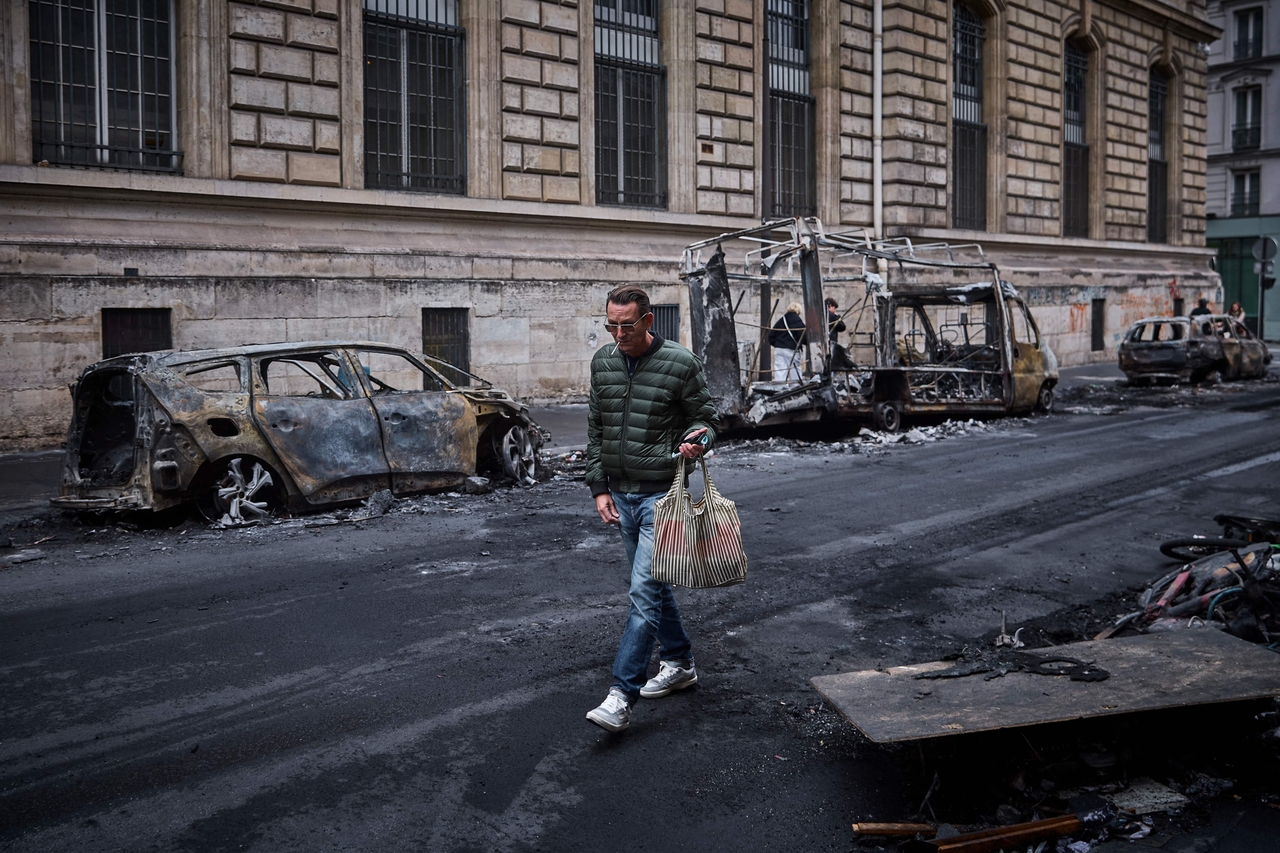
Justice Minister Gérald Darmanin said that as of noon Tuesday, 149 people remained in custody. Earlier, 2,500 people had been arrested since Saturday, with more than 800 referred to prosecutors. Most were either given summary judgments or ordered to appear at later hearings.
In the northern city of Lille, three men aged 20 to 25 with no prior criminal records were convicted in summary proceedings and immediately imprisoned after being found guilty of looting a video game store in the old city center, Darmanin said. Each received a 10-month sentence.
Authorities also arrested a man suspected of setting fire to Limoges City Hall. Images of the building's entire roof engulfed in flames on Saturday became one of the most striking symbols of the weekend's violence, shocking audiences both in France and abroad.
The suspect appeared to have been under surveillance as a potential threat due to links with far-left movements, AFP reported.
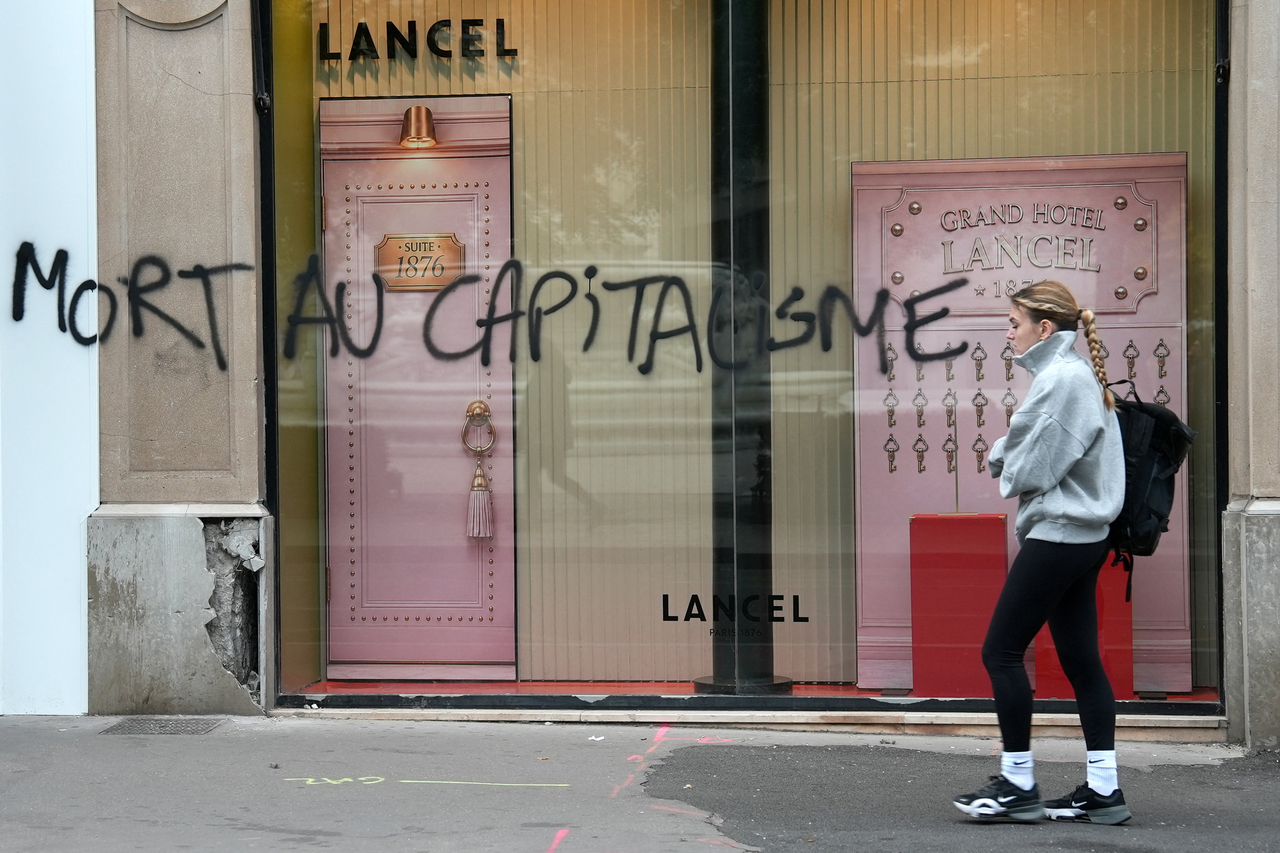
French government bond prices have continued to fall as the unrest compounds existing fiscal anxieties.
The yield on France's 10-year government bond rose to 4.96 percent during trading Tuesday, while the spread between French and German 10-year yields widened beyond 1.5 percentage points to reach 1.54 percentage points.
Earlier this month, as fiscal concerns intensified sharply, French bond yields climbed to 4.9937 percent — their highest level since July 2002 — and the spread with German bonds reached 1.59 percentage points. Tuesday's levels are approaching that peak.
French government bonds have been losing value in recent months amid a rapid rise in public debt, a widening fiscal deficit and political divisions that have cast doubt on the passage of the budget. Last weekend's mass protests demanding greater public-sector investment, followed by the outbreak of violence, deepened market unease further.
yckim6452@heraldcorp.com




