
66 transactions worth 23.1 billion won recorded through August
Seoul accounts for 80% of all deals with 53 transactions
Lawmaker warns of high likelihood of illicit gift transfers
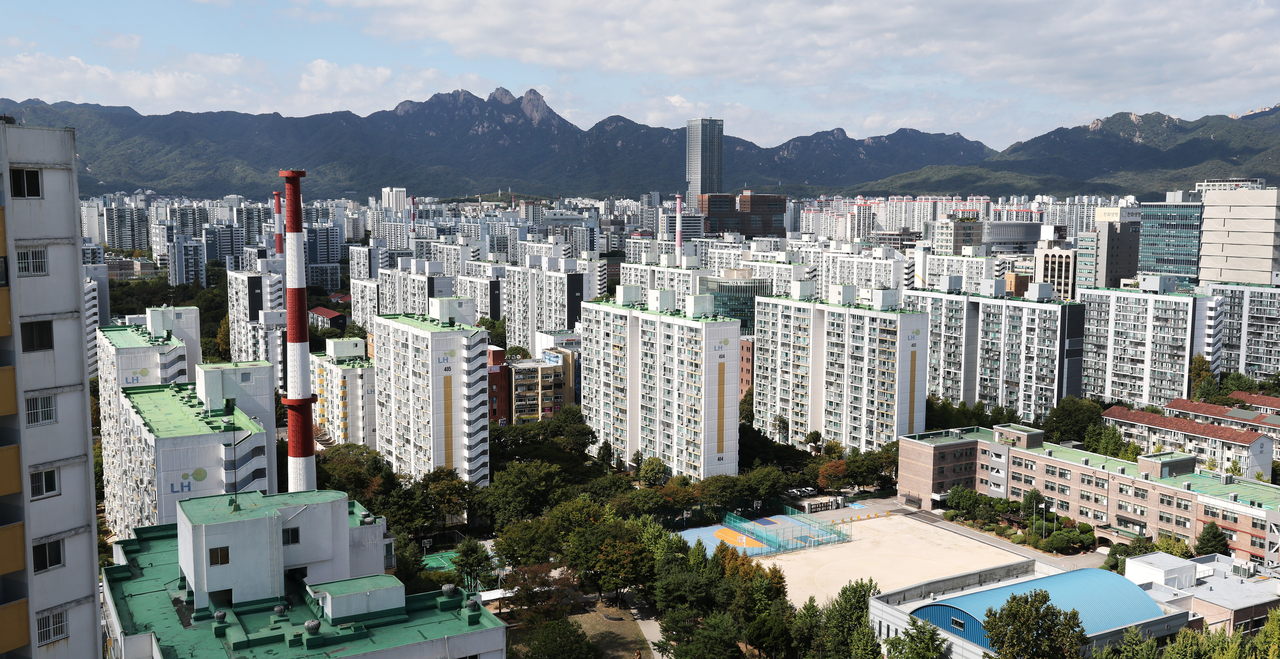
The number of homes purchased by minors this year has nearly doubled compared to last year, with more than half of the purchase funds reported as coming from the buyers' own money.
According to data on minor homebuyers' funding disclosure statements over the past five years, obtained by Democratic Party of Korea lawmaker Hwang Hee of the National Assembly's Land, Infrastructure and Transport Committee from the Ministry of Land, Infrastructure and Transport, minors aged 0 to 19 bought 66 homes nationwide through the end of August — 1.8 times the 37 transactions recorded last year. The total purchase amount came to about 23.1 billion won ($17.4 million), up 9.5 percent from 21.1 billion won the previous year.
Of that total, 56.7 percent — or 13.1 billion won — was reported as "own funds," including deposits and proceeds from the sale of shares and bonds.
Annual data show that minor home purchases peaked during the property price surge, with 981 transactions worth 177.6 billion won in 2021 and 424 transactions worth 81.8 billion won in 2022, before falling sharply as interest rates rose and the market froze: 13 transactions worth 13.6 billion won in 2023, 20 transactions worth 23.4 billion won in 2024, and 37 transactions worth 21.1 billion won in 2025. This year, however, the figure has already surpassed last year's full-year total, signaling a renewed rebound.
Breaking down the figures by region, one transaction each was recorded in South Gyeongsang Province (690 million won) and Busan (836 million won) through August, both funded entirely by own money. Gyeonggi Province followed with 11 transactions totaling 2.74 billion won, of which 73.9 percent came from own funds, while Seoul recorded 53 transactions worth 8.8 billion won, with own funds accounting for 49.4 percent.
No transactions were recorded in other regions through August. Among Seoul's districts — which led all regions in both transaction value and volume — Jongno (600 million won) and Geumcheon (292 million won), each with one transaction, had the highest own-fund ratios at 100 percent.
Eight districts in total reported own-fund ratios above 50 percent: Seodaemun at 91.6 percent (three transactions, 1.09 billion won), Gwanak at 67.1 percent (two transactions, 245 million won), Seongdong at 64.6 percent (one transaction, 310 million won), Dongjak at 61.7 percent (four transactions, 1.04 billion won), Seongbuk at 60.9 percent (two transactions, 560 million won), and Yeongdeungpo at 59.0 percent (two transactions, 366 million won).
Over roughly six years from 2021 through August of this year, minors purchased homes totaling 340.5 billion won across 1,541 transactions, with own funds accounting for 41.3 percent, or 140.6 billion won.
"When high-priced homes are purchased in the names of minors or infants who have no capacity for economic independence, there is a very high likelihood of illicit transactions — such as disguised gifts structured as deposits or stock sale proceeds, or the misappropriation of corporate funds," Hwang said.
He added that relevant agencies, including the Ministry of Land, Infrastructure and Transport and the National Tax Service, "must take strict measures — including reporting to the National Tax Service — when suspicious tax evasion is identified in funding disclosure statements submitted for minor homebuyers."
lucky@heraldcorp.com




