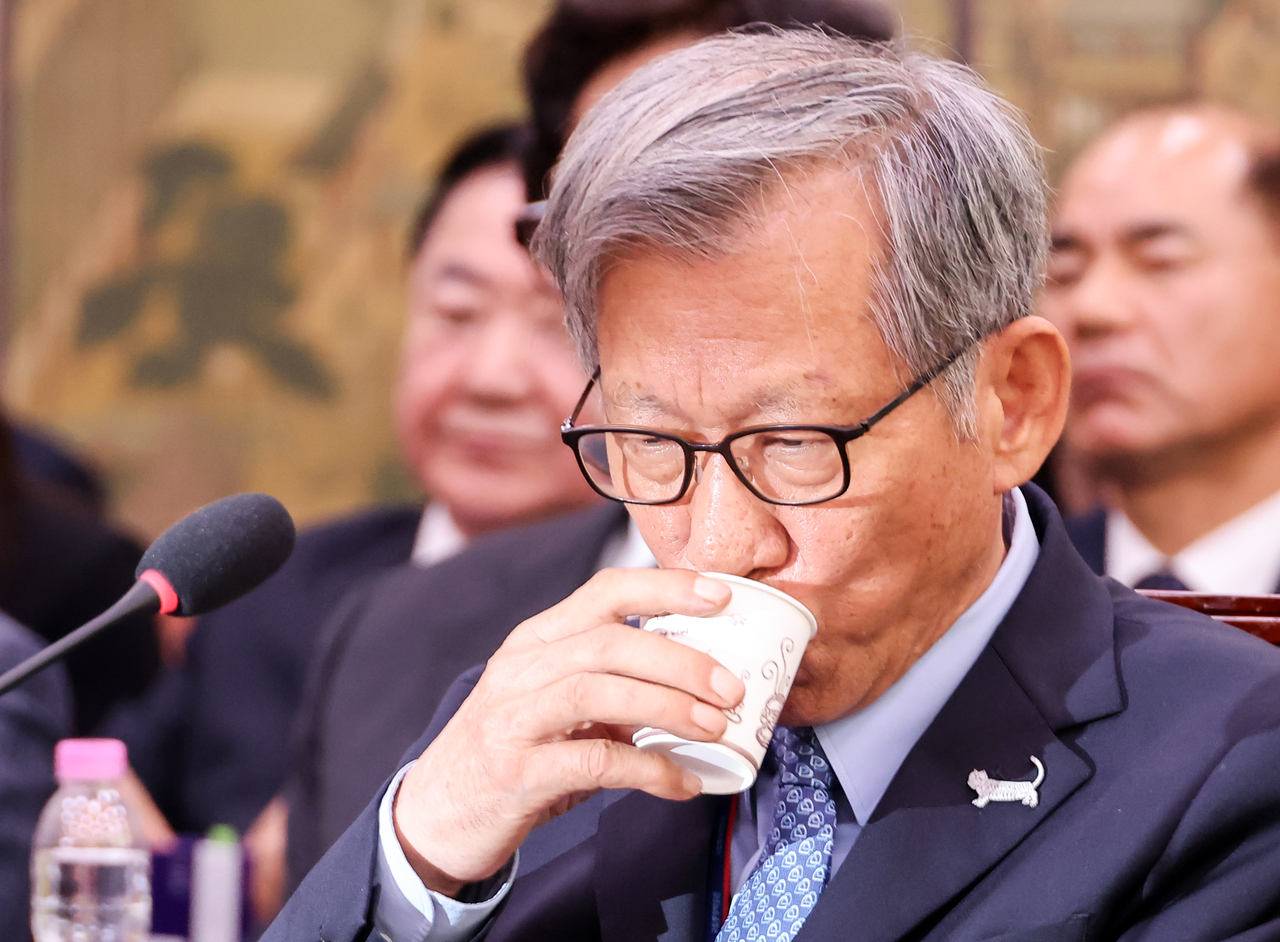
President Lee Jae Myung on Wednesday accepted the resignation of National Museum of Korea Director Yu Hong-jun, who offered to step down over a controversy surrounding the display of calligraphy by a pro-Japanese collaborator and questions about the museum's authentication process.
Cheong Wa Dae Chief Spokesperson Kang Yu-jung announced that afternoon that Lee had approved Yu's resignation, according to Yonhap.
Yu is leaving the post after roughly one year and three months.
Earlier that day, Yu said in a statement to the press corps that he had concluded it was right to resign as director in order to restore the museum's damaged reputation. "The deep trust the public has placed in the National Museum of Korea, and the values our staff have built up, collapsed in an instant because of my personal mistake," he said. "All criticism over this matter is entirely my responsibility."
The artifact at the center of the controversy was a piece of calligraphy bearing the phrase "ilban sigugeum" — displayed at the museum's special exhibition "Our Table," which opened in July — meaning "even a bowl of rice is all the grace of the nation."
The museum had introduced the work as calligraphy by patriotic independence activist Park Won-geun (1912–1950), but after receiving an outside tip, it concluded the work was in fact by Park Jung-yang (1874–1959), a figure designated as a pro-Japanese collaborator.
The controversy deepened when it emerged that Yu had purchased the piece at an online auction in 2019 for 50,000 won ($38) and recommended it for the exhibition roughly two months before the show opened.
'I was confident as a specialist in the field'
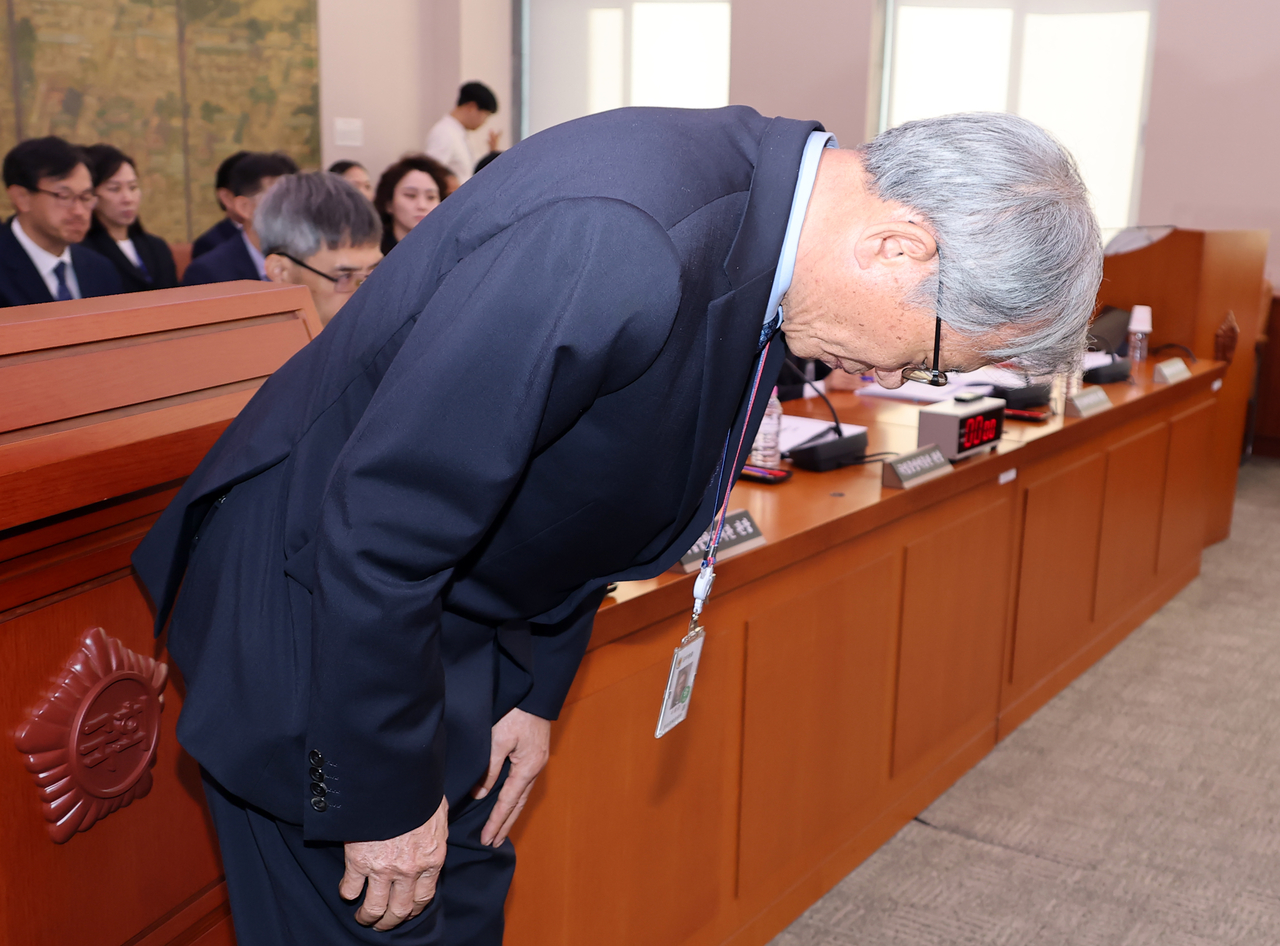
At a National Assembly audit of the Culture, Sports and Tourism Committee on Monday, Yu was asked by People Power Party lawmaker Kim Seung-su whether the calligraphy had ever been professionally appraised. Yu replied, "I was confident because I myself am a specialist in the history of calligraphy."
When fellow PPP lawmaker Yun Yong-geun asked what verification process had been followed before the work was put on display, Yu corrected himself, saying his assessment had been "a personal appraisal as someone who specializes in the history of painting and calligraphy."
Yu bowed twice in apology before delivering his audit report.
On the controversy itself, Yu said he had not disclosed that the calligraphy was from his personal collection because he did not want it to appear as self-promotion. "After it was later revealed to be a work by Park Jung-yang," he added, "I felt ashamed as an art historian. I am deeply embarrassed and remorseful."
Yu quoted from Tolstoy's "Resurrection," saying the novel holds that love and pride become memories with the passage of time, but mistakes and guilt remain in the present tense. He said he would take that as a lesson and work to help the museum recover its reputation.
At the audit, when pressed on whether he should take responsibility as director, Yu said only that the museum's systems needed to be overhauled to ensure such a mistake would never be repeated.
yul@heraldcorp.com