Oh visits Gwanak-gu care center Wednesday to hear from residents and staff
Nearly 70,000 care services linked to 14,000 residents in six months
City also plans transitional housing for patients discharged from hospitals
The Seoul Metropolitan Government plans to gradually expand eligibility for its integrated care program and develop standardized service models to reduce disparities in care quality across the city's 25 districts, allowing residents to continue living healthy and dignified lives in their own homes and neighborhoods.
Seoul Mayor Oh Se-hoon visited the Gwanak Health Care Center in Gwanak-gu Wednesday afternoon to review the program's progress since its launch and discuss its future direction with staff and service users. The visit was intended to gather firsthand feedback from the field and strengthen the community-centered care network.
The Seoul Integrated Care program is designed to help elderly residents and people with disabilities receive medical, long-term care and daily support services where they already live, without having to move to a hospital or institution. The primary beneficiaries are residents aged 65 and older and those under 65 with severe physical or brain lesion disabilities.
Oh first observed a massage therapy program at the center, in which visually impaired massage therapists help elderly residents manage their health, and encouraged participants and staff. At a subsequent roundtable, city and district officials shared updates on the program's progress and heard from professionals working in healthcare, wellness, long-term care and social services.
The center, located inside the Sillim General Social Welfare Center, serves as a community hub for integrated care in the district. It provides care referrals and information as well as programs covering exercise, nutrition, health management and emotional support.
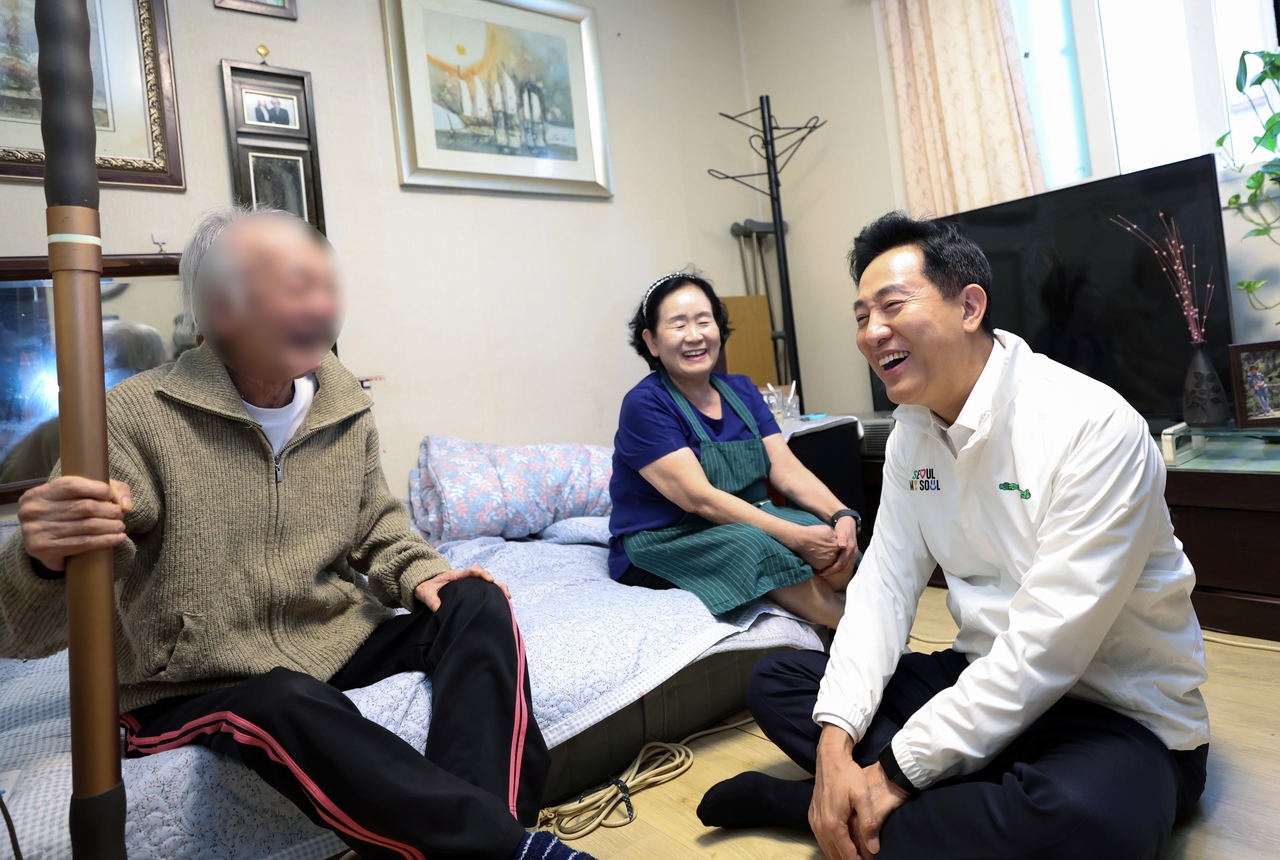
After the roundtable, Oh visited the home of a resident in their 70s who is currently receiving integrated care services near the center, listening to the resident's experience and checking on their health.
The Seoul Metropolitan Government launched the Seoul Integrated Care program on March 27, linking services across five areas — medical care, health management, long-term care, daily living support and residential welfare — so that elderly residents and people with disabilities can receive the care they need without leaving their homes.
From the program's launch through the end of September, a total of 20,711 people applied for integrated care, and 14,343 of them were connected to a combined 69,119 care services. By category, daily living support accounted for 36.5 percent of services provided, followed by health management at 30.6 percent, residential welfare at 10.8 percent, long-term care at 9.8 percent and medical care at 9.4 percent — spanning everything from meal and household assistance to health monitoring and housing support.
The city has also built a cooperative network involving 78 public institutions, including public health centers and dementia care centers, and 5,876 private organizations such as social welfare centers and in-home long-term care providers. Dedicated integrated care units have been established in all 25 districts.
Going forward, the city plans to further develop the program by gradually broadening eligibility, creating standard models for district-specific care initiatives and establishing transitional housing to help patients returning home after hospital discharge.
The city said it will incorporate feedback from Wednesday's roundtable into future policy and will hold an expert policy forum on the integrated care program on Oct. 30 to discuss improvements and the program's direction.
"Anyone who grows older or faces difficulties due to illness or disability would want to keep living in the home and neighborhood they have long called their own, surrounded by familiar faces," Oh said. "Based on what we hear from the field, Seoul will build an ever-tighter community care network so that everyone can live a healthy and dignified life where they already are — making Seoul a city defined by quality of life."
ikson@heraldcorp.com