Is reducing South Korea's own emissions not enough?
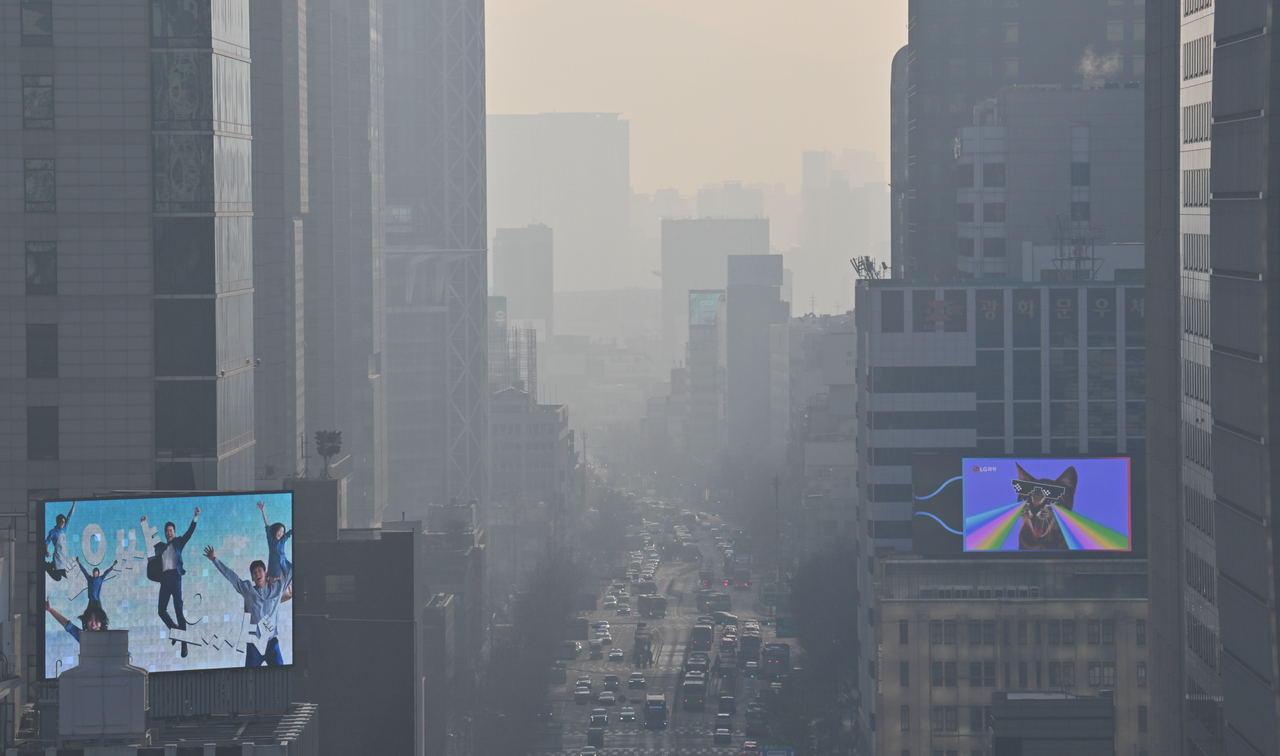
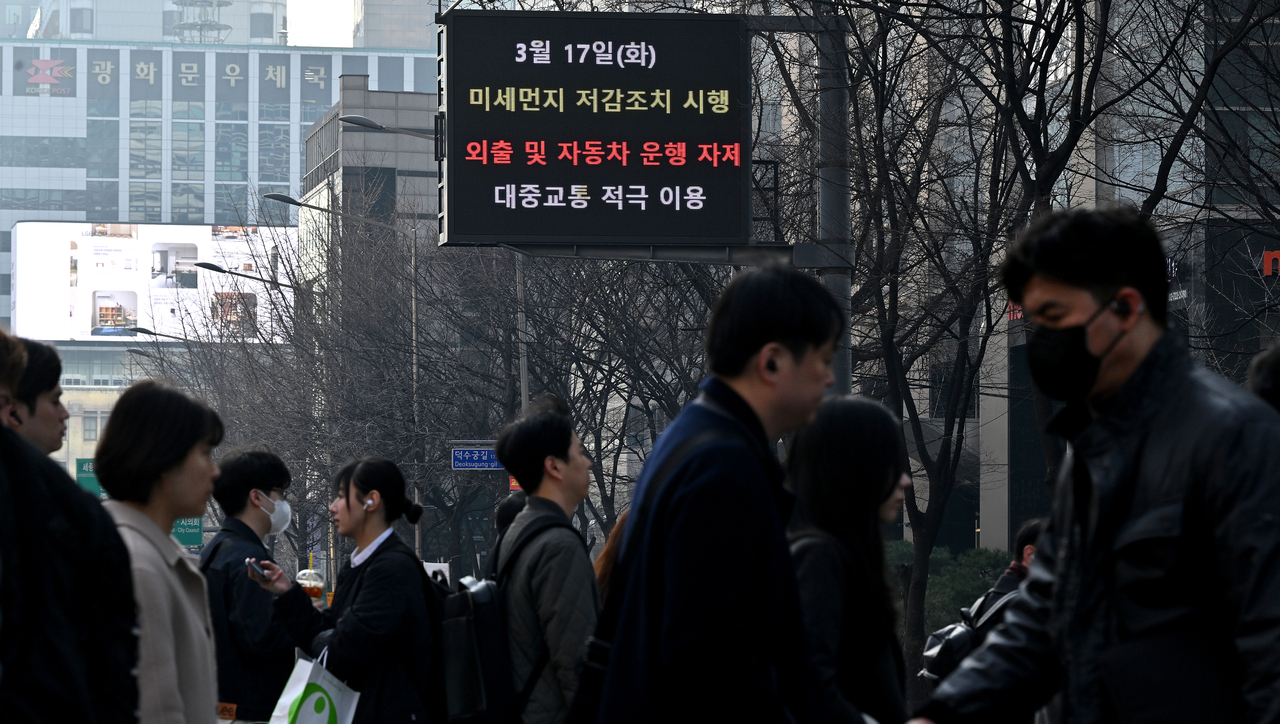
As temperatures drop each year, an unwelcome visitor reliably returns: fine dust. Clear skies turn gray, and checking air quality levels becomes a daily ritual before stepping outside.
Whenever South Korea's fine dust problem flares up, one country almost always comes up in the conversation — China. The widespread perception is that vast quantities of pollutants ride the wind across the Yellow Sea and foul South Korea's air.
That perception is not without basis. Pollutants generated in China do travel on the wind to the Korean Peninsula and contribute to South Korea's air pollution.
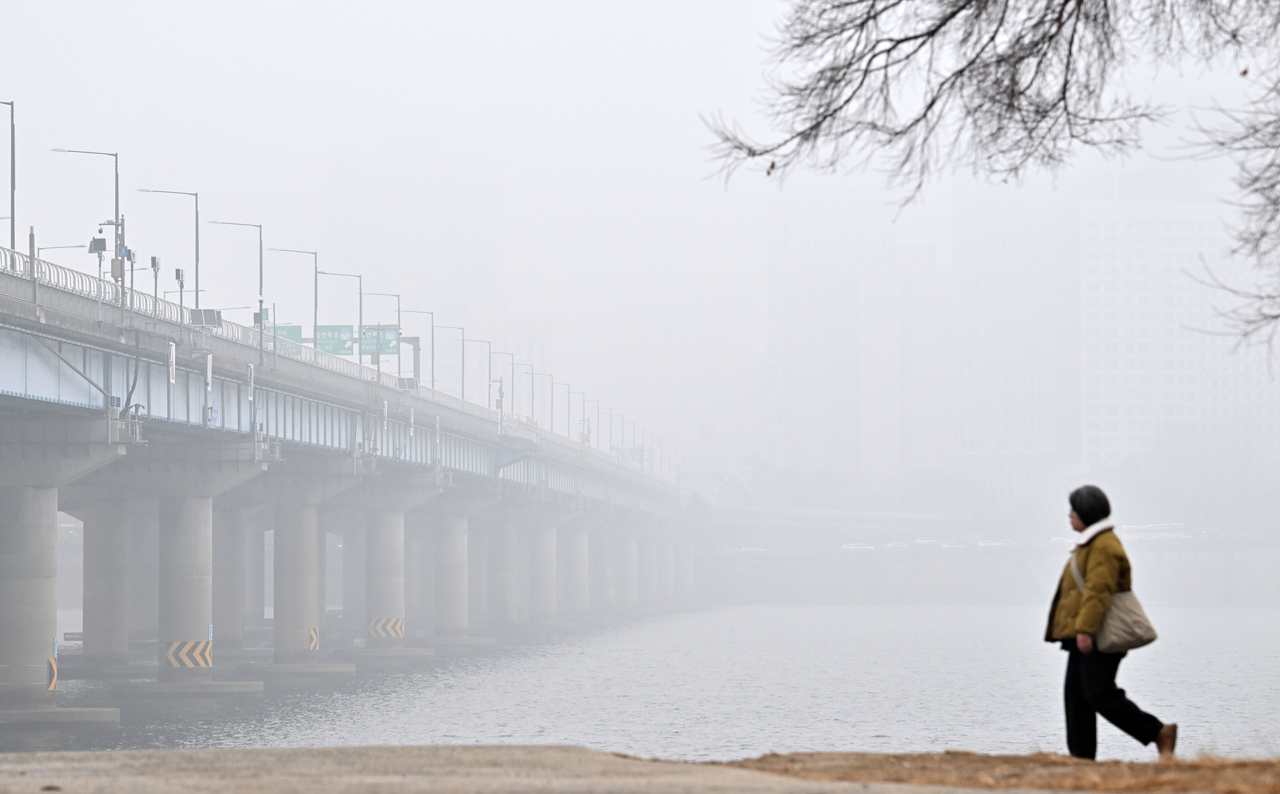
So what would happen if China sharply cut its emissions? Would South Korea's skies clear up just as much? A newly published study offers an answer.
A joint research team from Ajou University and Kunsan National University published findings last month in the international journal Environmental Impact Assessment Review, analyzing how reductions in China's pollutant emissions would affect South Korea and neighboring countries.
The researchers ran 25 simulated scenarios, either reducing each of five major pollutants from China individually or cutting all of them together. The analysis used winter atmospheric conditions from December 2020 through March 2021, a period when fine dust levels tend to worsen.
When emissions of all five major pollutants across China were cut in half, South Korea's average concentration of fine particulate matter — known as PM2.5 — fell from 24.1 micrograms per cubic meter to 16.4 micrograms per cubic meter, a reduction of about 32%.
Even without South Korea cutting its own emissions further, changes in China alone could reduce domestic PM2.5 levels by nearly one-third. The same simulation showed that the drop in South Korea's average PM2.5 concentration was about 2.8 times greater than the corresponding drop in Japan.
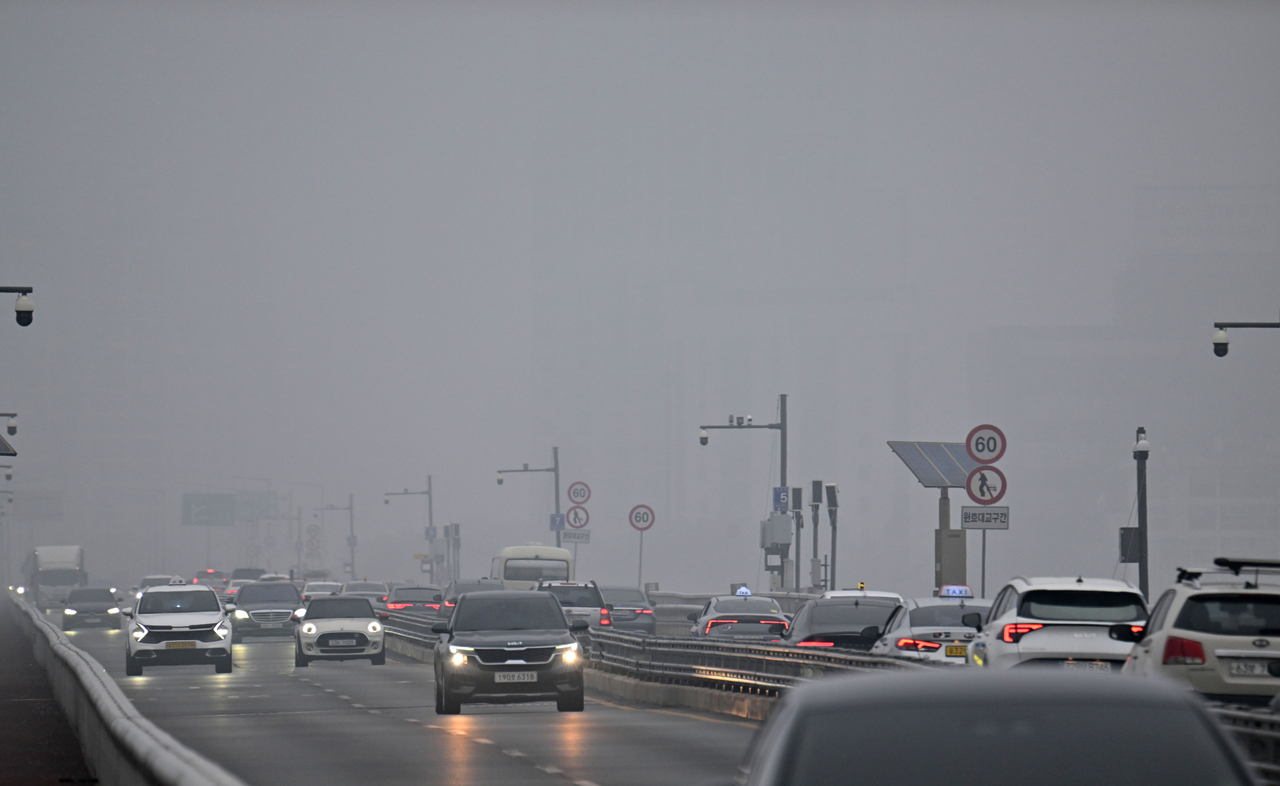
What if China eliminated all emissions of those five pollutants entirely? In that scenario, South Korea's PM2.5 concentration dropped from 24.1 to 8.8 micrograms per cubic meter — a total reduction of 15.3 micrograms per cubic meter, or roughly 63%.
The findings underscore that China's emissions cannot be ignored as a driver of South Korea's air quality. At the same time, the study confirmed that even a complete elimination of China's major pollutant emissions would not wipe out South Korea's fine dust problem entirely.
South Korea itself generates pollutants from a wide range of sources, including vehicles, factories and power plants. Pollutants drifting in from regions other than China, as well as naturally occurring dust, also play a role. According to the Ministry of Climate, Environment and Energy's National Fine Dust Information Center, South Korea directly emitted about 48,000 tons of PM2.5 domestically in 2023.
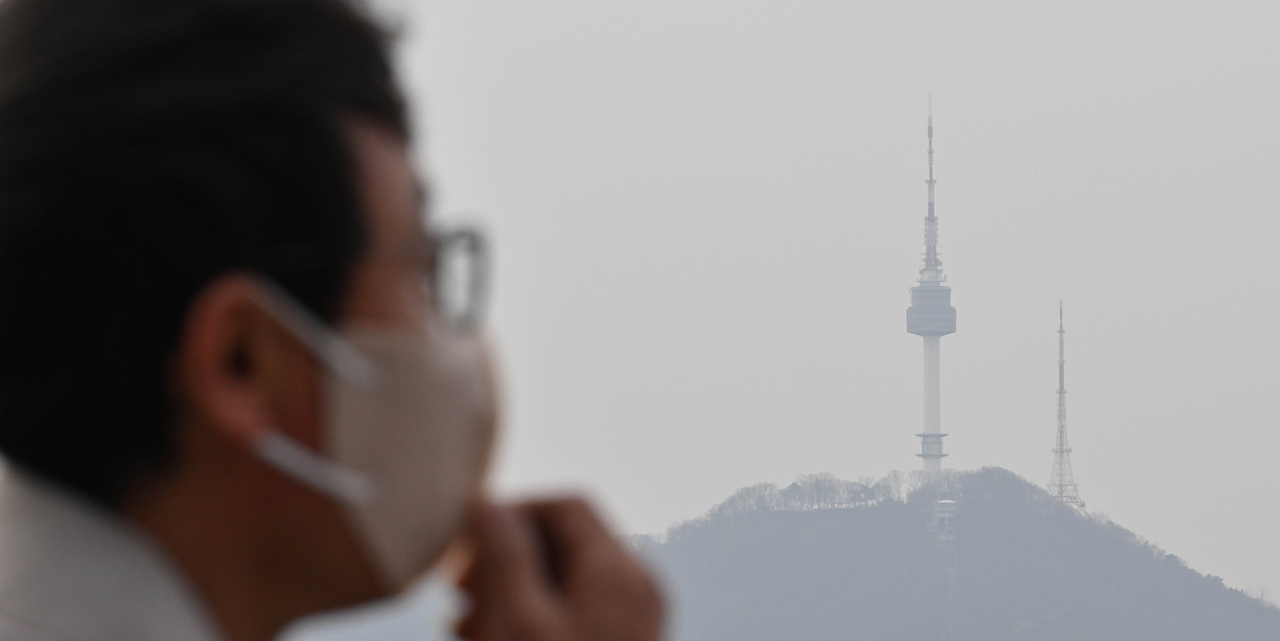
The study also revealed that not all pollutants originating in China affect South Korea equally. Within China itself, cutting directly emitted dust particles proved most effective at improving local air quality. For South Korea, however, the picture was different.
Reducing nitrogen oxides — pollutants produced by vehicles and factories — turned out to be more effective at lowering South Korea's PM2.5 levels. When China's nitrogen oxide emissions were halved, South Korea's PM2.5 concentration fell by 3.1 micrograms per cubic meter, more than the 2.6 microgram drop achieved by halving direct dust emissions.
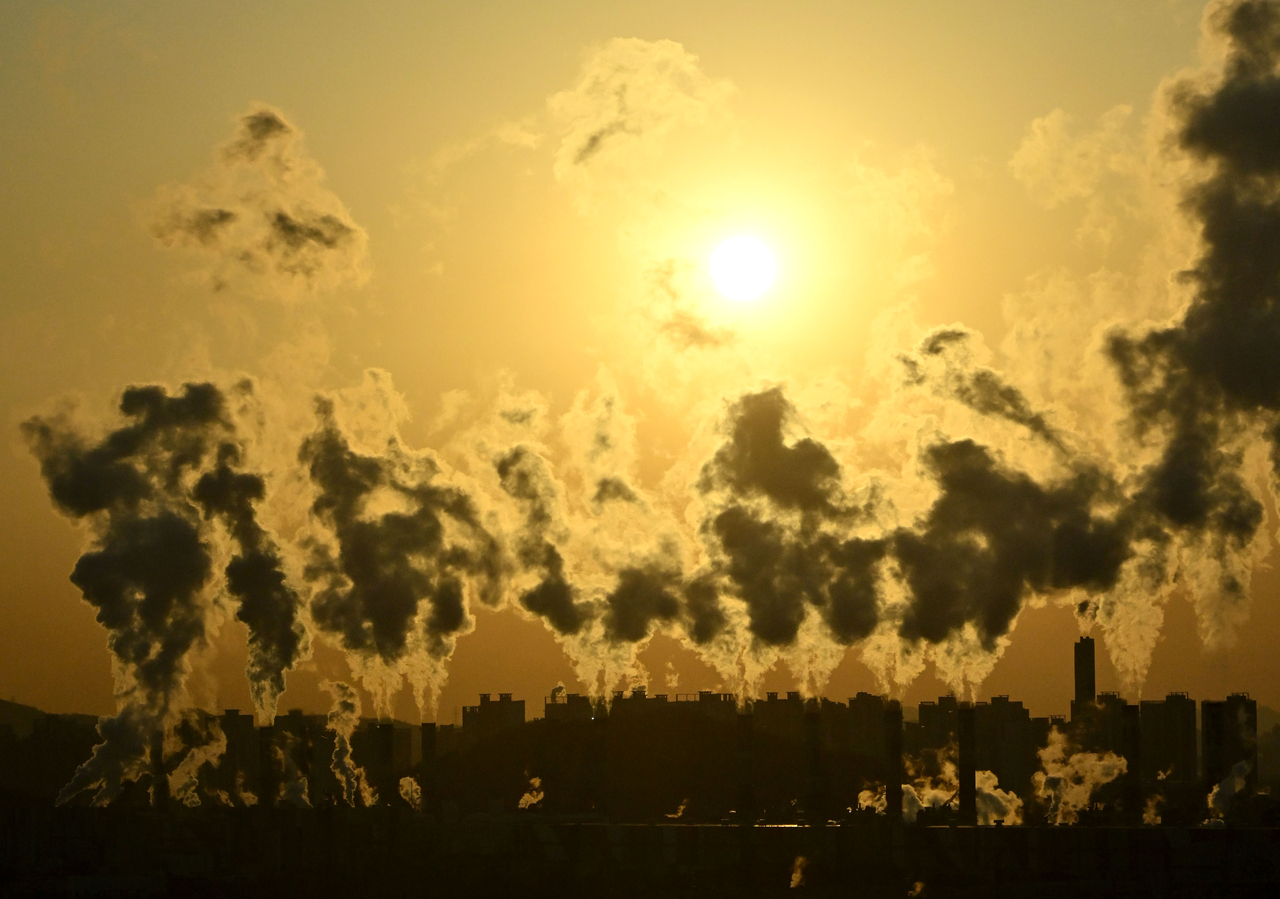
The problem is not simply dust particles formed in China blowing directly into South Korea. Gaseous pollutants emitted by factories and vehicles also travel on the wind, and along the way they can react with other substances to form new PM2.5 particles.
The location of emission cuts within China also made a difference. Halving major pollutant emissions in Shandong Province, which faces South Korea across the Yellow Sea, reduced South Korea's PM2.5 concentration by 1.2 micrograms per cubic meter. The Beijing-Tianjin-Hebei region produced a similar level of improvement.
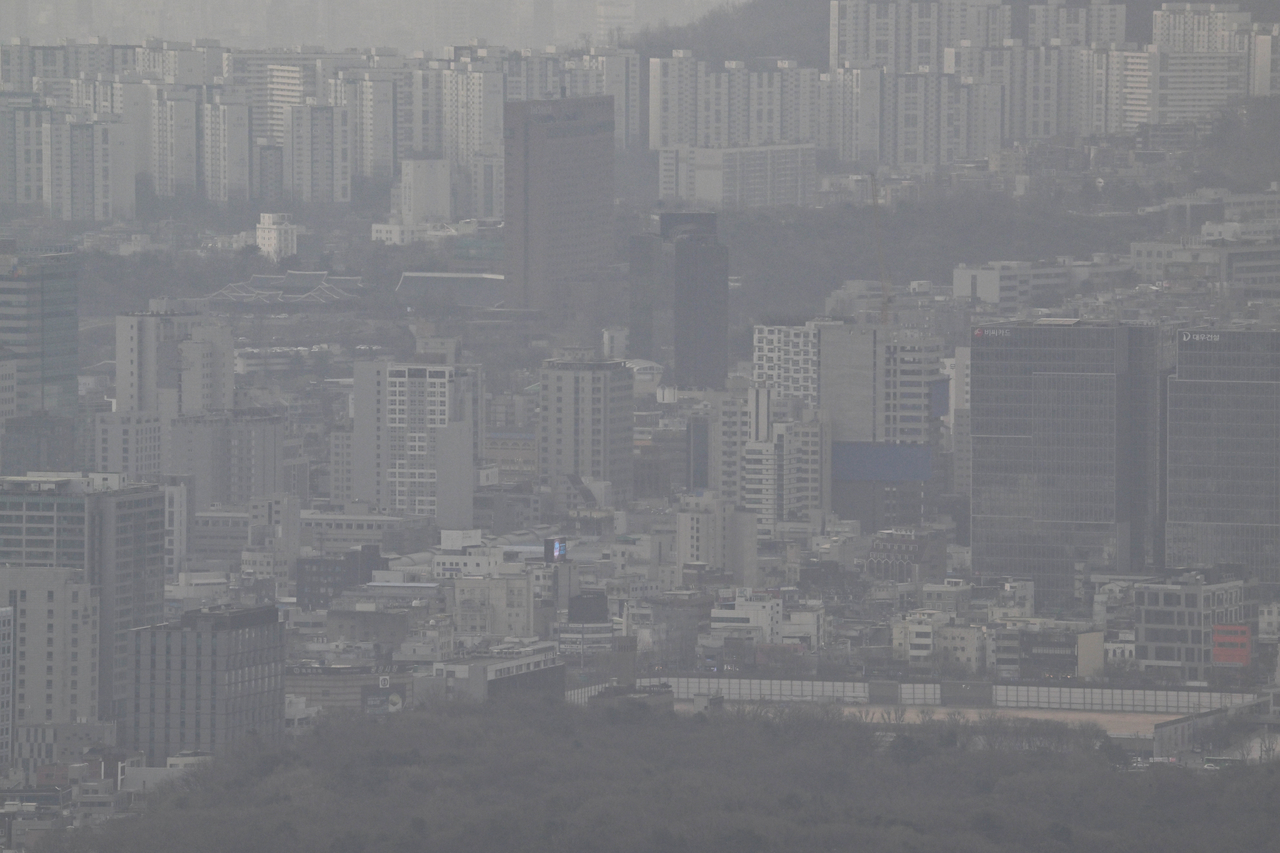
By contrast, emission cuts in the inland city of Chongqing had a relatively negligible effect on South Korea, confirming that some regions of China have a far greater influence on South Korean air quality than others.
Meanwhile, South Korea's fine dust levels have been on a gradual downward trend. According to the Ministry of Climate, Environment and Energy, the national annual average PM2.5 concentration fell from 25.2 micrograms per cubic meter in 2015 to 15.6 micrograms per cubic meter in 2024, a decline of about 38%. In 2025, the figure held at around 16 micrograms per cubic meter (provisional), maintaining the improved level.
But there is no room for complacency. The WHO recommends an annual average PM2.5 concentration of no more than 5 micrograms per cubic meter to protect public health. South Korea's levels still exceed that guideline by more than three times.
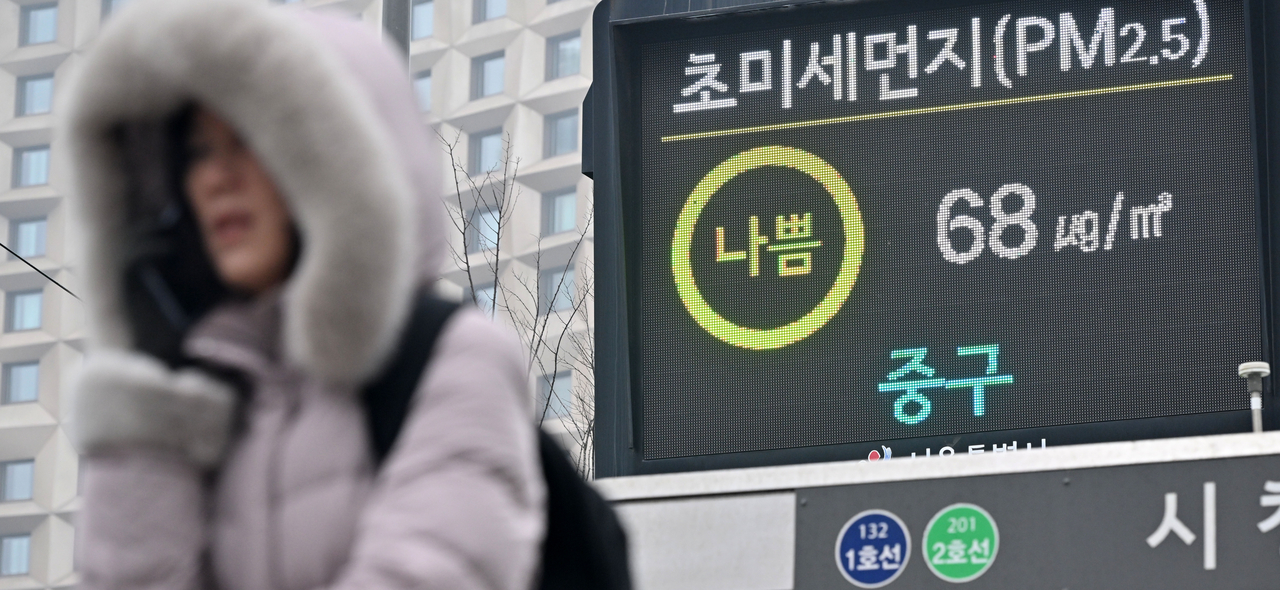
The situation becomes particularly acute in winter. From December 2024 through March 2025, the national average PM2.5 concentration reached 20.3 micrograms per cubic meter. While lower than in past years, the risk of high-concentration fine dust episodes remains.
Given these conditions, reducing domestically generated pollutants and deepening cooperation with neighboring countries such as China are seen as equally important priorities. With the study confirming that China's emission reductions would benefit air quality in both South Korea and Japan, experts say building a multilateral framework for cutting air pollution through cross-border cooperation is essential.
"These findings provide important policy implications for PM2.5 reduction strategies in Northeast Asia," the researchers said. "Establishing institutional mechanisms for transboundary cooperation is critically important."

woo@heraldcorp.com