- Partners to develop specialty steel and heat-resistant materials for fusion reactors, build critical mineral supply chain
- Collaboration to span design and construction of Korean innovative fusion reactor through commercialization
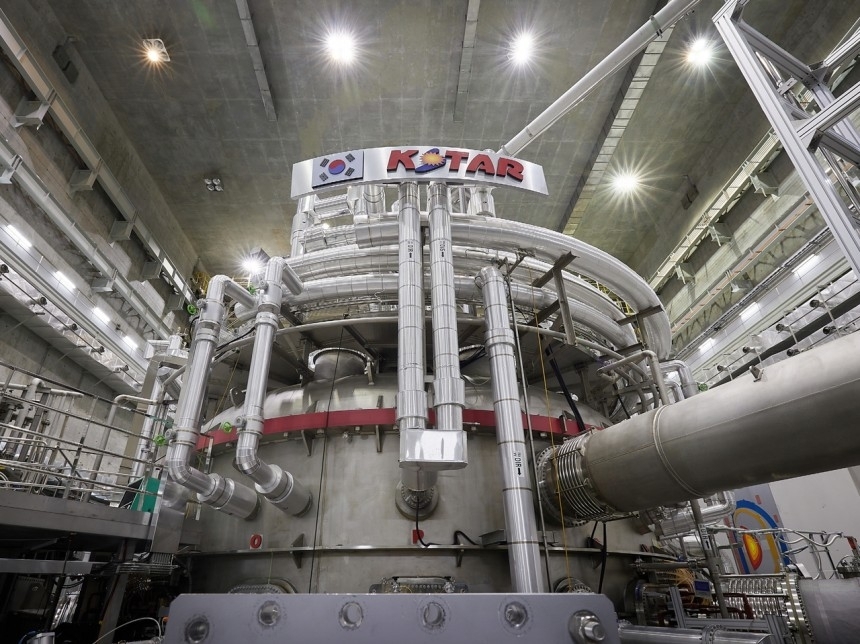
South Korea's leading nuclear fusion research institute and a major steelmaker have joined forces to develop key materials for fusion power generation, a technology widely seen as a future source of clean energy. The partnership aims to localize production of critical fusion reactor materials — from heat-resistant components capable of surviving extreme plasma environments to specialty steels used in cryogenic superconducting magnets — and to build a stable domestic supply chain.
The Korea Institute of Fusion Energy signed a mutual cooperation agreement with Posco Holdings at its headquarters in Daejeon on Wednesday, committing to joint technology development and the cultivation of a domestic fusion industry ecosystem.
The agreement is designed to secure the key materials needed to develop next-generation fusion devices, including a Korean innovative fusion reactor, and to expand industry participation across the full spectrum from design and construction to commercialization.
Fusion power works by replicating on Earth the process by which the sun generates energy. Sustaining the fusion reaction requires maintaining an ultra-high-temperature plasma of at least 100 million degrees Celsius.
Achieving that demands not only plasma control technology but also advanced materials and components that can retain their performance under extreme conditions.
Particularly critical are heat-resistant materials such as tungsten that can withstand the intense heat generated by plasma, as well as low-activation steels that minimize radioactivation even under neutron exposure. Specialty steels that maintain strength and toughness at cryogenic temperatures are also required around superconducting magnets.
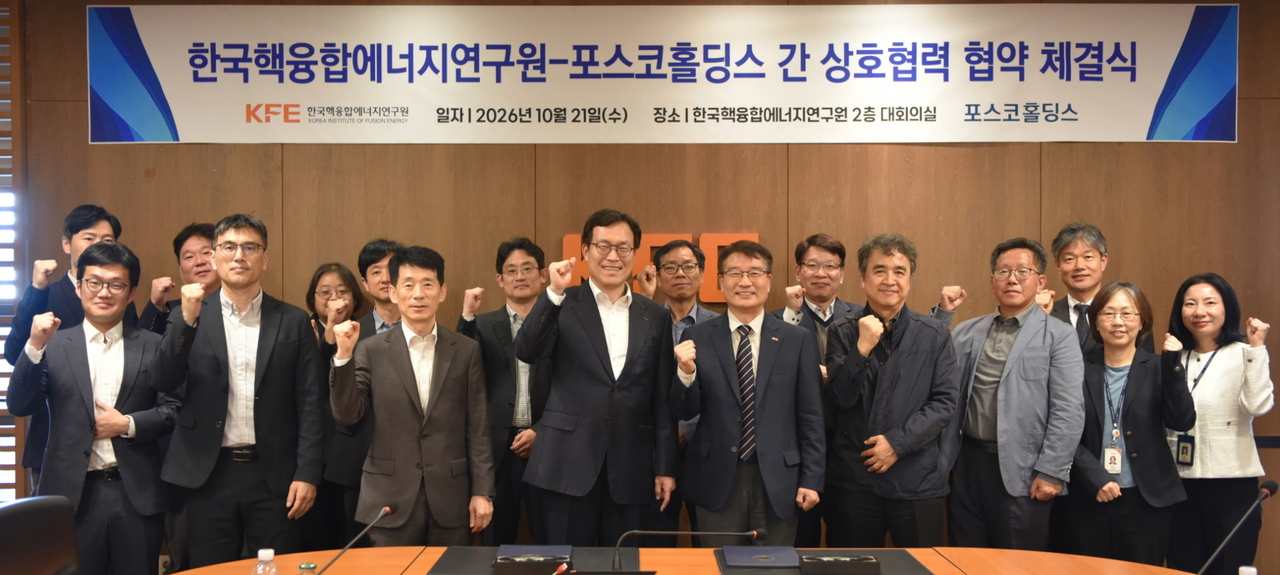
The two organizations plan to apply Posco Group's steel and materials expertise to fusion device development, focusing on material development and performance evaluation as well as building a reliable supply chain.
Key areas of cooperation include fusion energy technology and device development, the development and evaluation of fusion-grade steel, specialty materials and critical minerals, and the design, engineering and construction of fusion devices and related facilities.
The partners will also work together to identify commercialization opportunities and investment prospects in fusion technology, and to facilitate exchanges of technical and industry information as well as expert personnel.
The collaboration is particularly significant for broadening domestic industry participation in the government-led effort to develop a Korean innovative fusion reactor.
"Realizing fusion energy requires not only research and development but also close cooperation with industry across diverse fields, including materials and components," Korea Institute of Fusion Energy President Oh Young-kook said. "We will work to make our cooperation with Posco Holdings on materials and supply chains more concrete, and we will continue to expand collaboration with other domestic companies."
nbgkoo@heraldcorp.com