Analysis of buyers in the three Gangnam districts this year
Residents from Bundang, Suji, Yeongtong and Dongtan heading to Gangnam
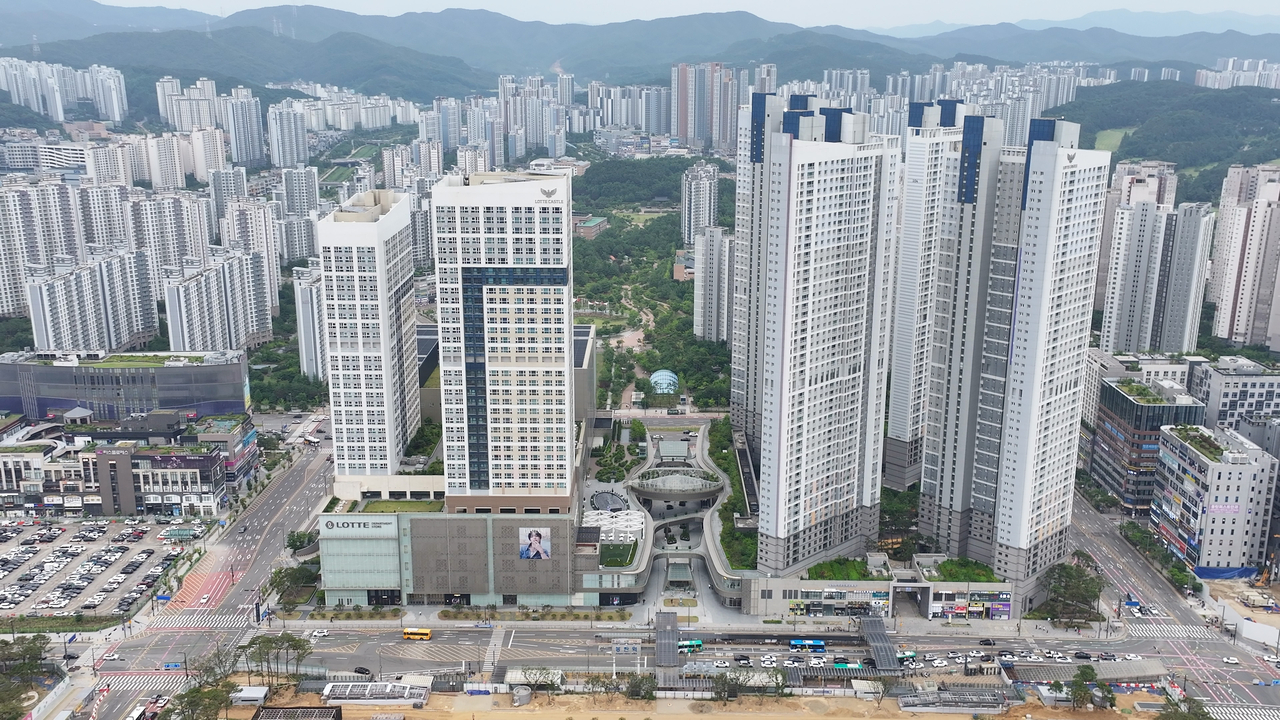
More than 4,000 Gyeonggi Province residents bought homes in Seoul's three Gangnam districts — Gangnam-gu, Seocho-gu and Songpa-gu — this year, according to new data. Songpa-gu accounted for nearly half of all purchases, and buyers most commonly listed Seongnam's Bundang-gu as their home address. As apartment prices in southern Gyeonggi Province have risen and the price gap with some Gangnam complexes has narrowed, real estate agents say they are fielding a steady stream of inquiries from homeowners looking to sell and trade up to a higher-tier neighborhood.
Bundang leads with 589 buyers; Dongtan, Suji and Yeongtong also send buyers to Gangnam
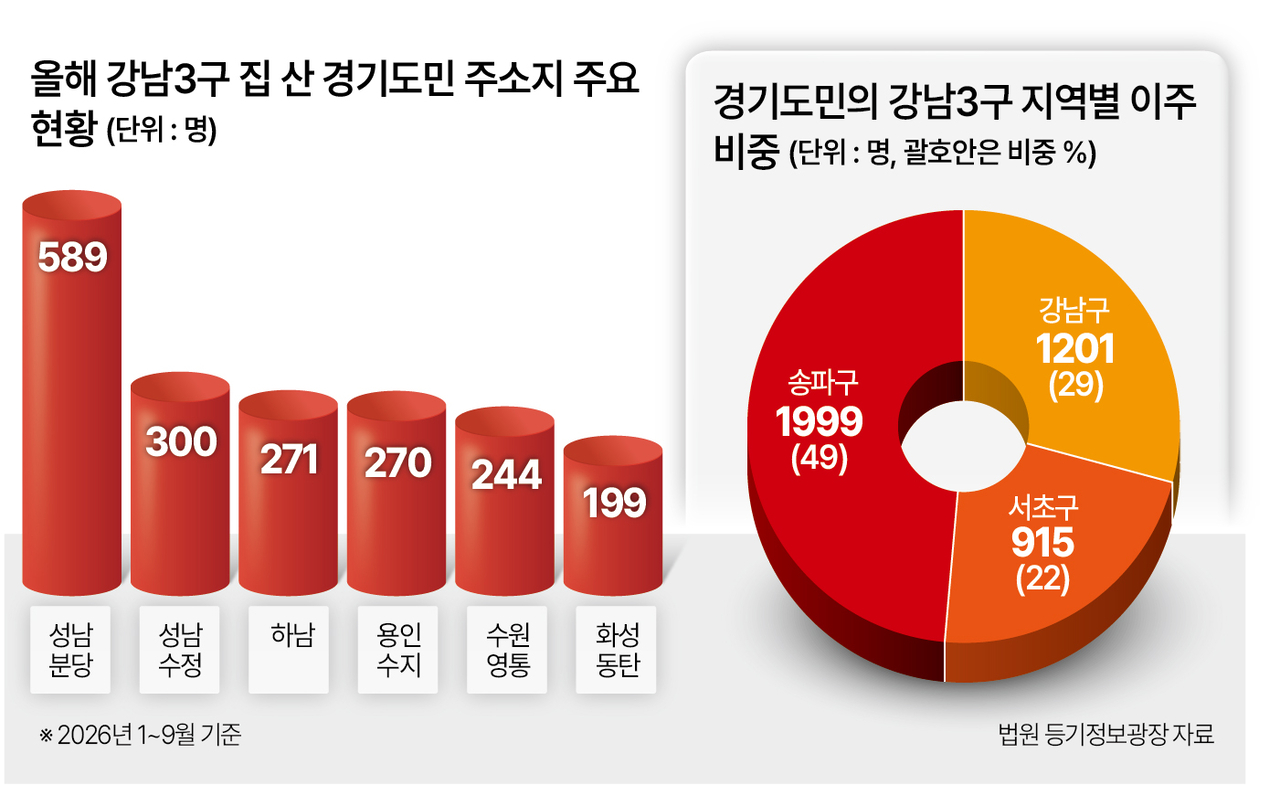
According to the Court Registry Information Plaza, a total of 4,115 people with Gyeonggi Province addresses filed ownership transfer registrations for collective buildings — purchases — in the three Gangnam districts from January through September this year.
By district, Songpa-gu drew the most buyers at 1,999, or about 48 percent of the total, followed by Gangnam-gu with 1,201 (29 percent) and Seocho-gu with 915 (22 percent). Roughly one in two Gyeonggi residents who bought in the Gangnam area chose Songpa-gu, which has a relatively lower barrier to entry than the other two districts.
Within Gyeonggi Province, residents of Seongnam's Bundang-gu were the most active buyers in the three Gangnam districts. A total of 589 Bundang-gu residents filed ownership transfer registrations for purchases there this year — 231 in Songpa-gu, 227 in Gangnam-gu and 131 in Seocho-gu.
Bundang-gu recently posted the highest weekly apartment price increase in the country during the second week of October. Buying activity within the three Gangnam districts was concentrated in preferred neighborhoods: Bundang-gu residents who bought in Songpa-gu favored Jamsil-dong and Munjeong-dong, each drawing 41 buyers. In Gangnam-gu, Gaepo-dong was the top destination with 46 buyers, while in Seocho-gu, Seocho-dong led with 40.
Beyond Bundang, significant numbers of buyers also moved from other major areas in southern Gyeonggi Province into the three Gangnam districts — including 300 from Seongnam's Sujeong-gu, 271 from Hanam, 270 from Yongin's Suji-gu, 244 from Suwon's Yeongtong-gu and 199 from Hwaseong's Dongtan-gu. Analysts say rising home prices in so-called "shuttle zones" — areas prized by chipmaker employees for their commuting convenience — have prompted some residents to relocate to the Gangnam area.
Dongtan-gu in Hwaseong, which recorded the highest cumulative apartment price increase in the country this year, also sent a steady flow of buyers into the three Gangnam districts. Among Dongtan-gu residents, 100 bought homes in Songpa-gu, 55 in Gangnam-gu and 44 in Seocho-gu. The most popular destinations were Garak-dong in Songpa-gu (21 buyers), Yeoksam-dong in Gangnam-gu (14) and Seocho-dong in Seocho-gu (22).
Buyers push through lending curbs — chipmaker bonuses and in-house loans are key factors
Experts point to improved conditions in the semiconductor industry — including performance bonuses and Samsung Electronics' expanded in-house housing loan program — as key reasons why demand for the move from southern Gyeonggi Province to the three Gangnam districts has persisted despite tightened lending restrictions.
The government's Oct. 15 measures last year capped mortgage loans at a maximum of 600 million won ($452,000), with the limit dropping to 400 million won for homes priced above 1.5 billion won and to 200 million won for those above 2.5 billion won. The three Gangnam districts are home to some of Seoul's most expensive real estate. According to KB Real Estate, the average sale price of apartments in the top 20 percent — the fifth quintile — in Seoul stands at 3.47 billion won.
Even with mortgage limits as low as 200 million won for homes priced above 2.5 billion won, the restrictions have not been enough to fully stop owner-occupiers from trading up to higher-tier neighborhoods, analysts say. Buyers are combining proceeds from selling their existing homes with income and other financial resources to make the move.
A real estate agent operating in Songpa-gu said that with asking prices for the 84-square-meter units at Gwanggyo Jungheung S-Class exceeding 2.1 billion won, a reconstruction apartment of the same size at Munjeong-dong Olympia Family Town for around 2.5 billion won can feel relatively affordable by comparison. The agent added that inquiries have been rising for the 84-square-meter units at Songpa Fine Town in Jangji-dong, Songpa-gu, which are available for 1.8 billion won.
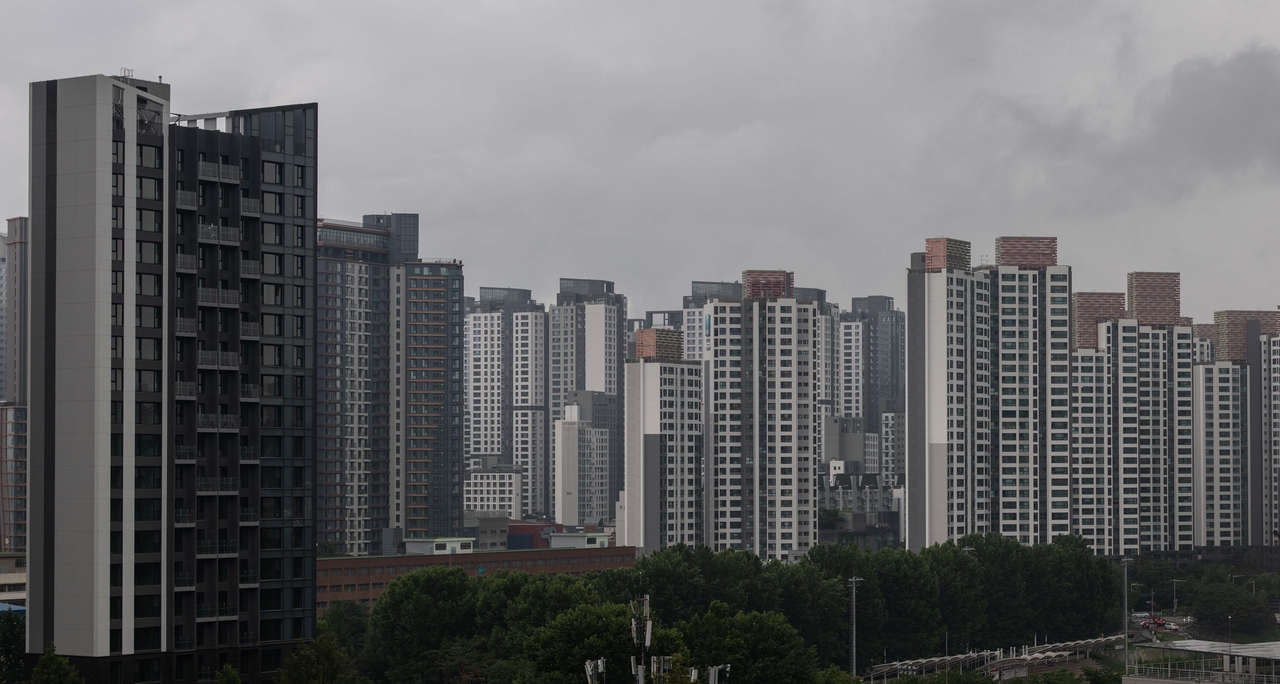
Samsung Electronics' in-house housing loan program, which took effect last month, is seen as an additional factor. It has expanded the financing options available to employees living in the semiconductor belt who sell their existing homes and relocate to the Gangnam area.
According to financial industry sources, Samsung Electronics employees who use the company's in-house housing loan can still take out an additional mortgage from a bank, with the extra borrowing capped at around 400 million won. The in-house loan is funded through a separate internal pool, meaning it is not directly subject to the debt service ratio regulations applied by financial institutions and is not registered with Korea Credit Information Services. However, the actual additional loan limit can vary depending on an individual's income, existing debt and the lending criteria of the financial institution.
Jung Jae-hoon, a professor at Dankook University, said that as home prices in major hubs such as Dongtan have surged and the price gap with higher-tier areas has narrowed, more people are concluding that Gangnam is actually the cheaper option and moving there. "This trend goes beyond a simple localized rebound," he said. "It is likely to develop into a reverse asset diffusion — people using the narrowed price gap as a springboard to move from Bundang into Gangnam."
hss@heraldcorp.com