SpaceX, led by Elon Musk, swung to its first operating profit since its IPO in the third quarter, and news that the company is exploring a merger with Tesla sent its shares surging more than 8% in after-hours trading. A surge in AI revenue drove the turnaround, while the prospect of combining the two companies lifted investor sentiment.
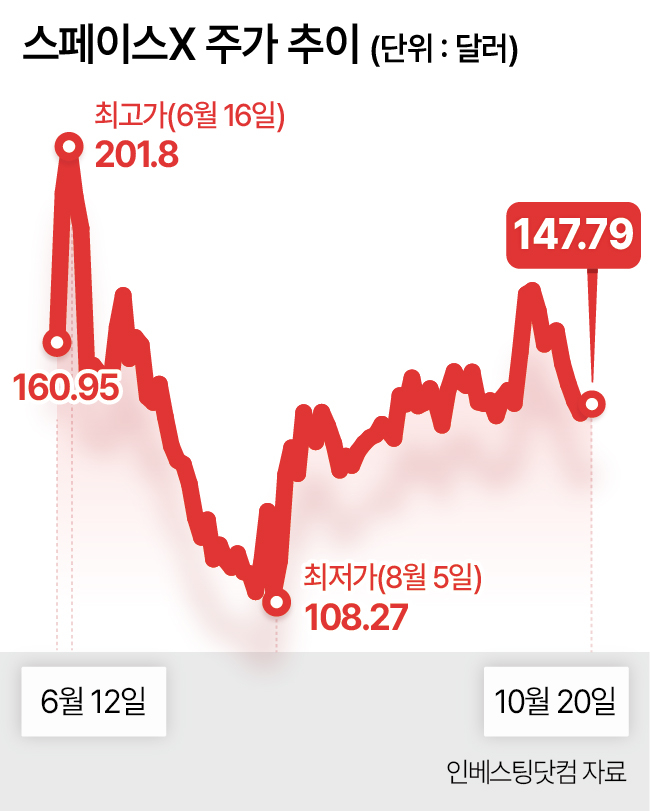
SpaceX shares climbed 8.53% to $160.39 in after-hours trading around 8 a.m. Wednesday, according to Investing.com. The stock had topped $225 during intraday trading in June before struggling near $150 through October. It edged down in the regular session just before the earnings announcement.
The shares jumped after the company reported its first profitable quarter following the close of trading. SpaceX said Tuesday (local time) that third-quarter sales reached $14.58 billion, up 161% from a year earlier. Net profit came in at $4.4 billion, reversing a net loss of $1.1 billion in the same period last year. Earnings per share of $0.35 also far exceeded the market consensus of $0.14.
Earnings were the starting point for the share rebound. SpaceX said Tuesday (local time) that third-quarter sales reached $14.58 billion, up 161% year on year. Net profit was $4.4 billion, reversing a net loss of $1.1 billion a year earlier, and earnings per share of $0.35 far exceeded the market estimate of $0.14. AI revenue totaled $7.56 billion — roughly triple the second-quarter figure — surpassing Starlink's $5.25 billion for the first time to become the company's largest revenue source.
The earnings call also put a potential merger with Tesla in the spotlight. Musk said the independent directors of both companies had formed a special committee to discuss a possible combination. He drew a line, however, saying no specific deal terms had been agreed upon and that a merger was not guaranteed. The combined enterprise value of the two companies is estimated at around $3.5 trillion.
Industry observers say that linking Tesla's autonomous driving, robotaxi and humanoid robot operations with SpaceX's AI models and software — and consolidating investment and operations at Terafab to support the computing needs of both — could go beyond cross-business cooperation to integrate AI technology and production infrastructure into a single framework.
A completed merger would still require deal terms and shareholder approval, among other hurdles. Corporate governance and shareholder consent are the key variables. Musk holds roughly 20% of Tesla's shares, which is not enough to push a merger through on his own. He would need majority support from all outstanding shares, meaning he must also account for shareholders who do not vote.
For that reason, the industry is discussing the possibility of additional merger-related announcements before year-end, timed to Tesla's annual shareholder meeting. Because shareholder approval is the biggest hurdle, the companies would need to spell out the merger ratio and deal terms, and clearly present the benefits for Tesla shareholders alongside the financial burden that SpaceX's massive AI investment would entail. SpaceX is pouring enormous capital into AI infrastructure, and a merger could channel Tesla's cash flow and business assets into funding that expansion — an opportunity for Tesla shareholders, but also a potential capital burden.
For the share price to climb further, SpaceX must demonstrate that its rapidly growing AI revenue can translate into profitability sufficient to offset the heavy investment load. Third-quarter AI revenue of $7.56 billion was a key growth driver, but capital expenditure on the AI business in the same period reached $16.4 billion — more than double the revenue. Additional investment recovery will be needed before rising sales feed through to improved profits and cash flow.
Whether subscriber growth at Starlink, the company's existing profit base, can improve margins is another question. Subscribers reached 13.6 million at the end of the third quarter, but average revenue per user has been trending lower. Analysts warn that if falling prices limit revenue growth even as the subscriber base expands, the cash-generating capacity needed to fund the AI business could weaken.
kacew@heraldcorp.com