Barrack calls for 'redefining' alliance ties
Urges shift to smaller, diversified regional pacts
Gulf states uneasy as US signals exit from Iran war it launched
Experts warn of eroding American credibility
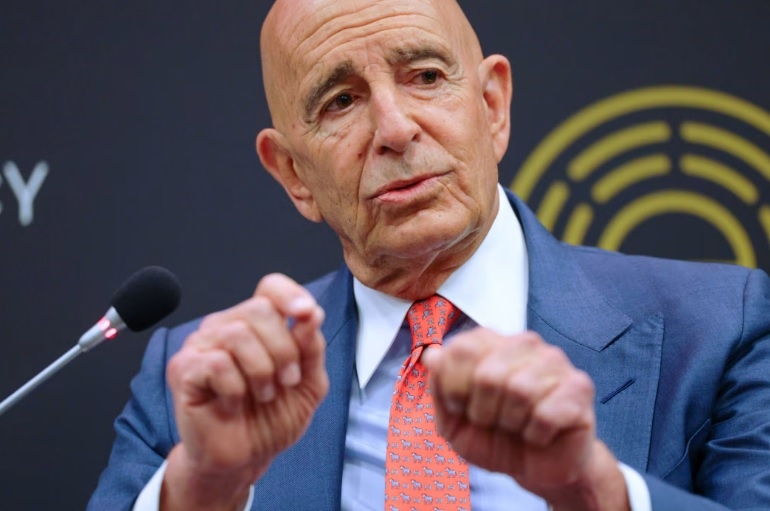
Tom Barrack, the US ambassador to Turkey and White House envoy for Syria and Iraq, declared that the longstanding arrangement under which the United States provided security to the Middle East in exchange for oil is over, urging regional states to take responsibility for their own defense. Gulf states, already on edge amid rising regional tensions, responded with concern that Washington is walking away from a war it started and leaving them to manage the fallout.
The Wall Street Journal reported Tuesday (local time) that Barrack told the Doha Security Forum in Qatar that day that "the post-World War II construct — the exchange, if you will, of security for oil — no longer fits America's primary needs."
The United States, he said, has no desire to sacrifice lives for the Middle East, and Gulf states already know Washington cannot guarantee their security.
"The America that has been guaranteeing the world's security for the past 80 years no longer exists," Barrack said, adding that the administration's message was not one of abandonment but of "redefining the relationship." He proposed that Middle Eastern countries focus on securing themselves through regional cooperation, and said the right path forward was a shift toward smaller, more diversified alliances — citing a defense arrangement among Saudi Arabia, Pakistan and Turkey as a model.
The Journal said Gulf states have since grown worried that the US will leave them to clean up after the war it launched against Iran. Gulf nations had urged President Donald Trump not to strike Iran, but the US and Israel went ahead with the attack. The conflict has dragged on longer than expected, and tensions escalated further when Yemen's Houthi rebels launched airstrikes against Saudi Arabia. Regional states burned through much of their air-defense capacity repelling Iranian strikes early in the war and are increasingly anxious about their ability to counter future missile and drone attacks.
Barrack acknowledged that the war the US and Israel launched in late February had produced unintended consequences, comparing the Middle East to a Rubik's Cube in which a single move reshapes the entire picture. He went on to cite Iraq, Libya and Afghanistan, saying, "Every time we've gone in and tried to change a leader or a regime, it seems like it was the wrong call."
The Journal noted that the Trump administration has delivered similar calls for self-reliance at security forums in Europe and Asia, yet has simultaneously moved to expand its military presence in the Middle East — sending mixed signals to the region.
The US designated Saudi Arabia a major non-NATO ally last year; Qatar, Bahrain and Kuwait hold the same status. In connection with the Iran war, Washington has deployed a third aircraft carrier and a Marine expeditionary unit to the Persian Gulf and has been replenishing supplies in preparation for a possible resumption of hostilities. Barrack himself said, "We are not leaving."
Ali Vaez, an Iran expert at the International Crisis Group, said the contradictory messages coming from US officials have damaged American credibility and that regional states are now moving to hedge their risks.
kate01@heraldcorp.com