Five Korean artist teams explore AI research questions through art; exhibition opens Friday at Centre Pompidou x Hana in Yeongdeungpo-gu
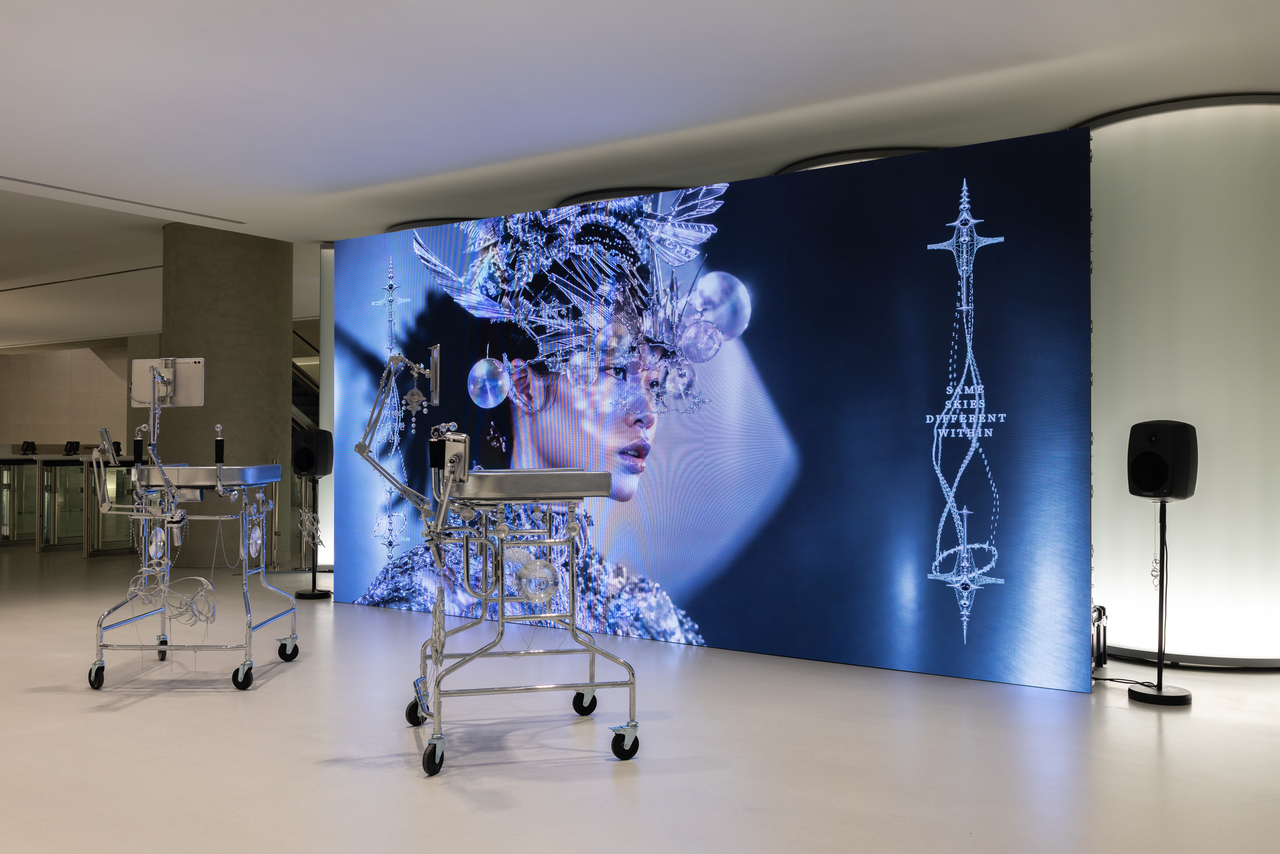
Hanwha Cultural Foundation has launched an art commission project with global AI company Anthropic, bringing together art and technology.
The foundation will hold the "Hanwha x Anthropic Art Commission 2026" exhibition from Friday to Nov. 13 at Centre Pompidou x Hana in Yeongdeungpo-gu, Seoul.
Titled "AS ___ AS POSSIBLE," the exhibition features new works by five Korean artist teams — Nam Min-o, Yeom In-hwa, Woobak Studio, Jung Ga-hee and Chu Mi-rim. The title, which translates roughly as "as ______ as possible," encompasses interpretations such as "as accurately as possible," "as understandably as possible" and "as desirably as possible," posing questions about the goals and standards that technology pursues.
The participating artists translate questions drawn from Anthropic's AI research — including "interpretability," the effort to understand how AI systems work internally, and "alignment," the effort to ensure AI reflects human intentions and values — into works spanning video, installation, sound, performance, extended reality and interactive media.
Nam Min-o presents a media art series titled "Rocket Sequence #11 Orbit" (2026), spanning AI programs and analog film video. The constant movement of horses, the sound of dice and the image of a lone winner left after a game ends prompt reflection on the human tendency to understand a complex reality through limited rules and objectives.
Yeom In-hwa's "Chandra Chronicles: In Neuroverse" (2025–2026) is an interactive installation set in a fictional world called the "Neuroverse," where different neurological types and forms of intelligence converge. The work questions the standards that measure different beings against a single notion of "normal" or optimal performance, and explores neurodiversity — the collaborative process of building the conditions for support and connection that each being needs.
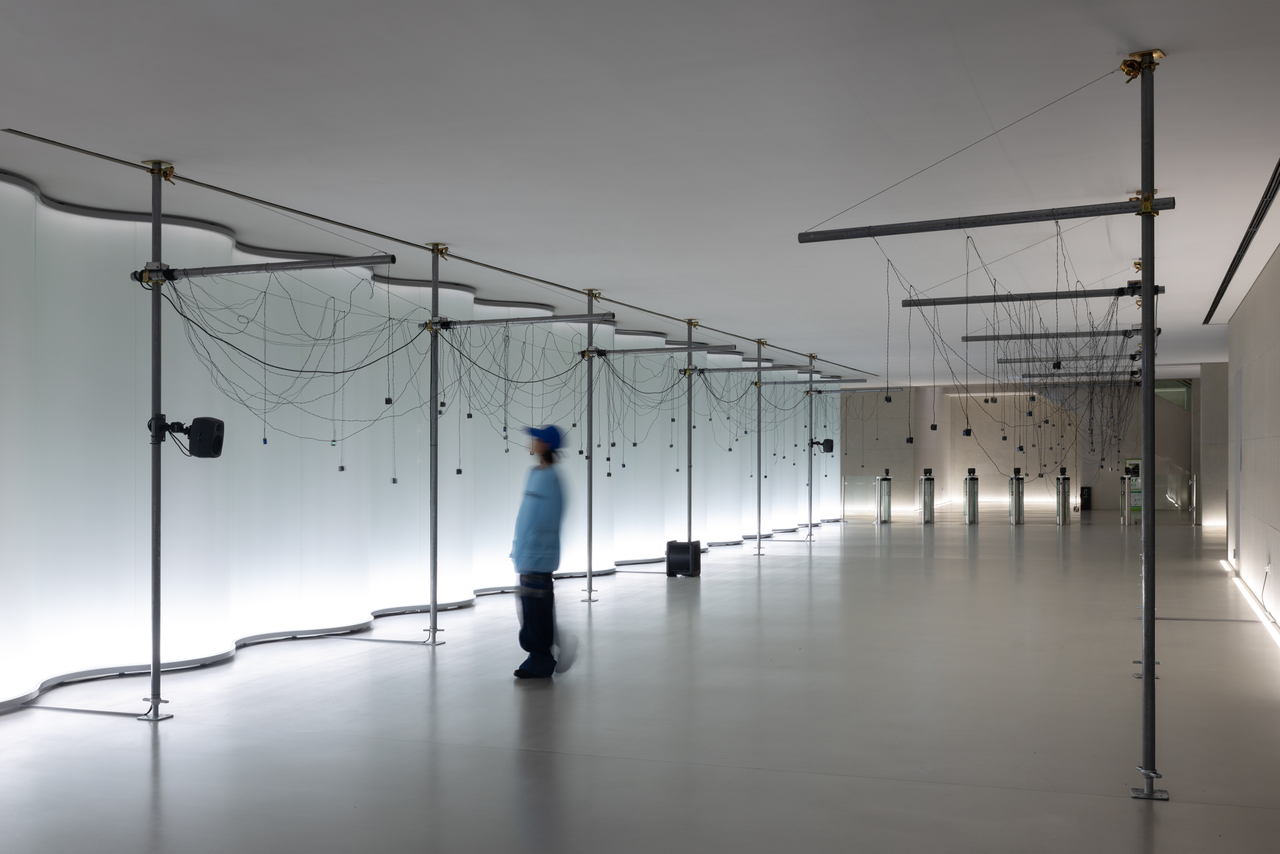
Woobak Studio, a media artist duo comprising Woo Hyun-ju and Park Ji-yun, presents the interactive installation "Body, Still, Moving" (2026). Visitors walk around the work and view images arranged at different depths, experiencing the time and space captured in flat map photographs in three dimensions.
Jung Ga-hee's new work "103 Early Hints" (2026) is an installation of 103 miniature monitors suspended from above; the title is drawn from the HTTP status code that a server sends before delivering a final response. Codes presented alongside brief scenes indicate a status without explaining its context, confronting viewers with the distance between the information technology offers and human interpretation — between what is seen and what is understood.
Chu Mi-rim's "Navigating a New Route" (2026) takes its starting point from the "shape tween" function in animation software, which automatically generates transitions between two forms — a beginning and an end. A video connecting ten drawings reveals the forms that emerge between human-set conditions and an unpredictable system.
Hanwha Cultural Foundation and Anthropic supported the artists in exploring new technologies and AI research themes and developing them into finished works.
This marks the first time Anthropic, which has collaborated with major art institutions around the world, has undertaken a joint project with a Korean cultural arts foundation. Anthropic gave the artists access to its AI model Claude during the creative process.
Lee Sung-soo, chairman of Hanwha Cultural Foundation, said the collaboration with Anthropic would "explore new possibilities at the intersection of art and technology." He added that the foundation would "expand its curatorial scope to support the creative work of contemporary artists, alongside its existing activities introducing overseas museum collections to domestic audiences."
pink@heraldcorp.com