FTC chief says comments aimed at opaque governance, economic concentration
Calls for fair competition environment; opposition renews resignation demands
Korea Fair Trade Commission Chairman Joo Byung-ki said Wednesday that his remarks about chaebol and large conglomerates were never meant to deny the role of big business in South Korea's economic growth and development.
Speaking at the National Assembly's Political Affairs Committee comprehensive national audit, Joo apologized for the disruption his earlier comments had caused. "I am truly sorry that the Oct. 12 Fair Trade Commission policy audit did not proceed smoothly because of my answers," he said.
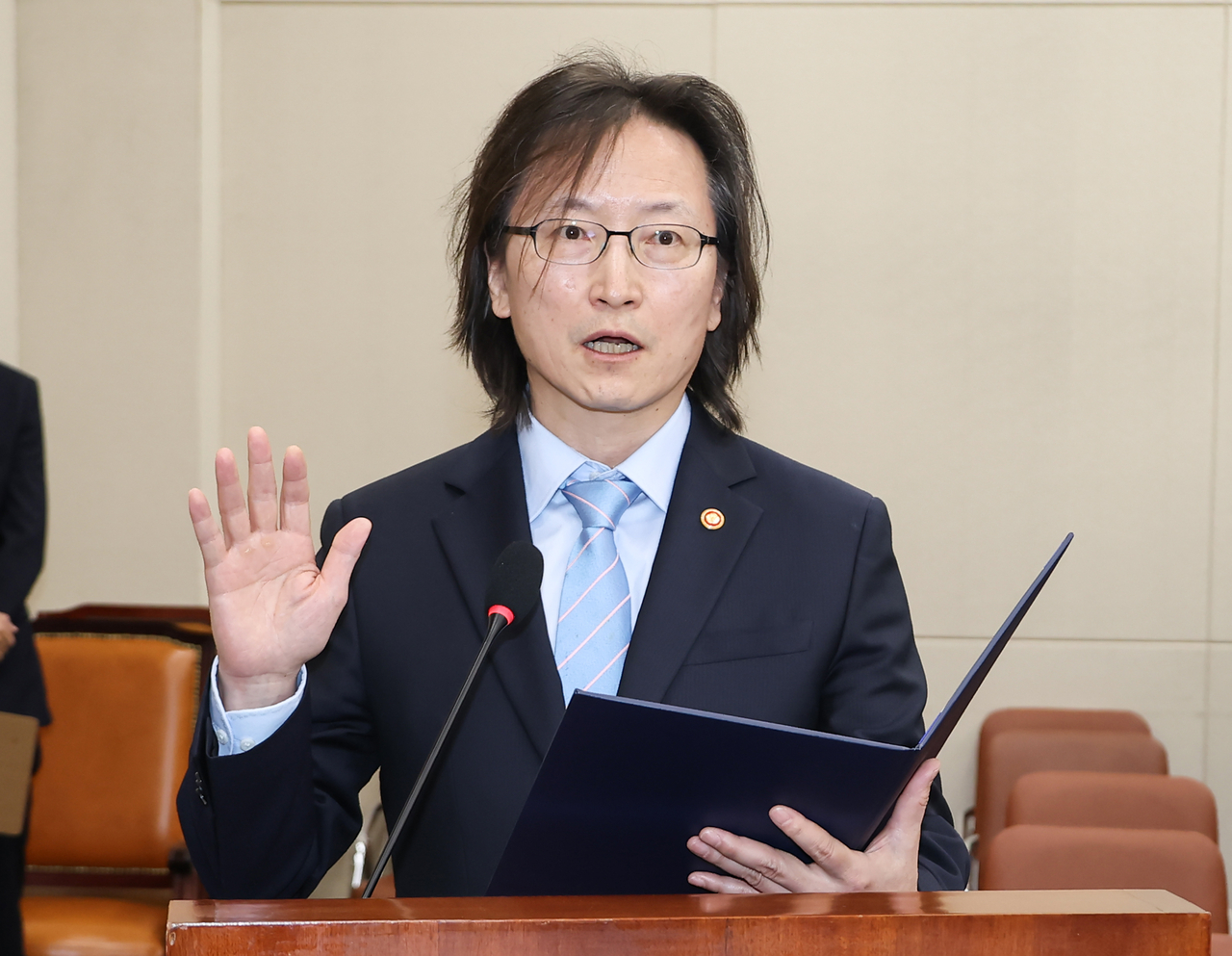
The controversy began when Joo's past writings came under scrutiny at the Fair Trade Commission's national audit on Oct. 12.
In a December 2024 op-ed written while he was a professor at Seoul National University, Joo said the "hereditary economy of chaebol and large conglomerates" was the foremost enemy of an inclusive society and a driver of exploitation in South Korea. When People Power Party lawmaker Choi Eun-seok asked at the Oct. 12 audit whether he still held that view, Joo said the language may have been excessive but that he still believed it.
On Wednesday, Joo clarified the intent behind those remarks. "The point was that for large conglomerates to continue growing and strengthening their global competitiveness, they need to address the side effects of opaque governance structures and excessive concentration of economic power within their groups," he said.
He added that his description of companies owned by many individuals as "public enterprises" was meant to emphasize the rights of majority shareholders and the social responsibilities of corporations.
"I will keep in mind, as the committee members have stressed, that the Fair Trade Commission's role in a market economy is to support companies in freely conducting their business activities while adhering to a fair and competitive market order," he said.
Opposition calls for his resignation continued at the comprehensive audit. People Power Party lawmaker Seo Il-jun questioned whether a chairman with such a negative view of specific companies could enforce the law fairly and without political bias.
Seo also called for explanations regarding the disclosure of investigation results before any legal violations had been confirmed, as well as allegations surrounding the appointment process for standing commissioners. "The most important value of the Fair Trade Commission is fairness," he said. "Stop undermining the trust of the public and businesses, and resign of your own accord."
y2k@heraldcorp.com