Pilot mission completed successfully
AI independently diagnoses faults and generates solutions
Space business head vows to integrate all space systems with AI
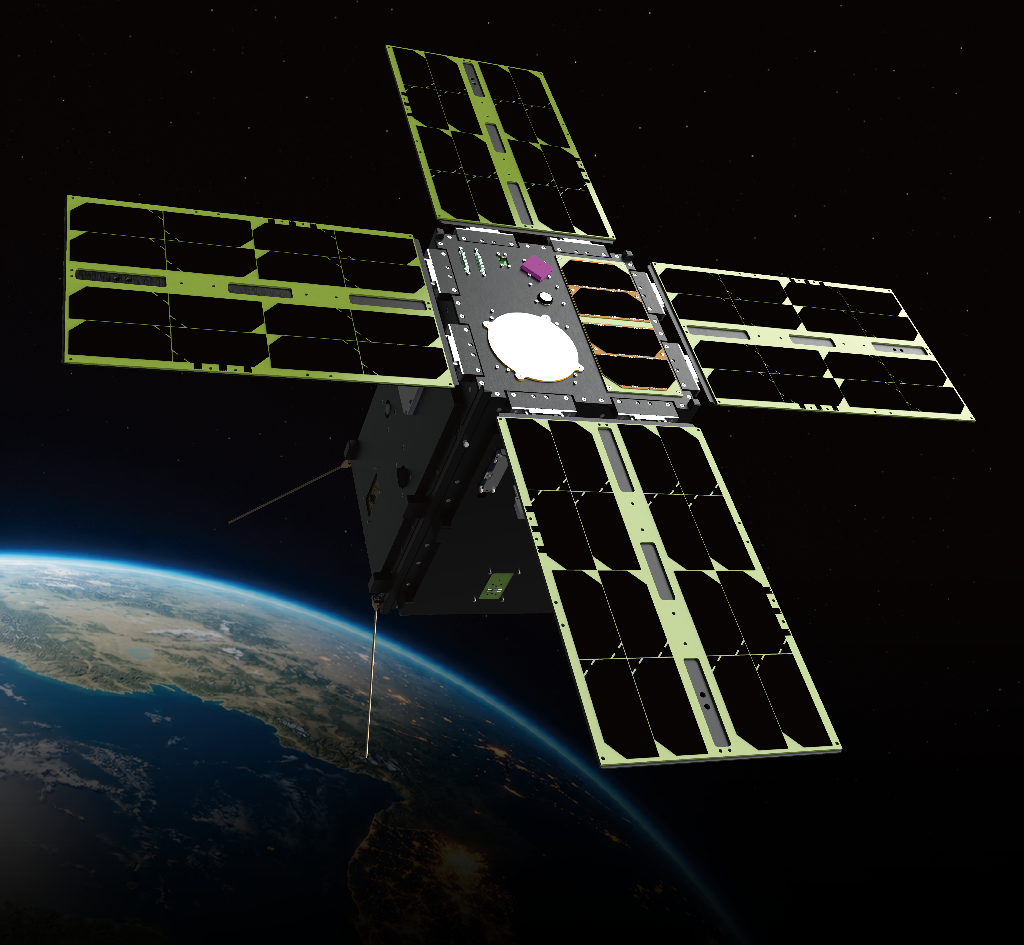
Korea Aerospace Industries (KAI) announced Wednesday that it had successfully completed a pilot mission for AI-based autonomous satellite operations technology in orbit the previous day, demonstrating a satellite's ability to diagnose its own condition and respond to anomalies without human intervention.
A pilot mission is a trial run conducted to verify technologies and operational procedures before full-scale deployment.
The BEE-1012 cubesat, which entered orbit Oct. 7 aboard the fifth launch of the Nuri rocket, carried an AI module developed in-house by KAI and completed the technology demonstration successfully. The project was a follow-up to an MOU signed between KAI and Space LiinTech in March for cooperation on AI demonstration using cubesats.
KAI verified its AI onboard processing technology, which enables an AI module aboard a satellite to autonomously analyze anomalies and derive optimal solutions based on data collected in the space environment.
The demonstration was completed in three stages: a ground station transmitted a simulated fault signal, the AI module analyzed the cause and scope of the anomaly, and the module then generated a technical report with recommended responses and transmitted it back to the ground station. Unlike conventional satellites, which must send data to a ground station and wait for analysis when an anomaly occurs, a satellite equipped with KAI's AI module can make real-time decisions autonomously while in orbit.
Building on the pilot mission results, KAI plans to launch a full-scale "main autonomous operations technology demonstration mission" in December. The company aims to maximize technical reliability through the effort and establish the technology as a core standard specification for the various satellite systems it will produce in the future.
Seo Hyun-seok, executive vice president and head of KAI's space business division, said the demonstration confirmed that the AI-based autonomous satellite operations technology works flawlessly in actual space, adding that the company plans to integrate all space systems on an AI technology platform going forward.
"KAI will continuously advance its space AI technology and apply it not only to satellite projects but also to a wide range of next-generation satellite systems, positioning the company as a leading satellite solutions provider in the global new space market," Seo said.
yeongdai@heraldcorp.com