Building owners and asset managers among those invited
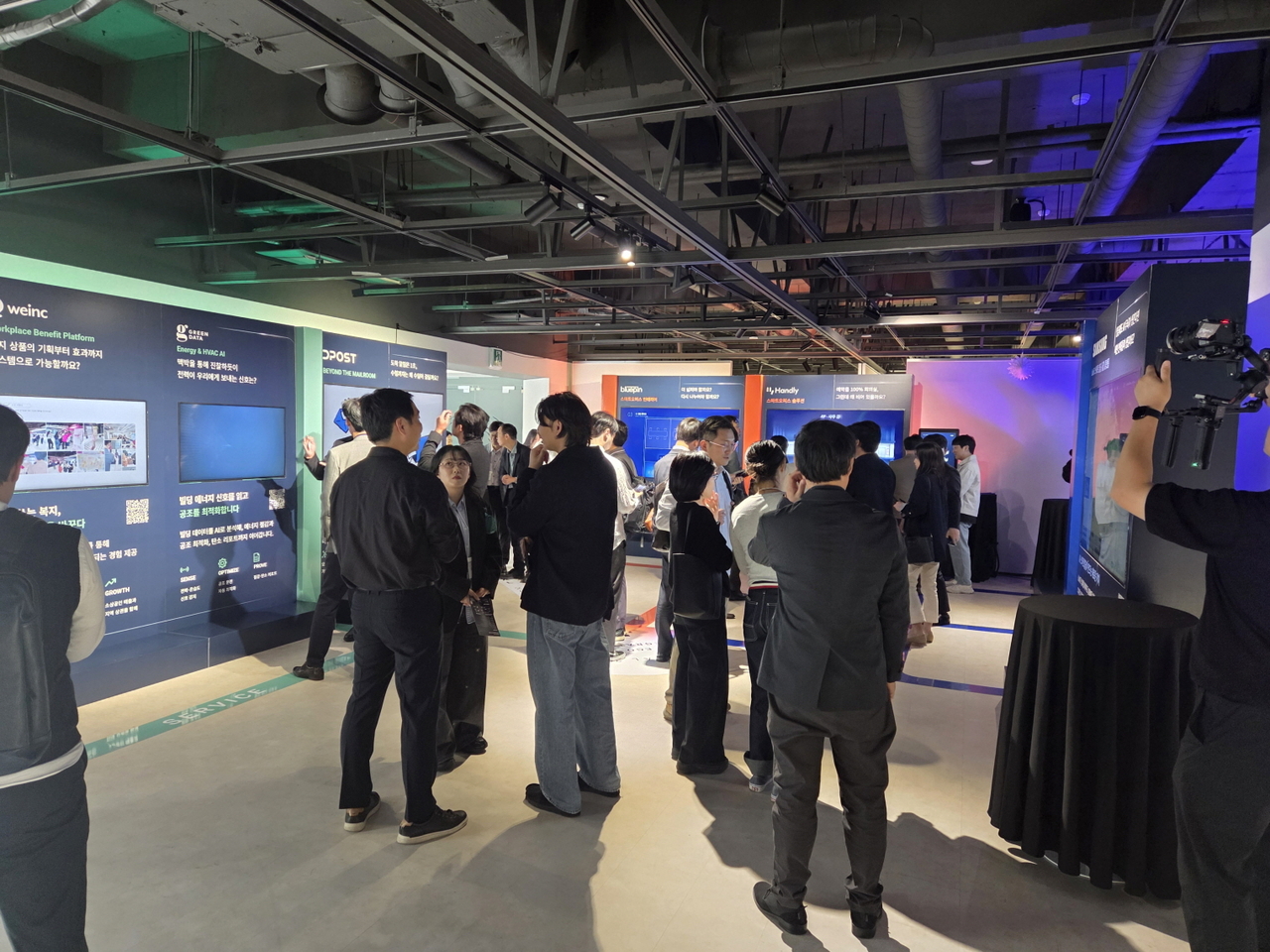
Samsung C&T said Wednesday it hosted "Signal 2026," a partners day event for its commercial building platform Bind, inviting about 100 industry professionals to the Neuromeka headquarters in Seongdong-gu, Seoul on Tuesday. The event name "Signal" reflects the platform's aim of extracting meaningful operational indicators from complex building data and translating them into new business opportunities and spatial value.
The event was organized to share the AI transformation paradigm for commercial buildings and to formally build a collaborative ecosystem in which technology, space and operators are organically linked through Bind. Samsung C&T launched Bind in 2024 as a building platform that integrates and delivers the wide range of services required in commercial buildings.
Samsung C&T said it plans to accelerate partner recruitment by positioning Bind as an open building ecosystem that integrates data from disparate solutions — covering facilities, energy, access control and space utilization — to maximize asset value and operational efficiency.
The event comprised three components: a keynote session, a panel talk and a smart office service exhibition. Yeo Gyeong-seon, a managing director at Mastern Investment Management, spoke on the theme "What makes real estate value different?" analyzing whether smart buildings can function as a standalone financial model and tracing the pathways through which structured operational data affects asset value.
Kang Jeong-gu, head of AI strategy at Liner, presented on "The office in an age when agents do the work." Kang said the office in the era of AI agents must evolve into a space that fosters organic connection and collaboration among members, and that activity data generated within the space must be analyzed in a multidimensional way.
Samsung C&T's Bind synthesized these discussions from a platform perspective. Through a presentation titled "When invisible signals become numbers," the company explained Bind's data-fusion architecture, which goes beyond the limitations of individual solutions. Power consumption data alone cannot reveal the specific purpose behind usage, and access records alone cannot show actual space utilization — but combining the two allows clear signals such as "unnecessary vacancy occupation" or "energy waste intervals" to be identified.
The core purpose of Bind is to support the combination of data generated by each solution within a shared common context. "The more technology partners join, the higher the resolution of the signals the platform can read — which is why close collaboration with solution providers is the platform's key competitive advantage," a Samsung C&T official said.
Samsung C&T said it plans to expand the building AI transformation ecosystem by connecting partner companies' specialized technologies to Bind, enabling partners to broaden their reach while allowing building owners and tenant companies to improve operational efficiency and user convenience.
Kim Myeong-seok, executive vice president and head of Samsung C&T's housing product marketing division, said, "A meaningful signal only emerges when the sensibilities of a building's owners, users and solution providers converge." He added that he hoped the event would serve as an opportunity to collectively explore the next standard for space, and that Samsung C&T would continue to expand an open ecosystem centered on Bind to create new spatial value and business opportunities.
hss@heraldcorp.com