Exercise simulates complex railway disaster scenarios
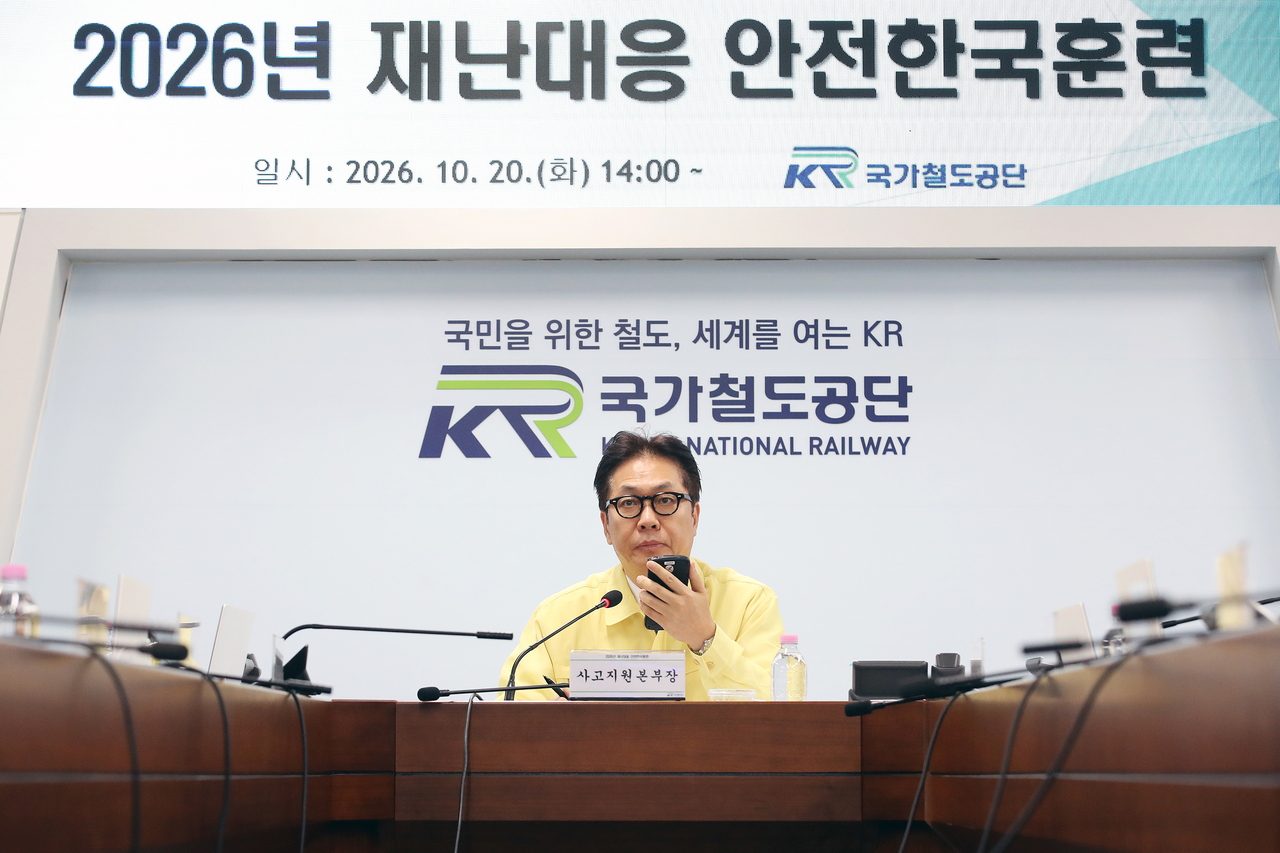
Korea National Railway conducted the "2026 Safe Korea Disaster Response Drill" at the construction site of GTX-B Line Section 1, which connects Yongsan Station and Sangbong Station, with 20 agencies taking part, the agency announced Tuesday.
The Safe Korea Disaster Response Drill is a pan-government comprehensive exercise designed to strengthen real-world response capabilities by simulating large-scale disaster scenarios. Conducted under the Framework Act on Disaster and Safety Management and the Ministry of Interior and Safety's basic disaster preparedness training plan, the drill brings together central government ministries, local governments and public institutions.
This year's exercise was carried out under a scenario in which heavy rainfall and strong gusts toppled a crane, which struck a pedestrian overpass, triggering a chain of compounding disasters — including a fire and the collapse of work facilities caused by debris from damaged construction materials.
Korea National Railway and 19 other participating agencies, including Yongsan-gu Office and Yongsan Fire Station, actively used the national disaster safety communications network (PS-LTE) to test rapid information-sharing systems among relevant agencies. They also deployed heavy equipment such as excavators and dump trucks through the Korea Resource Management System (KRMS), an integrated platform for managing personnel and equipment and mobilizing resources quickly in the event of a disaster.
Jung Jin-hyuk, Korea National Railway chairman and head of the incident support command, monitored the entire process in real time from the agency's disaster management operations center at headquarters — from the initial outbreak through early response to recovery — directing and controlling operations to strengthen the effectiveness of the railway disaster response system.
"When a complex disaster strikes, swift and systematic response through realistic training is essential to minimizing damage," Jung said. "We will continue to strengthen our disaster response capabilities through close cooperation with relevant agencies, and take the lead in protecting the lives and safety of workers and the public."
hss@heraldcorp.com