41,000 youths in work-experience program; 4.4 trillion won in scholarships disbursed
Youth monthly rent support at 75.6%; key projects under hyper-innovation economy reviewed
Deputy minister urges focus on employment, self-reliance and tech innovation outcomes
Budget execution rates for the government's youth work-experience support program and youth monthly rent support program stood at 97.7 percent and 75.6 percent, respectively, a review has found. Fiscal spending on major projects under the hyper-innovation economy initiative — aimed at securing future growth engines — is also proceeding on track.
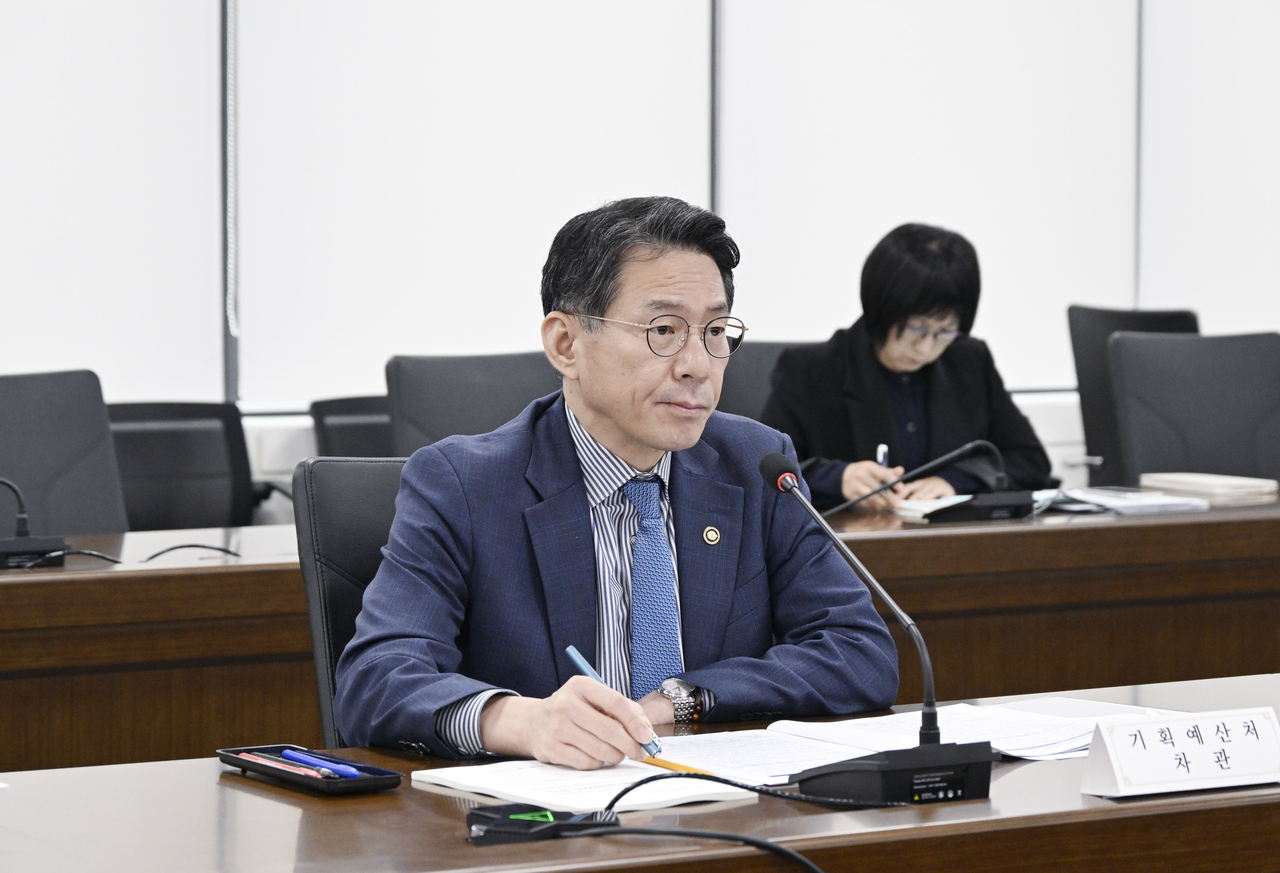
The Ministry of Planning and Budget said Tuesday it held the 16th joint fiscal execution review meeting with related ministries at the Korea Public Finance Information Service, chaired by Deputy Minister Jo Yong-beom.
The meeting reviewed major projects under this year's youth policy implementation plan, drawn up in accordance with the Second Basic Plan for Youth Policy (2026–2030). The focus was on whether fiscal investment is proceeding without disruption — both to support young people's stable entry into society and self-reliance, and to secure future growth engines.
In the employment sector, 41,000 young people had participated in the Ministry of Employment and Labor's work-experience support program as of the end of September, with a budget execution rate of 97.7 percent. The program provides youth with diverse work opportunities such as internships and project-based roles. The Ministry of SMEs and Startups' "Modu-ui Changup" startup support program, which backs the entire startup process on the strength of innovative ideas alone, is also progressing steadily — funds were disbursed swiftly, and second-round applicants exceeded 90,000.
In education and vocational training, the Ministry of Education's national scholarship program disbursed its full budget of 4.4 trillion won ($3.3 billion) to about 1.2 million recipients. The Ministry of Science and ICT's AI and software-focused university program, which aims to develop young talent in AI and software, also fully disbursed funds to 60 universities, with each institution advancing its projects as planned.
Support to ease housing costs for young people is also continuing. The Ministry of Land, Infrastructure and Transport's youth monthly rent support program — which provides up to 200,000 won per month to low-income youth without homes — selected about 93,000 recipients and executed 75.6 percent of its budget. The Ministry of Agriculture, Food and Rural Affairs' rural settlement support program, which provides rental housing and community facilities to help young people relocating to rural areas, posted an execution rate of 95.7 percent.
In the finance, welfare and culture sectors, the first round of contributions to the Youth Future Savings Account — launched in June — began in July, and second-round enrollment is currently underway. The enrollment period runs from Oct. 7 to Nov. 27. A public transit fare reimbursement program provided refunds to about 2.12 million young people.
The government said it will closely manage procedures from application to payment to ensure young people receive support when they need it, and will step up targeted promotions through SNS and other channels for programs that require applications.
The meeting also reviewed fiscal execution progress on major projects under the 15 hyper-innovation economy initiatives included in the new government's economic growth strategy.
By project, the nano-convergence industry ecosystem development program recorded a 100 percent execution rate, while the high-temperature superconducting magnet commercialization technology development program stood at 80.0 percent. The K-content fund investment program and the agricultural and food overseas market expansion program posted execution rates of 87.9 percent and 90.0 percent, respectively.
In the climate, energy and future-response sector, the regional energy industry ecosystem revitalization program recorded an execution rate of 79.0 percent. Work is accelerating on preliminary procedures including permits, site acquisition and equipment procurement.
"Youth support and hyper-innovation economy programs are core investments in the future of our economy and society," Deputy Minister Jo said. "The results of fiscal execution must be measured not simply by execution rates, but by young people finding jobs and achieving independence, and by companies driving technological innovation and growth."
He added that each ministry should listen closely to voices from the field to ensure young people receive the support they need on time, and push forward key projects to secure future growth engines with a sense of urgency.
The ministry said it will continue to monitor the execution of major fiscal programs with related ministries, minimize year-end carryovers and unused funds, and strengthen field-centered execution management so that fiscal support translates into outcomes that citizens can tangibly feel.
y2k@heraldcorp.com