4 of 6 agency audits run past 11 p.m.
Ruling, opposition parties unite on livelihood issues, drawing political attention
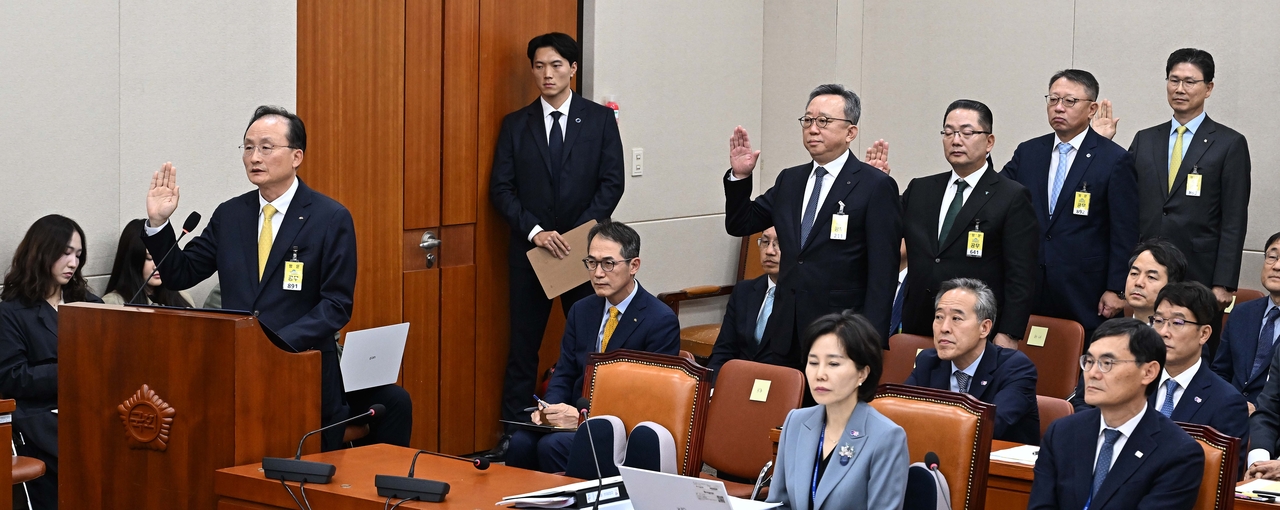
The National Assembly's Policy Committee, which is handling major issues including single-stock leveraged ETFs and financial-sector personal data breaches, has been pushing through late-night sessions ahead of its comprehensive audit scheduled for Wednesday.
While some other standing committees have been marked by sharp clashes and procedural breakdowns during the audit period, the Policy Committee has drawn attention for staying focused on policy implementation and institutional accountability — with lawmakers from both the ruling People Power Party and the opposition Democratic Party of Korea jointly criticizing AI hacking in the financial sector and Coupang Inc's defiance of an on-site inspection.
According to the National Assembly, the Policy Committee's audit of the Financial Supervisory Service and other agencies on Monday wrapped up after 11 p.m.
The committee has held six agency audits since Oct. 6, when it opened with the Ministry of Patriots and Veterans. Setting aside Oct. 12 — when a dispute over past remarks by Fair Trade Commission Chairman Ju Byeong-gi brought the session to a halt — and an Oct. 15 field audit of the Korea Asset Management Corporation in Busan, all four remaining sessions ran past 11 p.m.
The lengthy sessions featured repeated questioning over government policy decisions and corporate misconduct. At the Financial Services Commission audit on Oct. 8, People Power Party lawmakers pressed FSC Chairman Lee Eok-won on the introduction of single-stock leveraged ETFs. Lee said that "if there were any legal violations in the process, responsibility must be taken," and added that he was "sorry for the losses incurred."
On livelihood issues such as personal data breaches and allegations of price-fixing by oil refiners, lawmakers from both parties spoke with one voice in demanding accountability, drawing apologies and pledges to prevent recurrences.
At the Fair Trade Commission audit on Oct. 12, representatives of the four major oil refiners appeared as witnesses and apologized for the burden placed on the public by surging fuel prices. Democratic Party lawmaker Min Byeong-deok argued that exclusive purchase contracts and retroactive settlement arrangements between refiners and gas stations restrict price competition, while People Power Party lawmaker Park Jun-tae pressed refinery executives over price-fixing allegations.
That same day, lawmakers from both parties raised their voices over Coupang Inc's refusal to comply with a Fair Trade Commission on-site inspection. Policy Committee Chairman Yoo Dong-su said legislative remedies may be needed to address the issue.
At the Personal Information Protection Commission audit on Oct. 13, Democratic Party lawmaker Lee Gang-il and People Power Party lawmaker Shin Dong-uk took companies involved in data breach controversies to task over lax management. Commission Chairwoman Song Gyeong-hui acknowledged that South Korea's personal data protection and management framework lags behind and said the commission would work with relevant ministries to improve it.
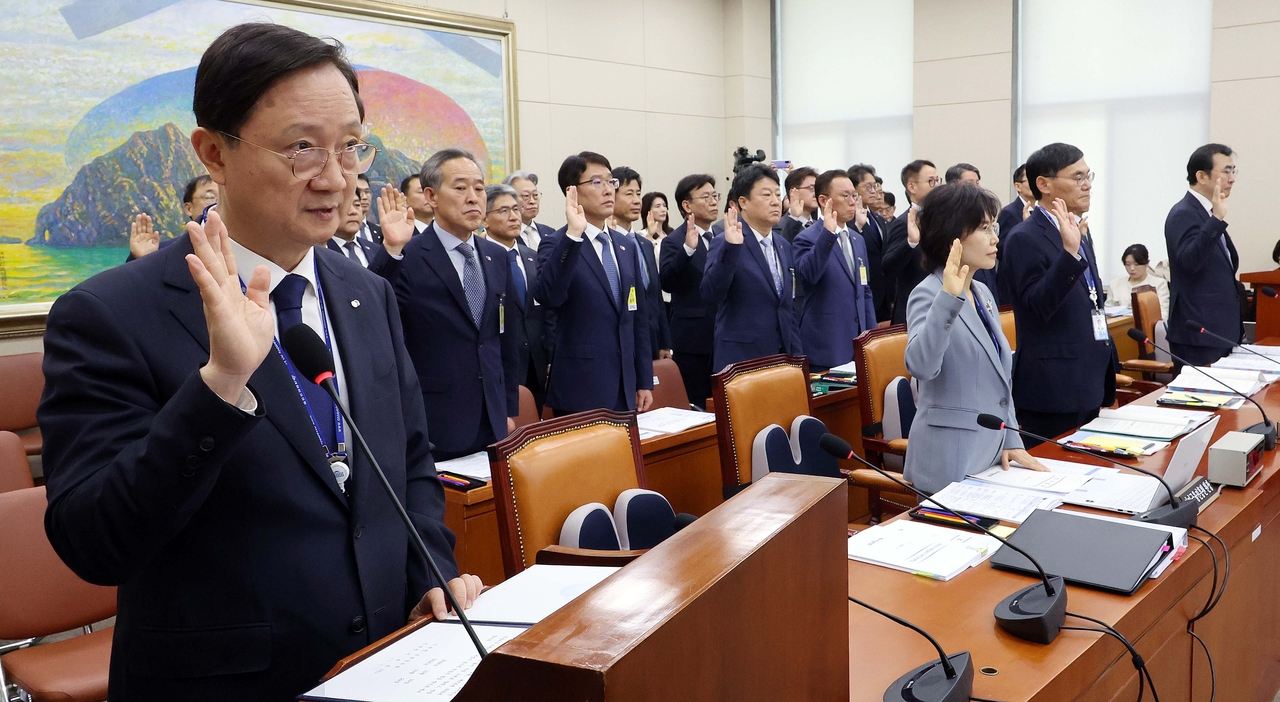
Scrutiny of accountability in financial policymaking continued throughout the audit period. Questions over responsibility for the introduction of single-stock leveraged ETFs, first raised at the FSC audit on Oct. 8, carried over into Monday's FSS audit.
When People Power Party lawmaker Park Dae-chul pressed FSS Governor Lee Chan-jin on why the FSS had proceeded with its review of single-stock leveraged ETFs before the Korea Exchange completed its preliminary listing screening, Lee acknowledged that "there was a part where the review was rushed to meet the FSC's schedule." In response to Social Democratic Party lawmaker Han Chang-min's argument that the FSS, as a supervisory body, should have acted as a check in advance, Lee said he would work to ensure the FSS's position prevails to prevent a recurrence.
A Policy Committee lawmaker said in a phone interview that "there are many issues on the committee's agenda that are directly tied to people's livelihoods," adding: "It's not as if the ruling and opposition members formally agreed to focus on livelihood issues, but since so many of the agencies we oversee — the FSC, the FSS, the Fair Trade Commission — are closely connected to everyday concerns, I think both sides share a common sense of responsibility to work hard."
The committee will open its comprehensive audit on Wednesday with the Ministry of Patriots and Veterans and the Fair Trade Commission, followed by the FSC, the FSS and other agencies under its jurisdiction on Thursday. The comprehensive sessions are expected to put under scrutiny the process by which single-stock leveraged ETFs were introduced and measures to prevent further personal data breaches — issues raised but not fully resolved during the earlier agency audits.
raining@heraldcorp.com