First national audit of prosecution office since restructuring
Opposition criticizes stripping of investigative powers
Ruling party defends reform, cites past abuses
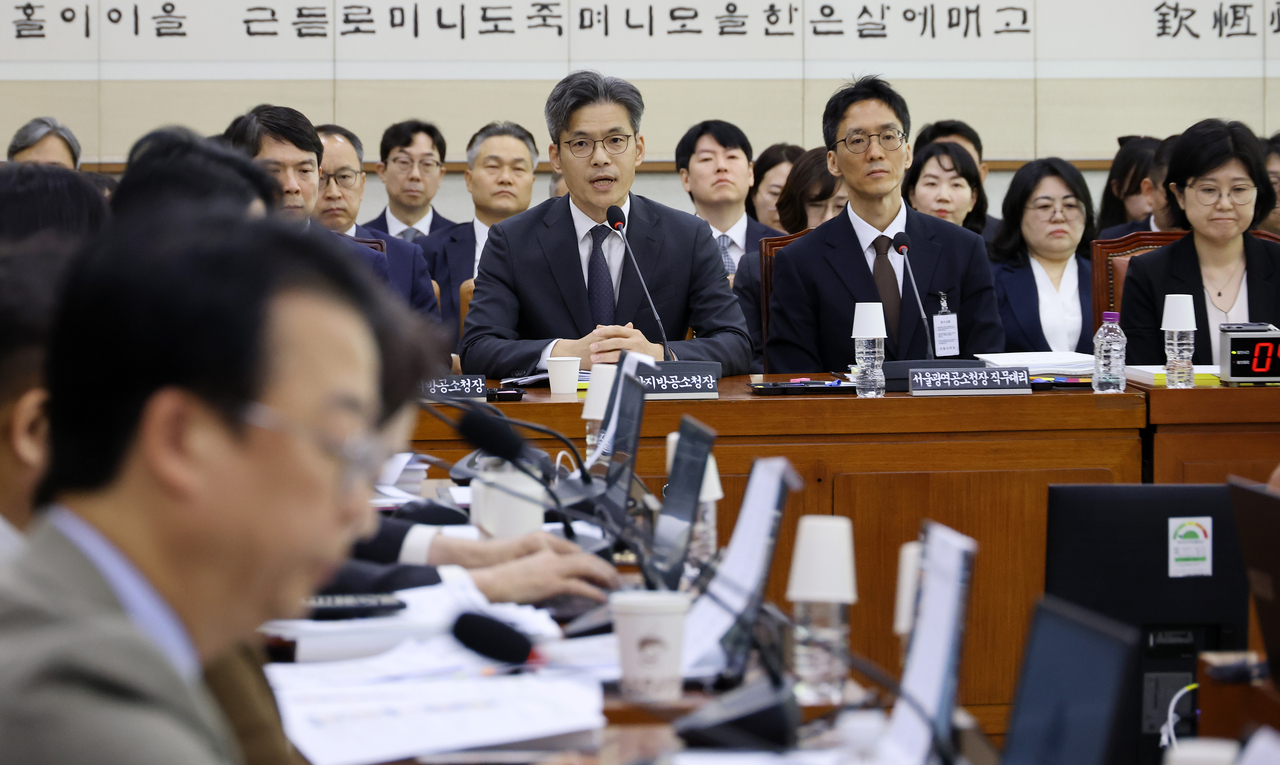
The People Power Party and the Democratic Party of Korea clashed Monday at the National Assembly's Legislation and Judiciary Committee national audit — the first since the prosecution service was restructured — over the legitimacy of abolishing the prosecution service. The People Power Party criticized the stripping of prosecutors' investigative powers and raised the possibility that prosecutors at the new agency should step down, while the Democratic Party pointed to past abuses of investigative authority and alleged case manipulation, arguing the reform was necessary.
The committee conducted the audit targeting the Seoul Metropolitan Prosecution Office and related agencies.
People Power Party lawmaker Kwak Gyu-taek, addressing Seoul Central District Prosecution Office chief Park Chul-woo, who appeared as a witness, said he felt conflicted. "If investigative powers were unilaterally stripped away for political reasons — with no regard for the public's wishes — under the new name of a prosecution office, then those who spent more than 20 years in the prosecution service should have resigned," he said.
He added that problems would arise when the new office declines to indict cases that should be prosecuted. "The most representative example right now is the disposition in the case of former Justice Minister nominee Kim Seung-won," he said.
Fellow party lawmaker Kim Tae-gyu also expressed concern over the weakening of investigative functions following the abolition of the prosecution service. "South Korea is becoming a truly laughable country," he said, turning to the prosecutors present at the audit. "I want to ask whether this is truly the right form of prosecution reform, and whether you are fine without supplementary investigative powers."
He argued that the Democratic Party had harbored a long-standing desire for revenge against the prosecution. "When President Roh Moo-hyun was alive and the administration was collapsing, the Democratic Party called itself a 'ruined clan,'" he said. "Those same people, mourning his death, pointed the blade — the cause — at the prosecution service. The resentment they built up from that moment has now been vented through the abolition of the prosecution service."
The Democratic Party, by contrast, defended the legitimacy of the reform that split the prosecution's functions into a new indictment-only office and a separate serious crimes investigation agency, pointing to the former prosecution's investigative practices as the problem.
Democratic Party lawmaker Kim Yong-min said the reform would yield positive results. "Going forward, we will see positive effects — a reduction in the function of shielding Kim Keon Hee, a reduction in the function of manipulating cases," he said.
He also directed criticism at prosecution office officials who had been involved in the appeals trial of the fabricated spy case involving a Seoul Metropolitan Government civil servant. He said the prosecution's arrogant attitude of the past — "manipulating cases, and even as victims died, saying 'we did nothing wrong, there is nothing to apologize for'" — remained unchanged.
The Democratic Party also took issue with independent lawmaker Han Dong-hoon's disclosure of an indictment plan while raising lobbying allegations against former Justice Minister nominee Kim Seung-won, arguing that a proper investigation into how the investigative materials were leaked has not been conducted.
Democratic Party lawmaker Kim Han-gyu said the Seoul Western District Prosecution Office and other related agencies were passing the buck on responsibility for investigating the leak. "Aren't they just playing ping-pong with each other, with no one actually doing the investigation?" he said.
Kim drew a comparison with the prosecution's aggressive response to the alleged leak of SBW Group investigative materials in 2022, when it searched relevant departments and made emergency arrests of investigators. "In the SBW case, they moved swiftly and strictly — like lightning," he said. "It feels like a different standard depending on the situation."
mp1256@heraldcorp.com