Industry calls for delay, citing unclear tax standards; ruling party lawmaker proposes two-year postponement
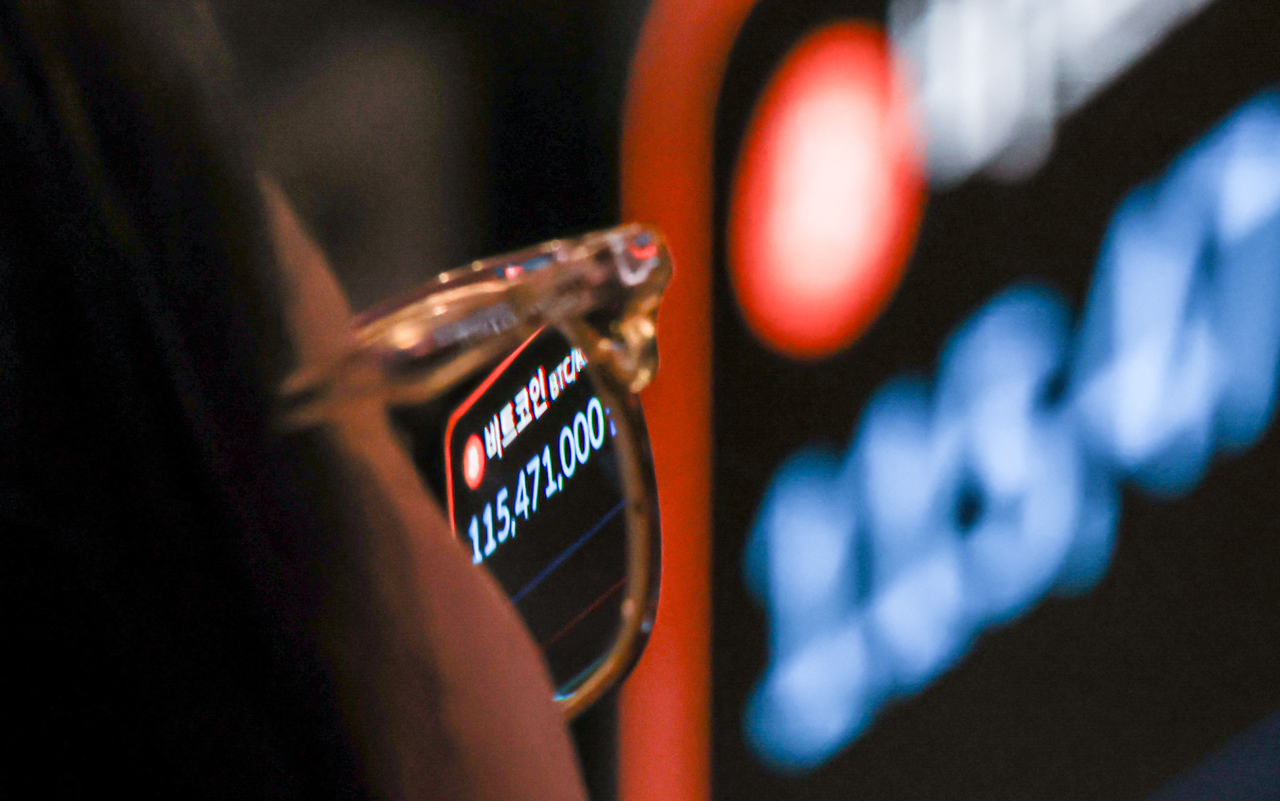
The government plans to gather industry representatives ahead of the scheduled introduction of digital asset income taxation in January, as calls grow for a further delay over concerns that tax standards and supporting infrastructure are not yet in place.
According to industry sources, the government will hold a meeting Tuesday with the heads of five major cryptocurrency exchanges — Upbit, Bithumb, Coinone, Digitalex and Gopax — along with executives from the Digital Asset eXchange Alliance (DAXA).
The meeting follows a pledge by Deputy Prime Minister and Finance Minister Lee Hyung-il at a National Assembly national audit on Oct. 6 to broadly gather the views of stakeholders on digital asset taxation.
Under the current Income Tax Act, taxes will be levied starting next January on income generated from the transfer or lending of digital assets. After a deduction of 2.5 million won ($1,850) from annual income, the remaining amount will be taxed at 22 percent, including local income tax.
The industry has consistently argued that implementation should be postponed further, saying tax standards and related systems are not sufficiently in place. Concerns have also been raised about the lack of clear tax guidelines for transaction types unique to digital assets, such as staking, airdrops and decentralized finance (DeFi).
Tax equity for users of overseas exchanges is another sticking point. Unlike income from the transfer or lending of digital asset spot holdings, there is no clear legal basis for taxing profits from derivatives trading — such as perpetual futures — conducted on foreign exchanges.
Legislative efforts to delay the tax are also under way. Democratic Party of Korea lawmaker Park Min-gyu on Friday introduced a bill to amend the Income Tax Act that would push back the implementation date to two years after the first exchange of cryptocurrency transaction data between countries. If the first information exchange under the OECD's Crypto-Asset Reporting Framework (CARF) proceeds as scheduled next year, the tax would take effect on Jan. 1, 2029.
Park said on SNS that "taxing as early as next year, when not even a basic framework law has been enacted, is premature," adding that "what matters now is building the institutional foundation to support and grow the market, rather than rushing to tax it."

kyoung@heraldcorp.com