Incoming society president Kon Yasuhiro calls cost-effective biosimilar the top prescribing priority
Omalizumab biosimilar priced 30% below original could open treatment to 96,000 more patients
Japan's leading allergists back Omryklo switch at official WAC 2026 seminar
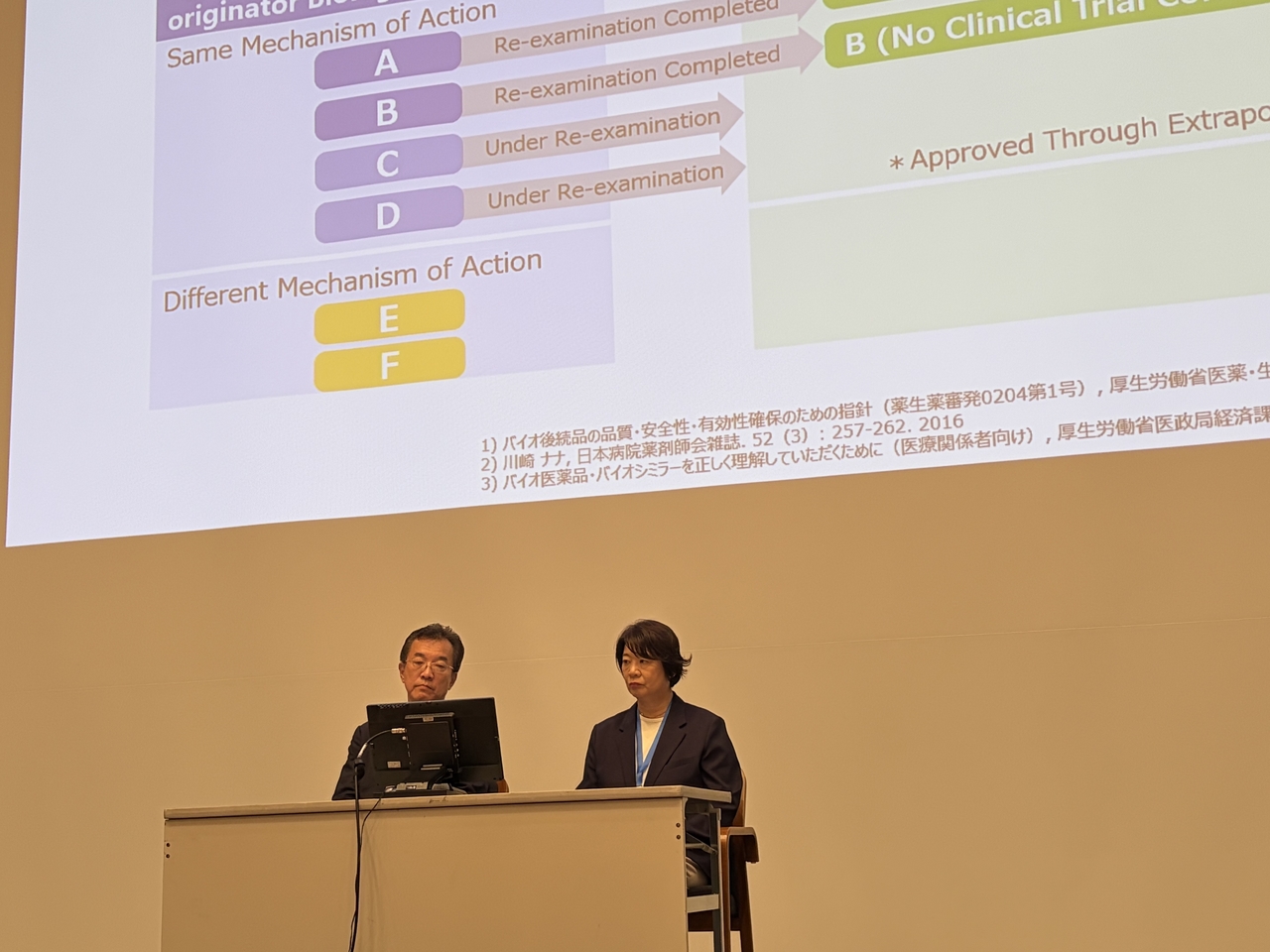
Japan's top allergy specialists gave their full public endorsement to Celltrion's Omryklo — the world's first omalizumab biosimilar, approved in Japan under the name omalizumab BS subcutaneous injection [CT] — at an official academic seminar held on the sidelines of the World Allergy Congress (WAC 2026).
The experts said the biosimilar is poised to become the first-line treatment of choice in clinical practice, overtaking existing high-cost biologics by dismantling the severe cost barrier that has long blocked access for patients with pollinosis — the pollen allergy affecting nearly half of Japan's population — and those with severe asthma requiring high-dose therapy.
The seminar, co-hosted by Celltrion Healthcare Japan at the Kyoto International Conference Center on Friday, was titled "A New Option Called Biosimilar: The Future of Asthma and Allergic Rhinitis Care." Every chair and speaker was drawn from the ranks of Japan's key opinion leaders who shape clinical guidelines and research in the field.
The session was chaired by Okubo Kimihiro, a professor at Nippon Medical School who led the compilation of Japan's allergic rhinitis treatment guidelines and headed the clinical trial that secured the original omalizumab's approval for pollinosis in Japan. Speakers included Kawashima Tayoko, chief of the allergy center at Osaka Habikino Medical Center and a leading authority in otolaryngology, and Kon Yasuhiro, chief professor at Nihon University School of Medicine and incoming president of the 76th Japanese Society of Allergology Annual Meeting in 2027.
'First-line choice ahead of interleukin inhibitors' — severe asthma prescribing order set to shift
The seminar's most closely watched moment came when incoming society president Kon declared a paradigm shift in severe asthma treatment. "Among patients with severe allergic asthma — particularly those with high body weight and high total serum IgE levels requiring doses of up to 600 mg per administration — many have abandoned biologic therapy midway because of the snowballing cost burden," he said. "The arrival of the omalizumab biosimilar Omryklo offers a clear advantage in terms of cost-effectiveness."
Kon added that 49 percent of adults with refractory asthma — nearly half — have atopic asthma amenable to IgE-targeted therapy. He said Omryklo "will establish itself as the first-line choice to be considered before other high-cost treatments such as interleukin inhibitors and subsequent biologics."
Kon also highlighted the mechanistic strengths unique to omalizumab. The drug suppresses both the early and late asthmatic responses to airway constriction, providing strong day-to-day symptom control. It also inhibits the expression of high-affinity IgE receptors on plasmacytoid dendritic cells and restores their capacity to secrete interferon-alpha, simultaneously blocking allergen-driven exacerbations in spring and virus-triggered acute asthma attacks in winter.
Pollinosis cuts workplace focus by 60% — biosimilar set to break the price barrier for adult patients
Kawashima focused her presentation on the health-economic value of Omryklo's pollinosis — or seasonal allergic rhinitis — indication, the only such approval the biosimilar has secured in Japan.
The prevalence of allergic rhinitis in Japan surged from 29.8 percent in 1998 to 49.2 percent in 2019, meaning roughly one in two people is affected; cedar pollinosis alone accounts for 38.8 percent. Of those patients, 52.1 percent have moderate-to-severe or severe disease.
Kawashima said pollinosis causes significant "presenteeism" — lost productivity among workers who show up despite their symptoms. An analysis of patient data from 40 countries found that absenteeism due to pollinosis was effectively zero, but productivity loss among those who came to work while symptomatic reached 60.7 percent in the severe patient group. The resulting indirect social costs account for 75 to 93 percent of the total disease burden.
"Unlike children, who receive local government subsidies, adult patients have faced a 30 percent out-of-pocket co-payment and have shied away from highly effective original biologics, asking why they should spend so much on a pollen allergy," Kawashima said. "The biosimilar is the key to breaking that cost barrier."
960 billion won in savings over five years — 96,000 patients who gave up on treatment could return
Kawashima said that introducing the omalizumab biosimilar at a 30 percent discount to the original would save approximately 40 million euros ($44.9 million) in national health insurance spending in the first year alone, rising to a cumulative 640 million euros over five years. She said the savings are large enough to extend biologic treatment to an additional 96,000 patients, and predicted the drug would bring back adult pollinosis patients in Japan who had previously given up on treatment.
Clinical data presented at the seminar were backed by evidence of Omryklo's quality and formulation. The biosimilar's amino acid sequence is identical to that of the original omalizumab, and physicochemical equivalence has been confirmed across excipients, pH (5.8–6.2) and osmolality. A Phase 1 clinical trial in 65 healthy Japanese adults demonstrated pharmacokinetic equivalence, while a global Phase 3 trial in chronic idiopathic urticaria confirmed therapeutic equivalence and safety.
Patients who switched from the original to Omryklo at week 12 maintained comparable improvements in the weekly itch severity score through week 24 (ISS7: −12.24 vs. −11.19 points), with no difference in safety. There were zero treatment-related deaths, and immunogenicity assessments — including neutralizing antibody formation — showed no significant differences between groups.
Four-device lineup including self-injection pen — designed around Japanese patients' needs
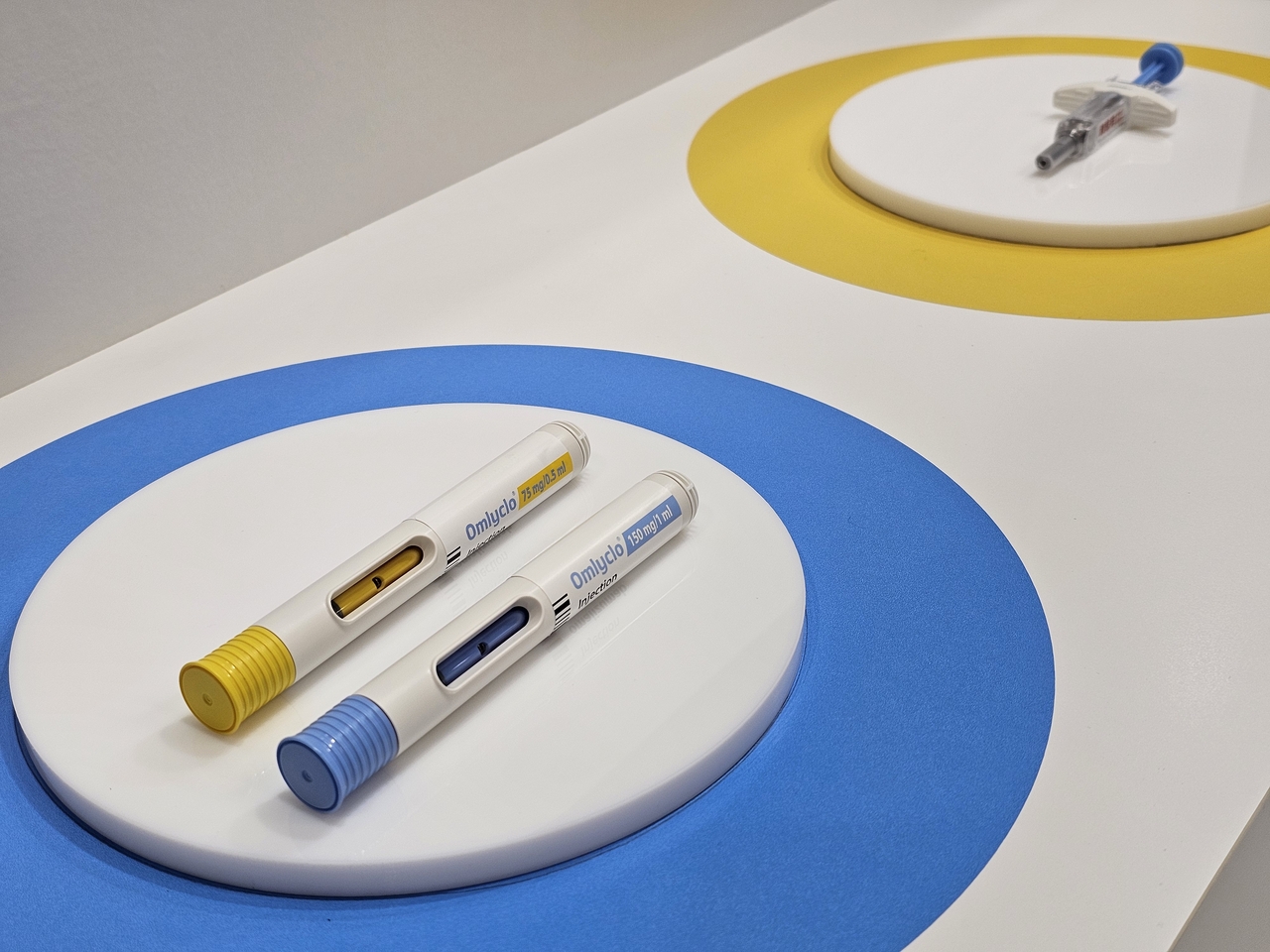
The device lineup is also designed to maximize patient convenience. Omryklo is available in two doses — 75 mg and 150 mg, with no single 300 mg formulation — and comes in four configurations: a prefilled syringe and an autoinjector pen with a shielded needle for easy self-administration. Additional features include a thin 27-gauge needle for reduced pain, a citrate-free formula, and a latex-free design to prevent allergic reactions.
Seminar chair Okubo said Omryklo, which has cleared rigorous equivalence testing and received indication extrapolation approval ahead of its launch, matches the original in amino acid sequence and physicochemical properties. "For patients who have struggled to access biologic therapy because of cost, Omryklo will be a new hope and an effective treatment option," he said.
silverpaper@heraldcorp.com