
225. Jan Matejko
The legendary jester Stańczyk, summoned anew
A wise man hidden behind a ridiculous disguise
His persona as a warning about his homeland's fate
The lesson: 'Stay awake'
Editor's note
The Huam-dong Museum is the original home of long-form cultural and arts storytelling suited to the boundless digital space. Click ■ Subscribe to reporter■ to enjoy a new art story every weekend. Articles are written as storytelling grounded in historical fact, with some imaginative embellishment.
The jester who dared joke — pointedly — even with the king
![Jan Matejko, Stańczyk Pretending to Have a Toothache, 1855 [Public Domain, commons.wikimedia.org]](https://wimg.heraldcorp.com/news/cms/2026/10/16/news-p.v1.20261016.92e4ecb13b4246d48856b3e413e3bcd5_P1.jpg)
By Lee Won-yul
Your Majesty. Would you care to make a wager?
Stańczyk, the court jester of the 16th-century Polish Kingdom, addressed King Sigismund I. "What wager?" Sigismund I asked. "What do you think is the most common profession in the kingdom?" "Perhaps… a farmer?" the king replied. "Completely wrong," Stańczyk said. He then produced a cloth, wrapped it around his face, and stroked his cheek as though suffering from a toothache. "Watch closely." He walked out into the corridor. At once, every person he encountered puffed themselves up and offered him a cure. "Your Majesty," Stańczyk chuckled on his return. "Even here, inside the palace, there are this many doctors." Sigismund I could not help but laugh.
There was a deeper meaning behind Stańczyk's words.
The court, he was saying, had filled with people who pretended to know things they did not. It was a warning that incompetent officials needed to be weeded out and dismissed.
That, in truth, was the kind of man Stańczyk was. On the surface he looked like a buffoon in a ridiculous costume pulling strange faces. Beneath that, he possessed the qualities of a sage — his every carefully honed word and gesture left room for interpretation, and he was more keenly aware of affairs at home and abroad than anyone around him.
He seemed capable of distilling every matter at court into absurd satire.
And yet, on this particular day, he could not.
The letter contained shocking news
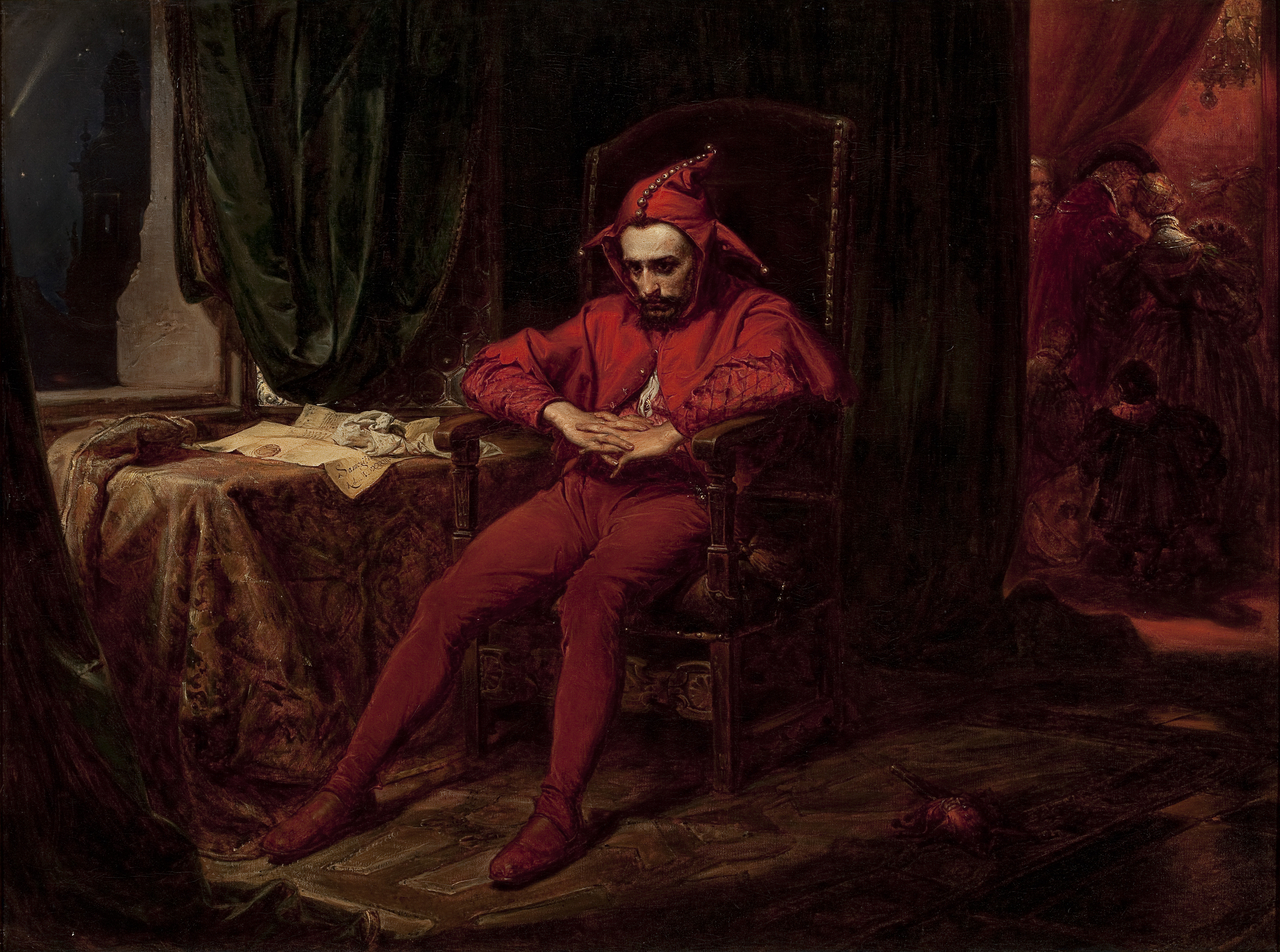
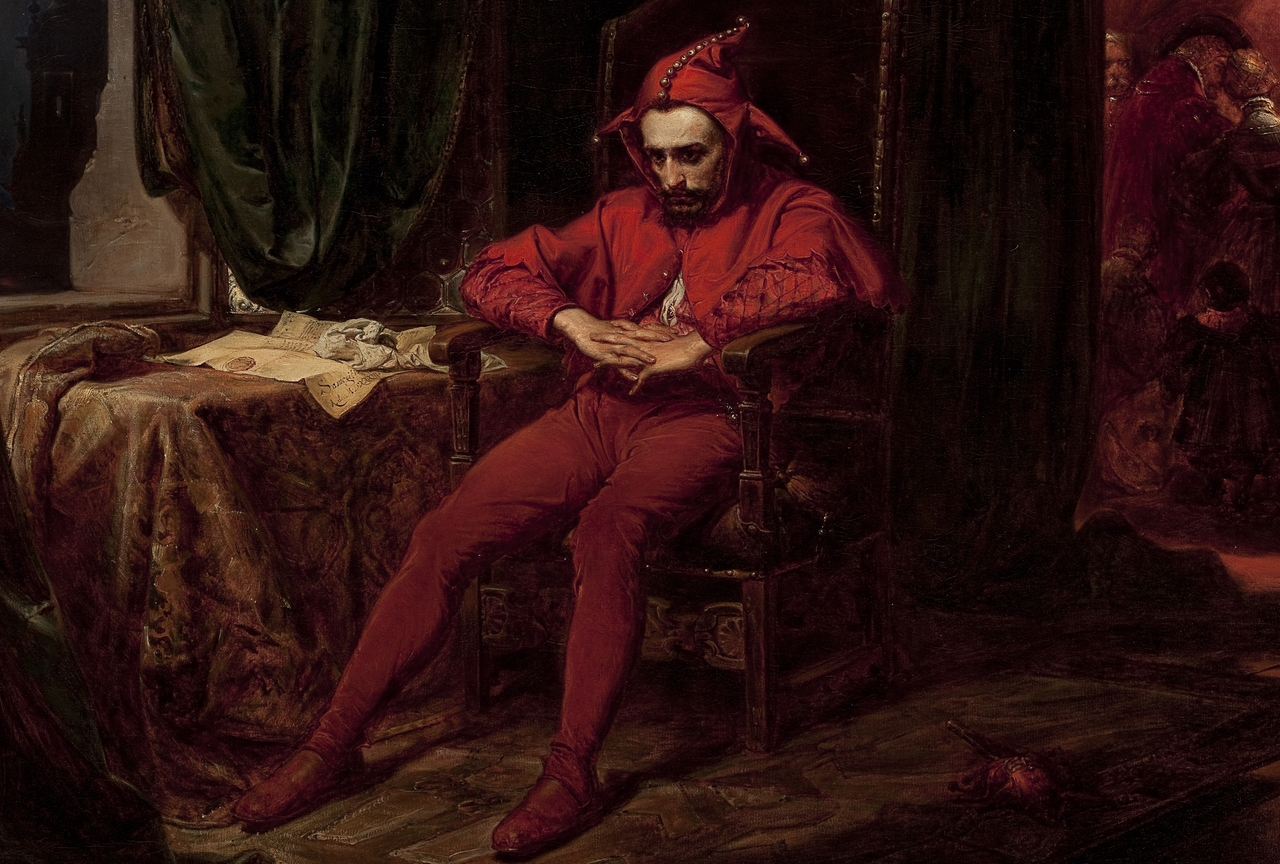
Even Stańczyk, on this particular night, wears a grave expression.
What he has just learned is so devastating that not a single joke comes to mind. He had already dressed for the occasion. He wore his jester's cap with its protruding horns and ears, and a costume that clung uncomfortably close to his body. Every piece of fabric was matched in conspicuous red, down to his red shoes and stockings. All that remained was to step out into the ballroom and stand before the royals — to deliver his customary barbs beneath a mask of foolishness, as he always had. But this time, he could not bring himself to do it.
Why? Because of the letter on the table.
The paper he had unfolded carried news he could not welcome.
The mood at court stung more than the fall of the city
![Jan Stypuła (woodcut), after Jan Matejko (original), Stańczyk, before 1876 [Kazimierz Władysław Wojcicki Album Jana Matejki, Public Domain, commons.wikimedia.org]](https://wimg.heraldcorp.com/news/cms/2026/10/16/news-p.v1.20261016.98938f7610a343948aa7a06a0eba297e_P1.jpg)
Around 1507, during the years Stańczyk served as court jester.
The Polish Kingdom of Sigismund I declared war alongside the Grand Duchy of Lithuania. Their adversary was the Grand Duchy of Moscow under Vasili III. Moscow had already been gnawing away at Lithuanian territory piece by piece and was the greatest threat in the region. The allied forces held their own. There were moments when they seized the initiative so decisively that Vasili III's side was the first to propose a truce.
Then came 1514, a year of relentless battles large and small.
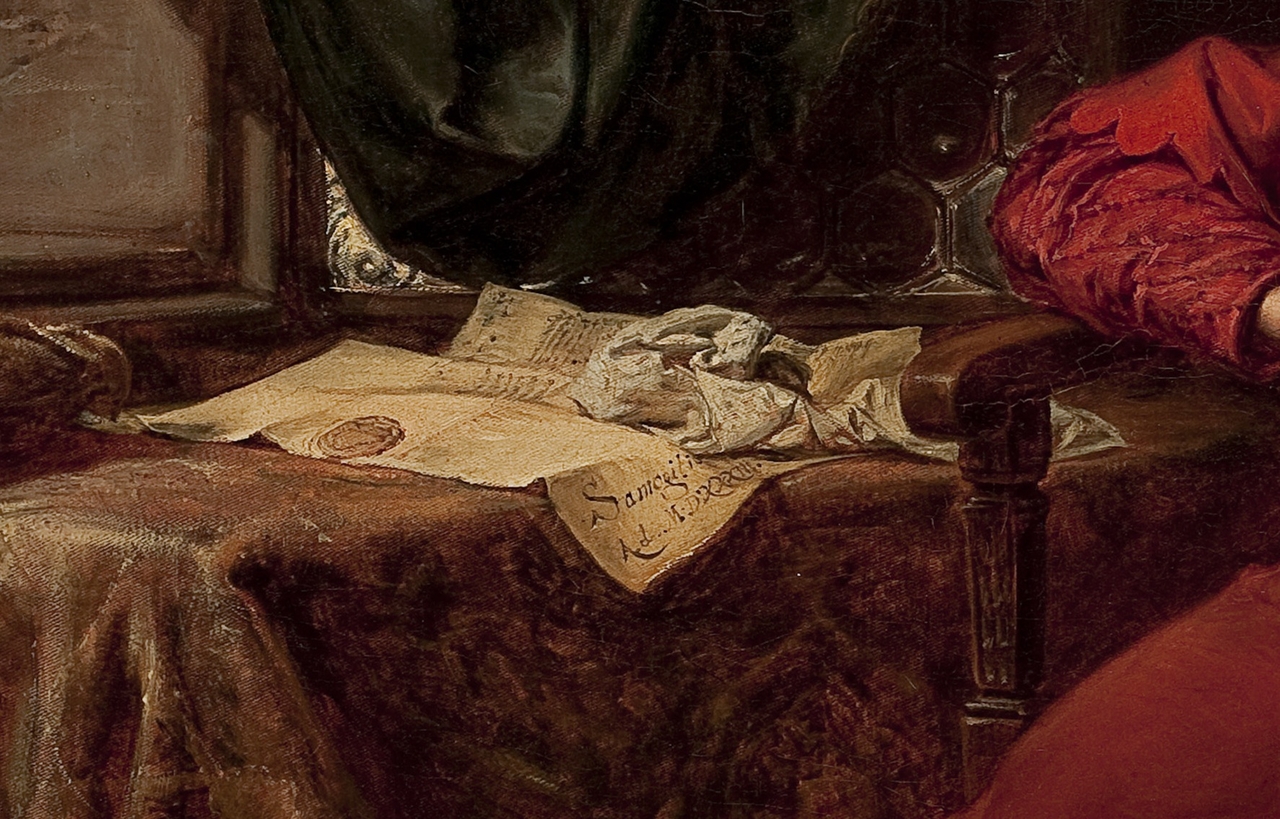
The Grand Duchy of Moscow gambled everything to turn the tide. It fixed its sights on a piece of land that could deal a fatal blow to the allied forces and pressed the assault without relenting. That place was Smolensk. The city served as a gateway connecting the allied forces and Moscow — and beyond them, the European continent and Russian territory. With rivers and marshland on all sides except through Smolensk, it was regarded as a position of supreme strategic importance. On July 31 of that year, Moscow massed its artillery and, after sustained pressure, succeeded in taking the city. "… Because the forces of the Grand Duchy of Moscow, led by Vasili III himself, could not be overcome, the governor of Smolensk ultimately abandoned the fortress." That, in essence, was what the letter before Stańczyk said. He understood immediately: the breach of that city meant, in effect, that the entire front was in danger.
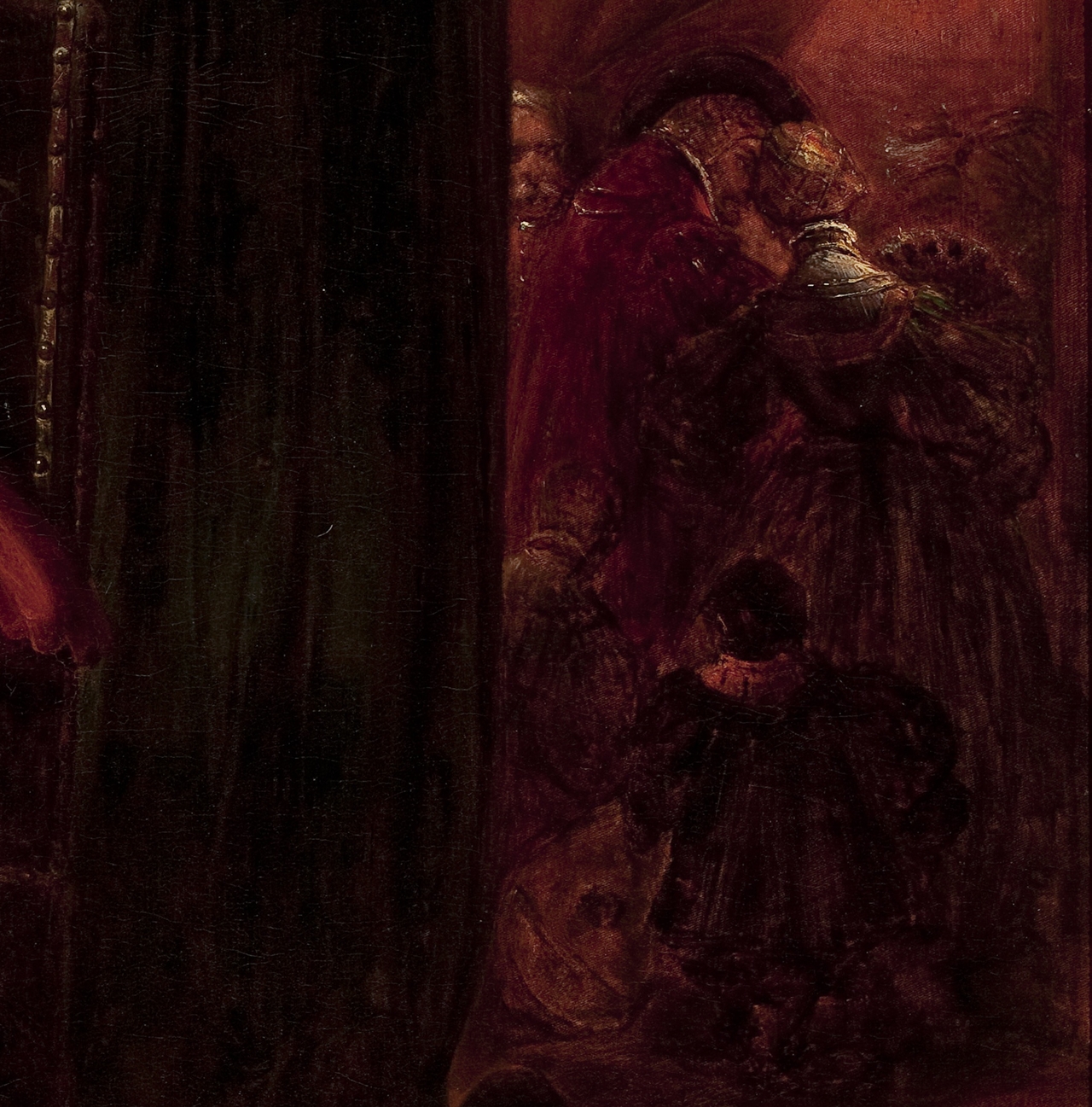
Amid all this, what must have been even more dispiriting was the mood inside the court itself.
Someone had surely read the news. And yet no one showed the slightest sign of grief or unease. They simply went on enjoying the wine, the party, the dancing and the singing. "Has everyone lost their minds?" It would not have been strange for that thought to cross his lips.
True, losing the Battle of Smolensk was a bitter blow — but we went on to win a great victory at the Battle of Orsha shortly after, so it is more or less even, is it not?
Some at court may well have been thinking along those lines. It was not entirely wrong. About a month after the walls of Smolensk fell, on Sept. 8, the Polish-Lithuanian allied forces and the Grand Duchy of Moscow clashed again at Orsha. This time, the allies won. They overcame a numerical disadvantage of roughly 30,000 against more than 45,000 and defeated their opponent — though the precise scale of the battle remains disputed to this day. But that was all. The allied forces were spent. Any thought of retaking Smolensk, the original objective, was beyond reach. A victory under those circumstances could not truly be called a victory. While the allies exhausted themselves, Moscow would raise Smolensk's walls higher, resettle its own people there, and station its core troops within. What had once been their fortress would soon become Moscow's most formidable shield.
So who, then, is the truly ridiculous clown?
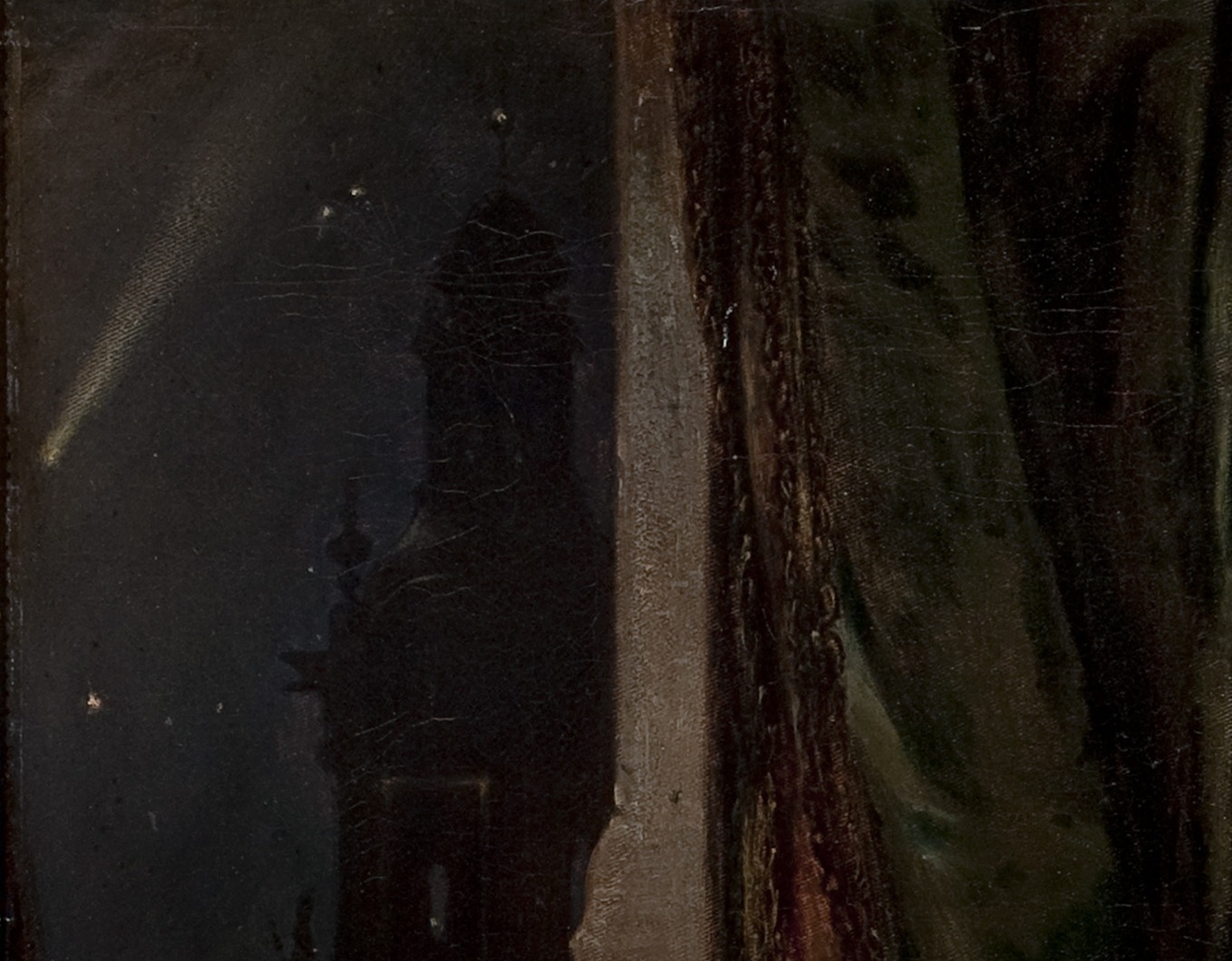
In fact, the Russian camp — the Grand Duchy of Moscow and later the Tsardom of Russia — would hold effective control over Smolensk until 1611.
That was nearly a hundred years after the city's fall.
In the painting, it is only the jester Stańczyk who dimly foresees this trajectory.
Stańczyk is suffocated by the situation. He has thrown down his staff — the last of his will to perform as a jester, abandoned. The carpet beneath his feet is crumpled, as though he has kicked it in frustration. Through the window, Wawel Cathedral in Krakow — the coronation site of the Polish Kingdom — is visible. Beside it, a comet falls. This can be read as an omen of ruin. The star to the left of the spire is understood to be part of the constellation Orion — the mythological hunter who boasted "I can catch any beast" and was killed by a scorpion's sting for his arrogance. The constellation seems to stand in for Stańczyk, targeting the incompetence of the court's officials. Beyond the curtain, the palace ballroom is warm and festive. Elegantly dressed men and women stand close together in easy conversation. So then — who, in this moment, is the truly ridiculous clown? This is "Stańczyk," painted in 1862 by 19th-century Polish artist Jan Matejko. Its longer title is "Stańczyk During the Ball at the Court of Queen Bona in the Face of the Loss of Smolensk."
Why he summoned the jester again
![Jan Matejko, Gamrat and Stańczyk, 1873–1878, oil on wood, 132x87.5cm, Kosciuszko Foundation [Scanned from album Malarstwo Polskie w zbiorach za granicą by Stefania Krzysztofowicz-Kozakowska, Public Domain, commons.wikimedia.org]](https://wimg.heraldcorp.com/news/cms/2026/10/16/news-p.v1.20261016.58caa2c2cdcb4e8faff6010393002a7b_P1.jpg)
That Matejko, writing from his own era, reached back three centuries to paint "Stańczyk" was not simply a matter of teaching the public about a frantic chapter of history — the fall of a prized city and the failure to retake it.
Nor could it be put down to a chance immersion in that period while leafing through old records. As the painting's title already suggests, what drew Matejko was not the events themselves but the figure at their center: Stańczyk, the legendary jester. There was a particular reason he chose to summon that figure into his own time. It was to warn. The man who could dissolve anything into a joke had been brought to despair — and Matejko wanted the world to know that something capable of doing the same could happen again, soon.
The 'great flood' that swept the kingdom
![Jan Matejko, Self-Portrait, 1892, oil on canvas, 160x110cm, Warsaw Museum [cyfrowe.mnw.art.pl, Public Domain, commons.wikimedia.org]](https://wimg.heraldcorp.com/news/cms/2026/10/16/news-p.v1.20261016.7562b90b1f7148f9a52e0a18949e8768_P1.jpg)
Matejko was born in 1838 in the Free City of Krakow, a city-state.
Established in 1815, it was a modest country — covering 1,164 square kilometers with a population of roughly 95,000 to 146,000.
What, then, had become of the Polish-Lithuanian Commonwealth, which had once dominated the region? What had happened to the power that could stand against even the Grand Duchy of Moscow, the forerunner of modern Russia?
The Polish-Lithuanian Commonwealth had repeatedly mounted offensives after the battles of Smolensk and Orsha. It shed more blood than it could afford after losing Smolensk, yet at one point it even occupied Moscow (1610–1612), establishing itself as the dominant power in Eastern Europe.
But glory built on internal wounds never lasts.
Uprisings from within, Russian incursions that exploited the chaos, and an invasion by Sweden — then in its golden age — brought one disaster after another. The Polish-Lithuanian Commonwealth lost a third of its population in the upheaval that followed. The devastation was so total that it is still known today as the "Deluge" (Potop).
Weakened, the Polish-Lithuanian Commonwealth suffered the humiliation of having its territory carved up, led by the Russian camp, the Kingdom of Prussia, and the Habsburg forces of Austria. Then came Napoleon Bonaparte of France, who established the Duchy of Warsaw as a kind of puppet state — only for the territory to be partitioned again after his fall. The last ember of the Polish-Lithuanian spirit had been the Free City of Krakow. When the smoke cleared, even that was gone. What had once been a great nation of about 11 million people (as of 1771) had been reduced to a small and diminished city-state.
![Jan Matejko, Veit Stoss Losing His Sight, with His Granddaughter, 1865, oil on canvas, 155.5x140cm, National Museum in Warsaw [cyfrowe.mnw.art.pl, Public Domain, commons.wikimedia.org]](https://wimg.heraldcorp.com/news/cms/2026/10/16/news-p.v1.20261016.1a2ce9db56db4e7abb09c3ee3b05e2c7_P1.jpg)
Even so, the shadow of decline still hung heavily over the land.
The Free City of Krakow was, despite its name, anything but free. Above all, it endured constant interference from three powers: the Russian camp, the Kingdom of Prussia, and the Habsburg forces. Rather than resist, the city's leading figures seemed preoccupied with dividing up what little power remained among themselves — splitting into factions such as the pro-Russian camp and squabbling over the scraps.
It was against this backdrop that Matejko, in 1846, witnessed the Krakow Uprising led by what remained of the Polish independence movement, followed by the intervention of Austrian forces and the massacre that came with it.
That same year, he had to watch as even the Free City of Krakow was "punished" by foreign powers and ceased to exist. It was no longer possible to call it the last flame of the Polish-Lithuanian spirit. It had become nothing more than a provincial capital — part of the Kingdom of Galicia and Lodomeria, a territory of the Austrian Empire. During this period, Matejko also learned of the fates of his two older brothers, who had sided with the independence movement. One had died on the battlefield; the other had fled into exile. Matejko must have felt suffocated by his homeland's total collapse — and the family tragedy layered on top of it all must have filled him with a deeply personal anguish.
That face in the painting — could it be … ?
"Stańczyk," then, was surely the product of all this.
It could not be called a mere history painting. It was an indictment — a critique of the contemporary ruling class, which lacked both the capacity and the will to read the situation before them. The implicit charge: how are you any different from those incompetent royals who feasted and danced even after losing Smolensk? There was also an intent to warn that if things continued as they were, a loss even greater and more permanent than that one awaited. Seen in this light, the face of Stańczyk in the painting bears a striking resemblance to someone in particular. It is the face of Matejko himself.
The year written on the letter inside "Stańczyk" also deserves attention.
The number shown is not 1514, the actual year Smolensk fell, but 1533. This remains a subject of debate. Given that Matejko used symbols and iconography with such deliberate care throughout the painting, scholars have raised the possibility that this detail, too, carries some intent. For instance, 1533 was the year Ivan IV — known as Ivan the Terrible — formally ascended to power in the Russian camp. He was a tsar of volatile temperament, but after his accession, Russian territory expanded dramatically. The land and population gained in that expansion would later provide the foundation for overwhelming the Polish-Lithuanian Commonwealth. The reading, in other words, is that the painting carries a warning: a homeland that had already fallen to rock bottom could yet face an even greater catastrophe.
![Izydor Jabłoński, Portrait of Jan Matejko, 1875, oil on canvas, 62.5x47.5cm, National Museum in Krakow [The National Museum in Krakow Digital Collection, Public Domain, commons.wikimedia.org]](https://wimg.heraldcorp.com/news/cms/2026/10/16/news-p.v1.20261016.ef5188aabbfa4086b6832e2a66347288_P1.jpg)
Some, however, argue that this is interpretation for interpretation's sake, and that Matejko may simply have made an error on this particular point.
There is another detail in "Stańczyk" worth pausing over: the name "Queen Bona" appears in the painting's long title. Going back to 1514 — the year Sigismund I's Polish-Lithuanian forces lost Smolensk to the Grand Duchy of Moscow — Bona Sforza was not yet queen consort. Her formal marriage to Sigismund I came four years later, in 1518. Was this a failure of historical accuracy on Matejko's part? It was not. Here, too, there was intent. Bona Sforza was from the Duchy of Milan — a foreigner by birth. Deliberately placing her name in the title was most likely a pointed jab at the majority of court officials who allowed themselves to be manipulated by foreign powers.
Leaning on foreign powers to suppress their own people
![Jan Matejko, Students Leaving Krakow in 1549, 1892, oil on canvas, 97x94cm, National Museum in Krakow [National Museum in Kraków Digital Collection, Public Domain, commons.wikimedia.org]](https://wimg.heraldcorp.com/news/cms/2026/10/16/news-p.v1.20261016.e82e01d2fe734631be778e834f43dcaf_P1.jpg)
In fact, around 1862, when Matejko was at work on the painting, the reality of his homeland was growing even more wretched.
At the time, nationalist forces seeking to revive the Polish-Lithuanian Commonwealth were staging demonstrations within Russian-controlled territory. A Polish nobleman named Aleksander Wielopolski had been placed in charge of controlling the Polish-Lithuanian population inside Russia. A pro-Russian figure, he feared a large-scale uprising and made a fateful miscalculation: he ordered young Polish activists to be conscripted by force into the Russian army, with a service term of 20 years. It was yet another instance of leaning on a foreign power to suppress his own people.
This triggered what became known as the January Uprising — from January 1863 to June the following year, roughly 1,200 engagements of varying scale, in which between 10,000 and 20,000 Polish-Lithuanian insurgents were killed.
Once again, the outcome was defeat for the Polish-Lithuanian side. The consequences were devastating: a ban on the Polish language, mass emigration, and deportation to Siberia.
Stańczyk appears again and again in Matejko's paintings
![Jan Matejko, Hanging of the Sigismund Bell, 1874, oil on canvas, 94x189cm, Warsaw Museum [pinakoteka.zascianek.pl, Public Domain, commons.wikimedia.org]](https://wimg.heraldcorp.com/news/cms/2026/10/16/news-p.v1.20261016.d59af42e55fe444493d508a28567abcd_P1.jpg)
Perhaps one painting was not enough to quiet the anxiety and anguish he felt for his homeland.
Matejko continued to work Stańczyk into his canvases with stubborn persistence.
In 1874, Matejko painted "Hanging of the Sigismund Bell (Hanging of the Sigismund Bell on the Tower of Krakow Cathedral in 1521)." The painting shows King Sigismund I of the Polish Kingdom and Queen Bona Sforza. Children and courtiers, nobles and laborers, clergy and ordinary citizens fill the scene. What they are all watching is the installation of the 12-ton Sigismund Bell (Dzwon Zygmunt) before Wawel Cathedral in Krakow. The bell is immense, and the surrounding scene is vivid and varied — a symbol of the Polish Kingdom's prestige at its height.
Sigismund I was, by most measures, a capable ruler. Under his reign, the Polish Kingdom achieved advances in technology and culture remarkable enough to be called a Renaissance. Losing Smolensk was a wound that would ache for years, but it was not something that would bring immediate ruin. And yet, even here, Stańczyk is present. He wears his red cap with its dangling ears once more. Seated before the king and queen, he looks away, indifferent to the spectacle. While everyone around him wears a solemn expression, he twists his body and bares his thigh. If given the chance, he might well deliver one of his characteristic barbs, laced with mockery: "Your Majesty — might this great bell, hung to celebrate the glory of the homeland, end up serving only as a funeral bell, tolling for mourning and burial?"
![Jan Matejko, Prussian Homage, 1882, oil on canvas, 388x785cm, Krakow Museum [pinakoteka.zascianek.pl, Public Domain, commons.wikimedia.org]](https://wimg.heraldcorp.com/news/cms/2026/10/16/news-p.v1.20261016.0b2ae105b289437b975dc92b02e006d8_P1.jpg)
Matejko also depicted the scene of Teutonic Grand Master Duke Albert kneeling before King Sigismund I.
The title was "Prussian Homage," painted in 1882.
The Teutonic Knights, of German origin, had long been a thorn in the side of the Polish Kingdom. They had allied first with the Holy Roman Empire, then with the Grand Duchy of Moscow, to antagonize Poland at every turn. Sigismund I responded by raising an army and targeting the Teutonic Knights directly. He brought up siege artillery, encircled their strongholds, and took them one by one. The two sides eventually reached an agreement and concluded a truce, but Sigismund I had won the upper hand in the diplomatic maneuvering that unfolded beneath the surface. As a result, on April 10, 1525, Teutonic Grand Master Albert, facing international isolation, capitulated. He knelt and pledged himself as a vassal of the Polish Kingdom.
The Teutonic Knights went on to establish the Duchy of Prussia — which at the time was little more than a puppet state of the Polish Kingdom. That was certainly what it was then. But by the time Matejko was alive, centuries later in the 19th century, what had it become? It had grown into the German Empire, one of the most formidable powers on the European continent.
And that was not all. It no longer knelt before Poland. Instead, it held its head higher than ever, pursuing policies of discrimination and cultural erasure against the Polish people.
In "Prussian Homage," Stańczyk sits below the ornate dais draped in red carpet. He is seated on the floor, wearing an expression of suspicion. Perhaps he is thinking: the one kneeling before us today may one day be the one who brings us to our knees.
A nation
must stay awake, whatever its circumstances.
That is the message Matejko sought to deliver by bringing Stańczyk back, again and again, into his paintings.
It can be distilled into that single sentence. Whether or not Matejko intended it, the figure of Stańczyk in both works also bears a resemblance to the painter himself.
'A nation must stay awake, whatever its circumstances … '
![Jan Matejko, Battle of Grunwald, 1878, oil on canvas, 426x987cm, National Museum in Warsaw [cyfrowe.mnw.art.pl, Public Domain, commons.wikimedia.org]](https://wimg.heraldcorp.com/news/cms/2026/10/16/news-p.v1.20261016.bc69a75296fc4945a8510240ef3bd7f4_P1.jpg)
By this point it will come as no surprise that Matejko was one of the most beloved painters among Poles of his era.
At a time when their land was barely visible on a map, he was a cherished artist who took it upon himself to record their history and their people in monumental works.
Not everyone, of course, admired his distinctive artificial compositions and cynical atmosphere. Some also questioned his insistence on invoking Stańczyk. The jester is generally believed to have lived in the Polish Kingdom from around 1480 to around 1560, but almost nothing is known about his life. Even his name and identity were subjects of debate for a long time. Certain anecdotes — that he delivered pointed jokes to the king and through them influenced appointments and policy — have consistently been suspected of being invented. Critics asked what Matejko's deeper purpose was in championing such an ambiguous figure.
Yet no one doubted the sincerity of Matejko's love for his homeland. During the January Uprising, when Polish-Lithuanian insurgents raised their banner, Matejko donated most of his personal wealth to their war chest. He even transported weapons to their bases himself. In addition, as time passed, the argument gained traction that Stańczyk's very mysteriousness made the works all the more compelling.
Matejko won a gold medal at the Paris Salon in 1865. He received the Legion of Honor in 1870, and in 1872 accepted the directorship of the Krakow School of Fine Arts — a "national" choice, made after setting aside an offer to lead the Prague Academy of Fine Arts.
![Jan Matejko, Rejtan — The Fall of Poland, 1866, oil on canvas, 282x487cm, Royal Castle in Warsaw [Public Domain, commons.wikimedia.org]](https://wimg.heraldcorp.com/news/cms/2026/10/16/news-p.v1.20261016.be4f0bfe15b347478524f91418ad2b3e_P1.jpg)
He continued afterward to fill his canvases with his homeland's history — including "Prussian Homage," for which he publicly declared his intention to dedicate it to the Polish nation.
All the while, Matejko suffered from a gastric ulcer. He died in Krakow on Nov. 1, 1893, at the age of 55, without living to see his homeland's independence. Large crowds attended his funeral. At least 32 European newspapers ran prominent obituaries. He was laid to rest in a cemetery in Krakow.
![Jan Matejko, Portrait of the Painter's Three Children, 1870, oil on canvas, 127.5x160cm, National Museum in Warsaw [cyfrowe.mnw.art.pl, Public Domain, commons.wikimedia.org]](https://wimg.heraldcorp.com/news/cms/2026/10/16/news-p.v1.20261016.c6e2ad3dca5f4decb15188dc5ad191fd_P1.jpg)
Nov. 11, 1918.
The name Poland was restored to the map on the day the First World War ended. Germany (the Kingdom of Prussia) and Austria, which had led the partitioning of Poland, were reeling from defeat; the Russian camp was in turmoil from the Bolshevik Revolution. Poland's miraculous rebirth was seized from that vacuum of power.
What painting might Matejko have made, had he been able to hold a brush until that day? What expression would his persona, Stańczyk, have worn within it? Perhaps, surprisingly, his approach would not have changed much at all. Stańczyk might once again have worn that inscrutable look — and through it, issued yet another warning. If you do not want history to repeat itself, do not surrender blindly to the joy of this moment. Please. Stay awake.
![Jan Matejko, Astronomer Copernicus, 1872, oil on canvas, 226x315cm, Jagiellonian University Museum [pinakoteka.zascianek.plmuzea.malopolska.pl, Public Domain, commons.wikimedia.org]](https://wimg.heraldcorp.com/news/cms/2026/10/16/news-p.v1.20261016.6e1e25c83eef43359ab434479f35b92f_P1.jpg)
References
Kim Yong-deok, A Story of Polish History, HUEBOOKs
Maria Szypowska, Jan Matejko wszystkim znany, Fundacja Artibus-Wurlitzer oraz Wydawnictwo Domu Słowa Polskiego
Jozef Bachorz, Alina Kowalczykowa, Słownik literatury polskiej XIX wieku, Ossolineum
![Unknown artist, Jan Matejko's studio [Polona Digital Library, Public Domain, commons.wikimedia.org]](https://wimg.heraldcorp.com/news/cms/2026/10/16/news-p.v1.20261016.5fee3c2a4e7a4360aea3b9aa0407c076_P1.jpg)
yul@heraldcorp.com



