
District pushes ahead on five governance goals and 87 campaign pledges, laying out a four-year roadmap; Hannam District 3 demolition complete, Sanho apartment approval fast-tracked by three months
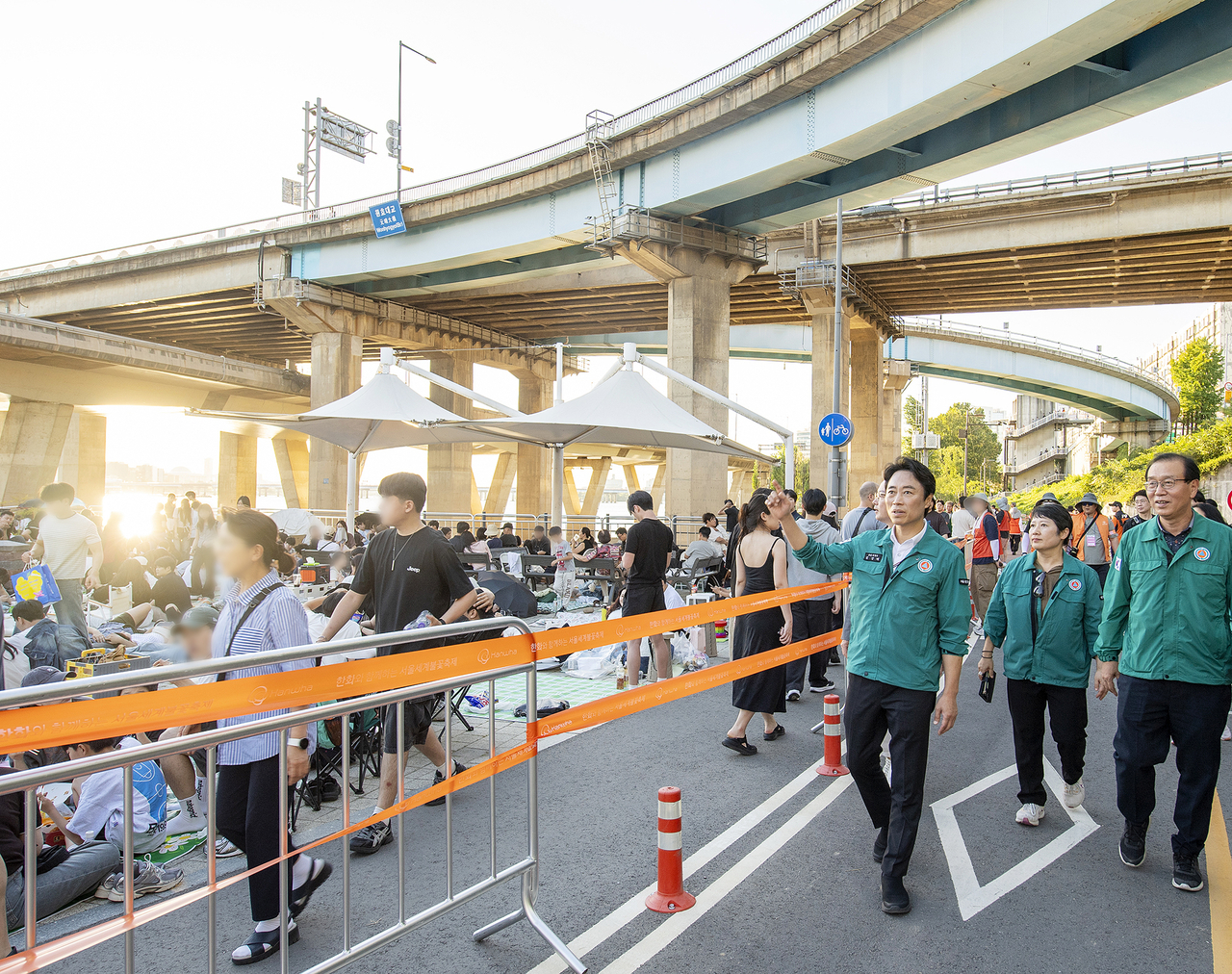
Yongsan-gu in Seoul has built a record of achievements across development, safety and public welfare in the first 100 days of the 9th-term administration. The district completed demolition of Hannam District 3, cut the approval period for the Sanho apartment management and disposal plan by three months, won the Presidential Award at the national public design competition, and became the first autonomous district in Seoul to earn international certification for disaster-response continuity. Work to expand parking and improve everyday living conditions is also under way.
Under the vision of "Yongsan — an attractive city opening the future," the district plans to transform its urban landscape through the Yongsan International Business District, Yongsan Park, the Yongsan Electronics Market and 90 redevelopment and reconstruction projects.
To that end, the district has confirmed five governance goals and 87 campaign pledges: bold Yongsan development, field-centered smart safety, a vibrant economy that delivers results, a cultural tourism destination the world will seek out, and warm welfare paired with solid education.
Since taking office, District Mayor Kim Kyung-dae has visited development and public-welfare sites to hear residents' views and has relayed community concerns about key issues — including housing supply at Yongsan Park and the Yongsan International Business District — to relevant agencies. The district plans to restructure its organization next year to sharpen the execution of campaign pledges and accelerate project delivery.
A field-based research initiative called Yongyong Lab, which works to solve residents' everyday problems through on-site study, won the Presidential Award — the top prize — at the 2026 Korea Public Design Awards, hosted by the Ministry of Culture, Sports and Tourism and the Cultural Heritage Administration.
Yongyong Lab examined noise, road cleanliness and traffic-safety issues in the Hangang-ro area and other neighborhoods, working with residents and relevant agencies to develop 21 types of safety-oriented living design. Its field-driven approach to solving local problems was credited with earning the award.
The district also became the first autonomous district in Seoul to obtain international certification for a business continuity management system for disaster-response functions, and received the Korean National Police Agency Commissioner General's Award at the Korea Crime Prevention Awards. In September, District Mayor Kim ranked first among Seoul district mayors in the K-Brand Index compiled by the Asia Brand Research Institute.
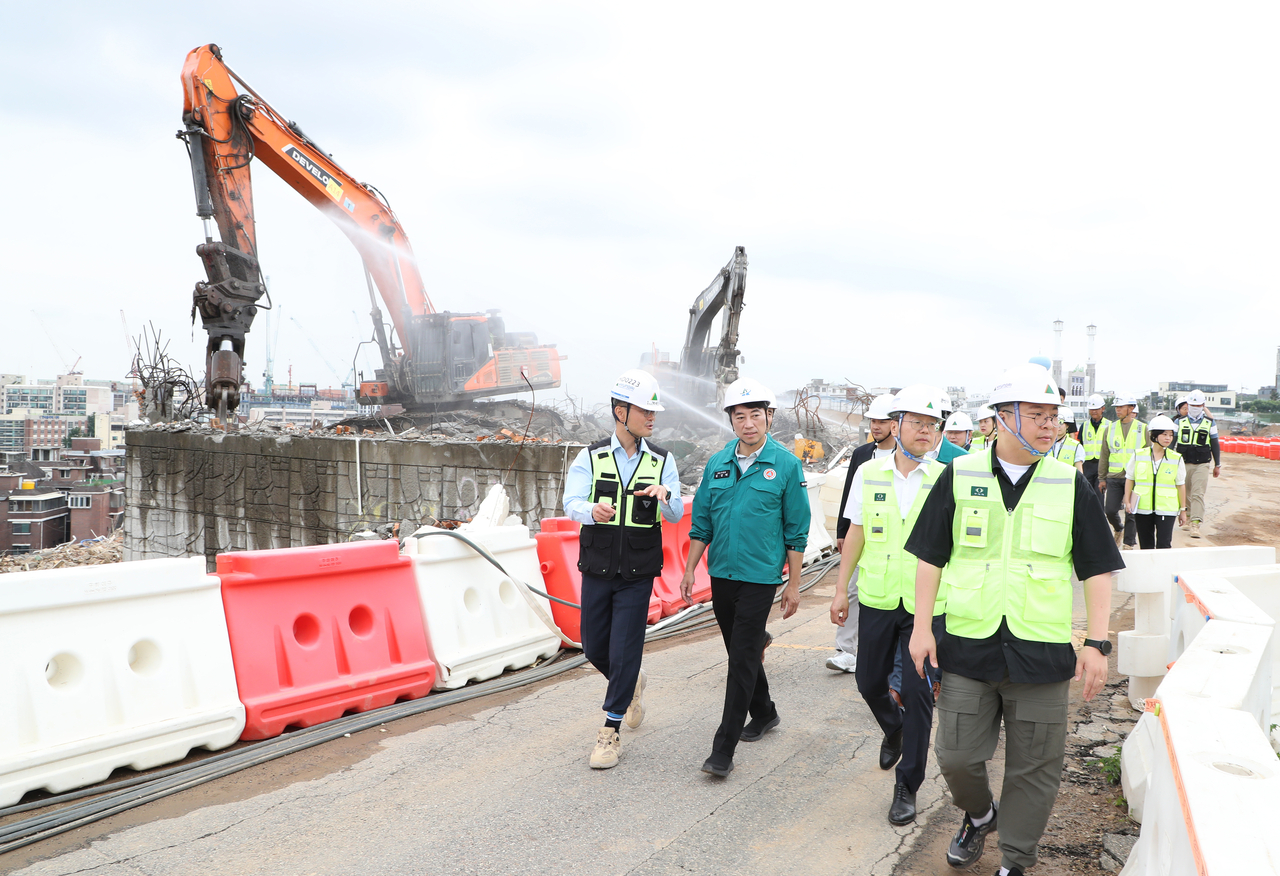
Redevelopment projects — a core priority of the 9th-term administration — are also gaining momentum. Centered on a rapid development task force, the district has reviewed the causes of delays on individual projects and coordinated with relevant agencies to advance key procedures.
Hannam District 3, billed as Seoul's largest redevelopment project at 5,970 units, is on track for a November ground-breaking after completing demolition. The Sanho apartment complex (647 units) had its management and disposal plan approval period cut by three months. Additional milestones followed: approval of the Gangchon apartment remodeling project plan, selection of the north side of Hyochang Park Station as a candidate site for an urban public housing complex project, and approval of the Huam District 3 promotion committee.
Beyond individual project permits, the district has put in place a system for ongoing monitoring of project progress. In September, District Mayor Kim presided over the first integrated progress review meeting, where causes of delays were identified and solutions discussed. Kim plans to continue chairing regular review meetings to personally oversee project status and resolve bottlenecks early, keeping redevelopment on schedule.
On the safety front, the district focused on field responses that residents can feel directly. As the heat wave extended, 43 cooling centers were added to or kept open beyond the original 85, bringing the total to 128. Community service centers were opened on nights and weekends to protect heat-vulnerable residents, and 24-hour emergency shelters were operated to strengthen the heat-wave response.
A "Smart Yongsan Safety Map" — allowing users to check risk factors and safety facilities by neighborhood at a glance — is set to launch in November. Near Samgwang Elementary School in Huam-dong, where a children's commute route runs alongside a residential area, the district is pursuing a resident-participatory safety design project that reflects students' own experiences, aiming to improve the living environment and prevent crime simultaneously.
The administrative foundation for disaster response is also being strengthened. Following the international certification for business continuity management for disaster-response functions, the district plans to systematically identify risk factors by area and raise response capacity to build a safer urban environment.
The district is also tackling parking shortages that affect residents' daily lives. In Itaewon 1-dong, nine existing on-street public parking spaces have been converted to direct management by a public corporation and are now operated as a shared parking lot using Internet of Things sensors. Five additional parking spaces were secured on nearby private vacant land.
In Itaewon 2-dong, a preliminary feasibility study for a public parking lot of about 100 spaces is getting under way. The Cheongpa Cultural Park development project is also being prepared for a Seoul Metropolitan Government investment review; if it proceeds, a 217-space underground parking lot will be built beneath the park.
The district is also expanding recreational infrastructure. A park golf course at Officer Quarters Complex 5 inside Yongsan Park has completed a trial run and is set for an official opening in November. The district aims to improve residents' everyday quality of life through both parking relief and expanded sports facilities.
To enhance Yongsan's appeal and energize the local economy, aging rest areas along Sowol-ro have been renovated into two spaces — Sodam Shelter and Soyo Shelter — offering rest and views of Namsan and Haebangchon. Existing trees were preserved to blend the spaces with the surrounding landscape.
The area around 40 Hangang-ro 3-ga has been rebranded as "Yongpori" to revitalize its commercial district. The district plans to install signage this year and develop a signature street by 2027 to kick off a full-scale commercial revitalization effort.
In the Itaewon tourism special zone, cultural content was used to heighten the street's appeal. At the K-Wave Dance Festival held Oct. 3 and 4, a roughly 400-meter stretch from Itaewon Station to Noksapyeong Station was transformed into a large outdoor stage. The district supported the street-style cultural festival, which drew both domestic and international participants and tourists, to boost Itaewon's cultural appeal and tourism competitiveness.
Cooperation with institutions and companies is also taking shape. The district jointly inspected redevelopment sites in the Seogyedong and Cheongpa-dong areas with the Seoul mayor and shared key issues. It is also broadening the foundation for collaboration with public institutions and private companies across development, safety, economic and cultural sectors.
With the Yongsan Police Station, the district has established a cooperative framework for child abuse prevention. With Korea District Heating, it is pursuing a plan to supply district heating to the Hannam redevelopment promotion zone. With Amorepacific, the district plans to form a three-way MOU involving Yongsan-gu, Amorepacific and the Yongsan Culture Foundation to create a public-private partnership model for local cultural revitalization.
Looking ahead, the district plans to sharpen the execution of its pledges through an organizational restructuring next year. In particular, the rapid development task force will be expanded and reorganized in January 2027 into a "Rapid Development Officer" unit reporting directly to the district mayor, strengthening the drive behind major development projects.
"If the past 100 days were about setting the direction for the 9th term and laying the groundwork for action in the field, going forward I will answer with results that residents can feel," District Mayor Kim said. "We will push major development projects forward with a sense of urgency while paying even closer attention to safety and people's livelihoods." He added that he would "make residents' voices the starting point of district governance and turn 'Yongsan — an attractive city opening the future' into reality without fail."
seouldream01@heraldcorp.com




