
Dysfunction predicted since the start of the eighth elected city administration
Seoul-Incheon split operations proved unsustainable
Government relocation plan puts Songdo headquarters project in jeopardy
Civic groups push back; Rep. Bae Jun-young faces calls for accountability
Questions mount over budget and administrative resources spent securing office space
Incheon's local community is pushing back after the government officially announced plans to relocate the Overseas Koreans Agency — which the city had won the right to host — to Sejong, just over three years after the agency was established.
Critics say the move confirms long-standing fears that Incheon's bid was always a "half-win," and are questioning whether the Yoo Jeong-bok administration wasted public funds and administrative resources on securing and supporting the agency's office space.
The Overseas Koreans Agency has been based in Songdo, Incheon, but has operated largely separate from South Korea's Ministry of Foreign Affairs and other key diplomatic bodies.
Incheon had positioned itself as a gateway city for the era of 7 million overseas Koreans, pointing to Incheon International Airport and the internationally oriented Songdo district. Now, with the central government pressing ahead with the relocation, questions are mounting over the real value of the city's original bid and its ability to protect that outcome.
South Korea's Ministry of Interior and Safety announced Tuesday that 44 central government agencies based in the greater Seoul area, covering 9,929 civil servant positions, would be relocated to Sejong in phases starting in 2027. The Overseas Koreans Agency was among six agencies designated for priority relocation in the first half of next year.
If the plan goes ahead, the agency will leave its Songdo base for Sejong — effectively derailing the city's long-pursued plan to build a dedicated, independent headquarters for the agency in Songdo.
The deeper problem, observers say, is that this situation cannot be dismissed as a sudden or isolated dispute over office space.
When the agency launched in 2023, Incheon secured the hosting rights, but it quickly drew criticism for operating in a split arrangement — shuttling between Seoul and Incheon — due to coordination and accessibility issues with the Foreign Ministry. The arrangement earned it the label of a "half-hosted" agency.
Given Incheon's strengths — an international airport and a district home to international organizations and global companies — landing the agency had been seen as a symbolic achievement that would elevate the city's standing as an international hub.
But the city never resolved the fundamental problems of split operations and weak institutional ties, and debate over whether the agency truly belonged in Incheon never subsided.
Those concerns have now materialized in the form of a full relocation, barely three years in.
Particularly painful, critics say, is that Incheon's sustained effort to secure a permanent home for the agency now appears to have collided directly with the central government's relocation plans.
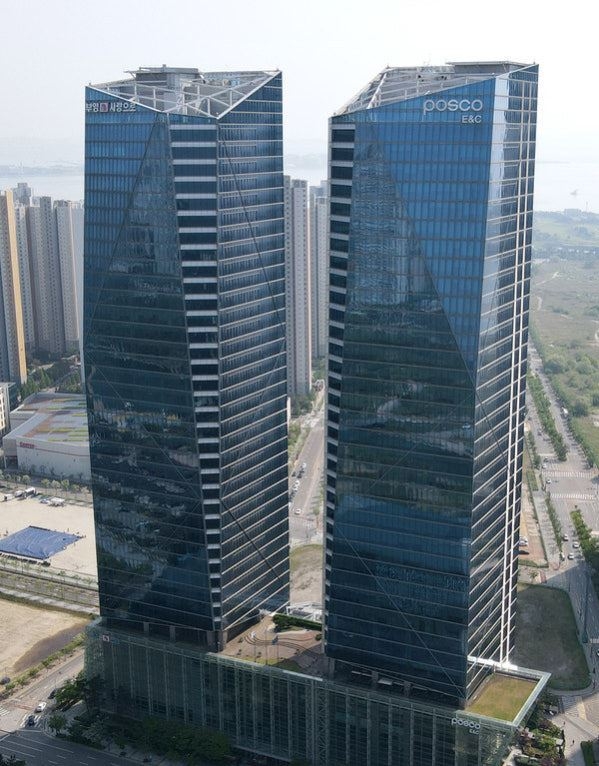
The agency has rented floors in Booyoung Songdo Tower since June 2023. High rental costs, cramped space and security concerns soon prompted calls for a dedicated building, and the city began exploring alternative public facilities — all on the assumption the agency would stay.
Incheon reportedly considered public buildings including the Incheon Urban Corporation headquarters in Namdong-gu, the former Jung-gu district office and the Ruwon mixed-use complex in Seohaegu as candidate sites. The agency had been pressing the city for a stable public facility, and the two sides had been in ongoing talks.
Those discussions entered a new phase after the ninth elected city administration took office and the central government unveiled its Sejong relocation plan.
The city had invested administrative resources in vetting candidate sites and consulting with relevant agencies, but critics say it ultimately failed to block or even anticipate the central government's decision — raising serious questions about the effectiveness of its policy response.
Civic groups and politicians are amplifying their opposition. Local voices are demanding that the agency remain in Incheon, while others are calling for accountability over the city's failure to protect what it had won.
People Power Party Assembly member Bae Jun-young held a press conference Wednesday to address the local political response to the relocation issue.
The stakes extend beyond the loss of a single government agency. At issue is whether Incheon ever realized the benefits it had anticipated from hosting the agency — enhanced international city branding, spillover effects for related industries and expanded exchanges with overseas Koreans. Critics say a fundamental accounting of those outcomes is now overdue, and that the effectiveness of the budget spent on securing and running the agency's office must be examined.
Incheon Mayor Park Chan-dae framed the Sejong relocation as part of the government's broader push to complete the administrative capital, and said the city is pursuing plans to attract an "Overseas Koreans Education and Culture Center" to Incheon instead — aiming to keep overseas Koreans coming to the city even after the agency moves.
The agency's relocation to Sejong was always meant to serve Incheon's ambition of becoming a true international city. But having failed to overcome the structural limitations of split operations, and now facing an outright departure, doubts are growing over whether the optimistic promises made at the time of the original bid ever translated into real results.
"It was already a foregone conclusion, given the 'half-baked' concerns raised from the very beginning when the agency was brought to Incheon," a former government official said. "Now even the budget poured in over the years looks set to go up in smoke."
The Overseas Koreans Agency said in a statement Wednesday that "strengthening Sejong-centered national governance is a key policy goal of the current administration, shared across all ministries, and this announcement is the result of thorough deliberation at a Cabinet meeting." It added that it would work out the details in consultation with the Ministry of Interior and Safety.
gilbert@heraldcorp.com




